Chinese Astrology
 83
83

Chinese Astrology
Paula Delsol's 'Chinese Astrology' avoids the common pitfalls of superficial astrological guides, presenting a thorough and systematic approach to the subject. Its strength lies in its detailed exploration of the Five Elements and their interplay with the twelve animal signs, moving beyond mere personality archetypes to the underlying energetic dynamics. The section detailing the 60-year cycle, for instance, offers a more nuanced astrological calculus than many popular treatments. However, the prose can occasionally feel dense, particularly for readers entirely new to the subject matter, requiring a dedicated focus to fully absorb its intricacies. The book's meticulousness, while commendable, might feel overwhelming without prior exposure to Chinese cosmology. Despite this, Delsol provides a robust framework for understanding a complex system. It serves as a solid reference for dedicated students of Eastern divinatory arts.
📝 Description
83
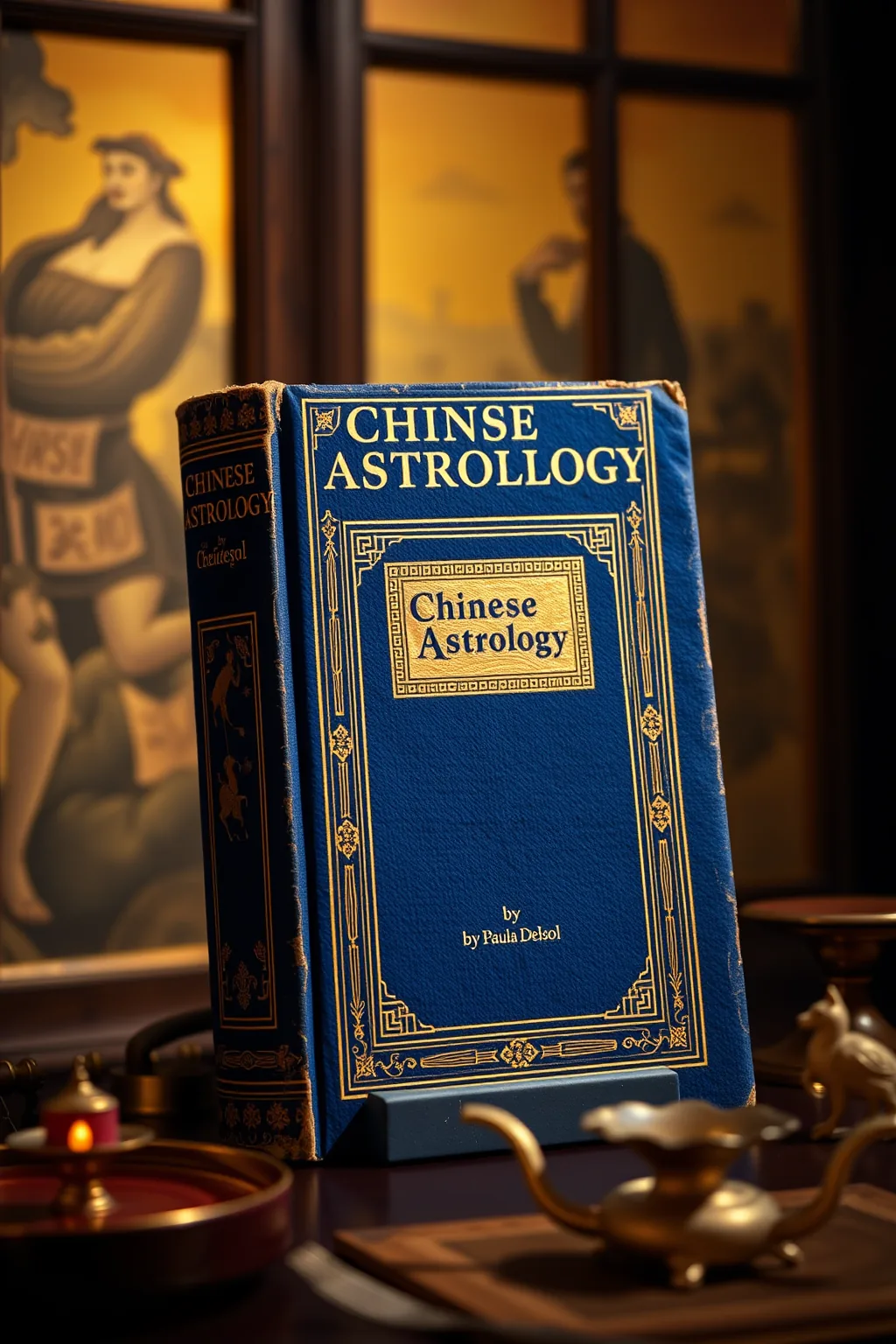
Paula Delsol's 1986 book offers a detailed look at the Chinese zodiac system.
Paula Delsol's Chinese Astrology, first published in 1986, moves beyond basic animal year associations. It examines the connections between the twelve zodiac animals, the five elements—Wood, Fire, Earth, Metal, and Water—and the principles of Yin and Yang. The book explains how these components shape personality, destiny, and relationships.
This text is suitable for readers interested in comparative astrology, Eastern philosophies, and divination. It provides a more thorough understanding of the Chinese zodiac than typical introductions. Those seeking to grasp the cyclical view of time in Chinese cosmology and its use in understanding human connections and life trajectories will find it informative.
Delsol's work systematically unpacks the Chinese zodiac. It explains the twelve animal signs, the Five Elements (Wu Xing), and their interactions. The book details the 60-year cycle, a combination of the twelve animals with Yin/Yang and the five elements, creating a more detailed astrological framework. Compatibility between signs, based on their elemental and energetic qualities, is a significant focus.
Published in 1986, Delsol's book appeared as Western esoteric circles increasingly engaged with Eastern spiritual traditions. This period saw many previously less-known systems gain broader attention. Her work contributed by presenting a structured analysis of the complex Chinese zodiac, a system often simplified or fragmented in Western presentations.
💡 Why Read This Book?
• Gain a detailed understanding of the Five Elements (Wu Xing) and how their interactions shape the influences of the 12 animal signs, a concept central to the book's astrological framework. • Explore the 60-year cycle, which combines animal signs with Yin/Yang and the Five Elements, offering a level of astrological specificity not found in simpler zodiac guides. • Learn about the principles of compatibility between signs, grounded in the energetic and elemental relationships described by Delsol, to better understand interpersonal dynamics.
⭐ Reader Reviews
Honest opinions from readers who have explored this book.
❓ Frequently Asked Questions
What is the significance of the Five Elements in Chinese Astrology according to Paula Delsol?
Paula Delsol's 'Chinese Astrology' explains that the Five Elements (Wood, Fire, Earth, Metal, Water) are fundamental forces that interact with the 12 animal signs. Their cycles of creation and destruction influence personality traits, relationships, and life events, providing a deeper layer of astrological analysis.
How does the 60-year cycle in Chinese Astrology work?
The 60-year cycle, as detailed in the book, combines the 12-year animal cycle with a 10-year cycle based on Yin/Yang and the Five Elements. This creates 60 unique combinations, offering a more precise astrological reading for individuals born in specific years within this larger period.
Is Chinese Astrology by Paula Delsol suitable for beginners?
While comprehensive, the book's depth might require dedicated study. Beginners interested in a thorough exploration of the system, particularly its elemental interactions and the 60-year cycle, will find it a valuable, albeit detailed, resource.
What does 'Wu Xing' refer to in the context of this book?
'Wu Xing' is the Chinese term for the Five Elements (Wood, Fire, Earth, Metal, Water) discussed extensively in Paula Delsol's work. These elements are crucial for understanding the energetic interplay within the Chinese zodiac system and their influence on life.
When was Paula Delsol's 'Chinese Astrology' first published?
Paula Delsol's 'Chinese Astrology' was first published in 1986. This places its detailed examination of the zodiac system within a period of growing Western interest in Eastern esoteric traditions.
Does the book discuss compatibility between Chinese zodiac signs?
Yes, a significant aspect of 'Chinese Astrology' is the exploration of compatibility. Delsol explains how the elemental and energetic relationships between the 12 animal signs, influenced by Yin/Yang and the Five Elements, determine harmonious or challenging pairings.
🔮 Key Themes & Symbolism
The 12 Animal Archetypes
The core of Chinese Astrology lies in the 12 animal signs: Rat, Ox, Tiger, Rabbit, Dragon, Snake, Horse, Goat, Monkey, Rooster, Dog, and Pig. Delsol details the distinct characteristics, strengths, and weaknesses associated with each. Beyond simple birth year associations, the work explores how these archetypes embody specific elemental and Yin/Yang energies, influencing personality, temperament, and potential life paths. Understanding these archetypes is presented as the foundational step in deciphering one's astrological blueprint within the Chinese cosmological framework.
The Five Elements (Wu Xing)
Central to the system's complexity, the Five Elements—Wood, Fire, Earth, Metal, and Water—are not static but dynamic forces. Delsol elucidates their cyclical relationships: the constructive (Sheng) cycle where one element generates the next, and the destructive (Ke) cycle where one element controls another. These interactions are crucial for understanding compatibility, health, and fortune, adding a layer of energetic analysis far beyond simple animal sign correlations. The interplay of these elements with individual animal signs creates a nuanced astrological profile.
Yin and Yang Dynamics
Complementing the Five Elements, the principles of Yin and Yang are integral to understanding the subtle energies within Chinese Astrology. Delsol explains how each animal sign and element possesses a Yin or Yang aspect, representing complementary polarities. This duality is key to understanding balance, harmony, and conflict within an individual's chart and in relationships. The book demonstrates how the combination of an animal's inherent Yin/Yang nature with its associated element and year creates a unique energetic signature.
The 60-Year Cycle
Moving beyond the familiar 12-year cycle, Delsol introduces the more intricate 60-year cycle. This system arises from the combination of the 12 animal signs with a 10-year cycle derived from the pairing of Yin/Yang with the Five Elements (e.g., Jia Wood Yang, Yi Wood Yin, Bing Fire Yang, etc.). Each year within this 60-year period possesses a unique energetic quality, offering a highly specific astrological designation. Understanding this cycle allows for a more precise analysis of an individual's destiny and the prevailing energies of any given time.
💬 Memorable Quotes
Direct passages from the work, attributed to the author.
“The animal signs are not merely labels, but carriers of specific elemental and energetic potentials.”
— This highlights the book's core approach: Chinese Astrology is presented not as a simplistic categorization of personalities, but as a complex system where the animal sign is a vessel for deeper, interacting forces like the Five Elements and Yin/Yang.
“Each year within the 60-year cycle possesses a unique energetic signature.”
— This emphasizes the detailed nature of the Chinese astrological system as presented by Delsol. The 60-year cycle, combining animals with elements and Yin/Yang, creates distinct astrological combinations far more specific than a single animal sign.
“The constructive and destructive cycles of the Five Elements govern the flow of cosmic energy.”
— This points to the dynamic and cyclical nature of the Wu Xing (Five Elements). Delsol explains how these elements support or oppose each other, influencing all aspects of life and destiny within the Chinese cosmological view.
“Yin and Yang represent the fundamental polarities that inform the character of all astrological influences.”
— This interpretation focuses on the foundational role of Yin and Yang. Delsol uses these principles to add another layer of understanding to the animal signs and elements, illustrating the concept of balance and duality in astrological interpretation.
💡 Key Ideas
Editorial paraphrase of the work's core concepts — not direct quotes.
Compatibility between individuals is fundamentally an interplay of elemental forces.
This paraphrased concept underscores how Delsol explains relationships within the Chinese zodiac. It's not just about whether two animals 'get along,' but how their inherent elemental constitutions interact, creating harmony or friction.
🌙 Esoteric Significance
Tradition
While Chinese Astrology is a distinct system with roots in ancient Chinese cosmology and philosophy, Delsol's work presents it within a framework that appeals to Western esoteric students. It aligns with traditions that emphasize cyclical time, elemental correspondences, and the energetic interplay of cosmic forces. Its structured approach, detailing the interactions of Yin/Yang and the Five Elements, carries the systematic nature found in Hermeticism or Kabbalah, making it accessible to those familiar with comparative esoteric studies.
Symbolism
The 12 animal signs themselves are potent symbols, each representing a distinct archetypal energy and embodying specific qualities of Yin/Yang and the Five Elements. The cyclical relationships of the Five Elements (Wood, Fire, Earth, Metal, Water) are also deeply symbolic, representing processes of creation, destruction, and balance that are mirrored in natural phenomena and human experience. The Dragon, for instance, is a powerful symbol of auspicious power and transformation, deeply embedded in Chinese cultural and spiritual symbolism.
Modern Relevance
Contemporary practitioners of comparative astrology, Feng Shui consultants, and those interested in holistic wellness often draw upon the principles detailed in works like Delsol's. The emphasis on elemental balance and energetic flow speaks to modern approaches to mindfulness, energy work, and understanding subtle influences on well-being. Thinkers exploring cross-cultural spiritualities and the integration of Eastern wisdom into Western life continue to find its systematic approach invaluable.
👥 Who Should Read This Book
• Aspiring astrologers seeking to broaden their practice beyond Western systems will find a comprehensive introduction to the unique principles of the Chinese zodiac. • Students of comparative mythology and philosophy can gain insight into a sophisticated cosmological framework deeply embedded in East Asian culture. • Individuals interested in understanding interpersonal dynamics through an energetic and elemental lens will appreciate the detailed compatibility analyses presented.
📜 Historical Context
Paula Delsol's 'Chinese Astrology,' first published in 1986, arrived during a significant wave of Western engagement with Eastern philosophies and esoteric systems. The late 20th century witnessed a burgeoning interest in disciplines like Feng Shui, TCM, and various forms of Asian divination, moving them from niche curiosities to subjects of broader study. This book emerged within that milieu, offering a structured and detailed exposition of the Chinese zodiac, which had previously been accessible primarily through simplified or less comprehensive Western interpretations. While not directly engaging with contemporaries in a polemical sense, Delsol's work implicitly contributed to the academic and popular discourse alongside authors like Lin Yutang, who explored Chinese culture more broadly, and esoteric writers who were simultaneously re-examining Western traditions like Hermeticism. The detailed breakdown of the Five Elements (Wu Xing) and the 60-year cycle provided a level of analytical depth that distinguished it from more superficial treatments, solidifying its place as a foundational text for serious students of Eastern astrological systems.
📔 Journal Prompts
The energetic signature of your birth year's animal and element.
The interplay between your animal sign's Yin/Yang nature and its element.
How the Five Elements' constructive and destructive cycles manifest in your life.
The symbolic meaning of the Dragon within the Chinese zodiac.
Reflecting on the 60-year cycle's potential for astrological nuance.
🗂️ Glossary
Wu Xing
The Chinese term for the Five Elements: Wood (Mu), Fire (Huo), Earth (Tu), Metal (Jin), and Water (Shui). These elements are understood in dynamic, cyclical relationships of creation and destruction, forming a core component of Chinese cosmology and astrology.
Yin and Yang
Fundamental principles of complementary opposites in Chinese philosophy. Yin represents passive, dark, feminine energy, while Yang represents active, light, masculine energy. They are seen as interdependent and constantly transforming into one another.
Sheng Cycle
The constructive or generating cycle of the Five Elements, illustrating how one element fosters or supports the next (e.g., Wood feeds Fire, Fire creates Earth from ash). This cycle represents harmonious flow and growth.
Ke Cycle
The destructive or controlling cycle of the Five Elements, showing how one element overcomes or restrains another (e.g., Water extinguishes Fire, Fire melts Metal). This cycle represents checks and balances.
Animal Signs
The 12 creatures of the Chinese zodiac (Rat, Ox, Tiger, Rabbit, Dragon, Snake, Horse, Goat, Monkey, Rooster, Dog, Pig), each associated with a year in a 12-year cycle and embodying specific characteristics influenced by elemental and Yin/Yang energies.
60-Year Cycle
A comprehensive cycle in Chinese cosmology formed by the combination of the 12 Animal Signs with the 10 Heavenly Stems (derived from Yin/Yang and the Five Elements), creating 60 unique combinations for astrological calculation.
Heavenly Stems
The ten cyclical signs in the Chinese calendar system, composed of combinations of Yin/Yang and the Five Elements (e.g., Jia Wood Yang, Yi Wood Yin). They are paired with the 12 Earthly Branches (Animal Signs) to form the 60-year cycle.
🔮 Readers Also Liked
Browse all →









More by Paula Delsol
All books →


More Free Astrology & Cosmology Books
View all →