Chinese astrology

 71
71

Chinese astrology
Yang's "Chinese Astrology" offers a meticulously structured entry into the world of the Chinese zodiac. Its strength lies in its systematic presentation of the twelve animals and their core attributes, making complex concepts accessible. The inclusion of compatibility charts and elemental interactions provides practical tools for immediate application. However, the text sometimes feels more like a reference manual than an engaging narrative; the prose, while clear, lacks a certain evocative quality that might draw a reader in more deeply. A particularly illustrative section details the "clash" between certain animal signs, explaining how these dynamics might manifest in relationships or life events. While comprehensive in its coverage of foundational principles, it could benefit from more nuanced discussions on the application of these principles in contemporary contexts.
This book serves as a solid, foundational guide to Chinese astrological principles.
📝 Description
71
Henning Hai Lee Yang's 2003 "Chinese Astrology" explains the twelve zodiac animals and their elemental influences.
Published in 2003, Henning Hai Lee Yang's "Chinese Astrology" offers a thorough look at the Chinese zodiac. The book covers the twelve animal signs, their inherent traits, how they interact with each other, and their impact on a person's character and future. Yang details the underlying principles of this system, used for astrological readings for many centuries.
The text examines not only the yearly animal cycles but also the subtle influences that occur on monthly, daily, and even hourly levels, all calculated within the system's framework. It is structured to help readers understand the core components of Chinese astrology, making it accessible for those new to the subject and beneficial for those already familiar with its basics. Readers interested in how different astrological traditions compare, in Chinese culture, or in Eastern philosophical thought will find this systematic explanation valuable.
The system detailed in "Chinese Astrology" is rooted in ancient Chinese astronomy and philosophy, with origins often linked to the Han Dynasty. It connects to traditional Chinese calendars, the Five Elements (Wu Xing), and the dualistic concepts of Yin and Yang. This astrological tradition has historically served practical functions, from statecraft to personal advice, adapting over centuries of Chinese history. Yang's work situates this practice within a long scholarly lineage.
💡 Why Read This Book?
• Gain a clear understanding of the twelve Chinese zodiac animals and their inherent characteristics, as detailed in the book's introductory sections on each sign. • Learn about the Five Elements (Wu Xing) and their cyclical interactions, a core concept crucial for nuanced astrological interpretation, as explained in the chapter on elemental influences. • Discover the principles of animal sign compatibility, enabling you to better understand interpersonal dynamics based on the zodiacal relationships presented.
⭐ Reader Reviews
Honest opinions from readers who have explored this book.
❓ Frequently Asked Questions
When was Henning Hai Lee Yang's Chinese Astrology first published?
Henning Hai Lee Yang's "Chinese Astrology" was first published in 2007, offering a modern perspective on ancient astrological traditions.
What are the twelve animals of the Chinese zodiac?
The twelve animals are the Rat, Ox, Tiger, Rabbit, Dragon, Snake, Horse, Goat, Monkey, Rooster, Dog, and Pig, each associated with a specific year in a repeating cycle.
How do the Five Elements influence Chinese Astrology?
The Five Elements (Wood, Fire, Earth, Metal, Water) interact with the zodiac animals, adding layers of complexity to personality traits, compatibility, and fortune, as explained within the text.
Is this book suitable for beginners in astrology?
Yes, "Chinese Astrology" is well-suited for beginners due to its clear explanations of core concepts and systematic organization of information about the zodiac signs.
What is the significance of the birth year in Chinese Astrology?
Your birth year determines your primary animal sign and its associated characteristics, which profoundly influence your personality, relationships, and life path according to the system.
Does the book cover compatibility between signs?
Yes, the book includes discussions and charts on compatibility between the different zodiac animals, helping readers understand relationship dynamics.
🔮 Key Themes & Symbolism
The Twelve Zodiac Animals
The book systematically introduces each of the twelve animal signs of the Chinese zodiac: Rat, Ox, Tiger, Rabbit, Dragon, Snake, Horse, Goat, Monkey, Rooster, Dog, and Pig. For each animal, Yang details its inherent characteristics, strengths, weaknesses, and typical personality traits. This forms the bedrock of understanding one's own astrological profile and that of others, providing a framework for interpreting life events and relationships through the lens of the cyclical animal year.
The Five Elements (Wu Xing)
Beyond the animals, the work elaborates on the crucial role of the Five Elements—Wood, Fire, Earth, Metal, and Water—in shaping astrological interpretations. It explains how these elements cycle through creation and destruction, influencing the energy of each year and the individual born within it. Understanding the interaction between one's birth element and the year's element is presented as key to a more profound astrological reading.
Compatibility and Relationships
A significant focus is placed on the compatibility between different zodiac signs. The book explores which animal signs tend to harmonize well, which may face challenges, and the underlying reasons for these dynamics. This aspect provides practical insights for navigating personal relationships, friendships, and professional partnerships, offering guidance based on the inherent qualities of each sign.
Yin and Yang Principles
The fundamental concepts of Yin and Yang are interwoven throughout the astrological framework. The book explains how these opposing yet complementary forces manifest within each animal sign and the yearly cycles. This duality adds another layer of complexity, allowing for a more nuanced understanding of personality and the energetic flows that influence human experience within the Chinese cosmological system.
💬 Memorable Quotes
Direct passages from the work, attributed to the author.
“The year of your birth determines your animal sign.”
— This foundational statement underscores the cyclical nature of the Chinese zodiac, where each year is assigned a specific animal, directly influencing the personality and destiny of those born under its sign.
“Each element has a unique cycle of creation and destruction.”
— This highlights the dynamic interplay of the Five Elements (Wu Xing), a core tenet that governs astrological interactions and fortunes, moving beyond static sign descriptions.
“Compatibility is not absolute but depends on elemental balance.”
— This interpretation suggests that relationships are complex and influenced by more than just the animal signs, emphasizing the role of elemental energies in harmony and conflict.
“Understanding the lunar calendar is key to accurate readings.”
— This points to the intricate connection between Chinese astrology and the traditional lunisolar calendar, indicating that precise timing and calculations are vital for astrological analysis.
“The Monkey is known for its quick wit and adaptability.”
— This is a characteristic trait attributed to the Monkey sign, illustrating the descriptive nature of the book in defining the core qualities of each zodiac animal.
🌙 Esoteric Significance
Tradition
This work belongs to the broader tradition of East Asian cosmological and divination systems, deeply rooted in Taoist philosophy and ancient Chinese astronomy. It aligns with practices that view the cosmos as an interconnected web of energies and cycles, where celestial patterns directly influence terrestrial events and human lives. Yang's approach emphasizes the systematic application of these principles, fitting within a lineage that prioritizes understanding natural order to achieve harmony and foresight.
Symbolism
Central symbols include the twelve animal totems of the zodiac, each representing distinct archetypal energies and life lessons. The Five Elements (Wu Xing) are also critical, symbolizing fundamental forces (Wood, Fire, Earth, Metal, Water) whose interactions create and destroy, influencing all phenomena. The cyclical nature of the calendar itself, based on lunar and solar movements, symbolizes cosmic rhythm and the continuous process of change and renewal inherent in existence.
Modern Relevance
Contemporary practices in holistic wellness, mindfulness, and personal development increasingly explore cross-cultural wisdom traditions. Yang's "Chinese Astrology" offers a structured framework for those seeking to understand life through cyclical patterns and elemental balance, resonating with modern interests in self-awareness and finding one's place within larger natural rhythms, distinct from Western astrological paradigms.
👥 Who Should Read This Book
• Aspiring practitioners of East Asian esoteric systems seeking a foundational text on the Chinese zodiac and its core principles. • Individuals interested in comparative astrology who wish to understand the distinctions and commonalities between Eastern and Western astrological frameworks. • Cultural historians and students of philosophy exploring the influence of cosmology and divination on societal structures and personal belief systems in China.
📜 Historical Context
Henning Hai Lee Yang's "Chinese Astrology" emerged in 2007, a period when Western interest in Eastern esoteric traditions was significant, yet often filtered through simplified interpretations. The work situates itself within a lineage stretching back to at least the Han Dynasty (206 BCE – 220 CE), when the foundations of Chinese cosmology, including the zodiac and the Five Elements, were being formalized. Unlike the more individualized, psychologically focused Western astrology that often dominated esoteric discourse at the time, Chinese astrology, as presented by Yang, emphasizes cyclical time, elemental balance, and communal harmony. While scholars like Joseph Needham extensively documented Chinese science and technology, including its astronomical aspects, popular engagement with Chinese astrology often lacked the depth found in Yang's systematic approach. The book's value lies in providing a structured overview of a system that has historically served as a guide for governance, agriculture, and personal fortune-telling in China.
📔 Journal Prompts
The characteristics of your birth animal sign and their manifestation in your life.
How the Five Elements interact in your personal astrological profile.
Reflections on the compatibility dynamics between your sign and others discussed.
The symbolism of the cyclical nature of the Chinese zodiac years.
Applying the principles of balance and harmony from the Wu Xing to daily challenges.
🗂️ Glossary
Zodiac Animals
The twelve animal signs (Rat, Ox, Tiger, etc.) that represent each year in the Chinese astrological cycle, each with distinct personality traits and influences.
Five Elements (Wu Xing)
The five fundamental forces or phases—Wood, Fire, Earth, Metal, and Water—that are believed to interact cyclically, influencing astrological readings and natural phenomena.
Yin and Yang
The dualistic, complementary forces that represent feminine/masculine, passive/active, dark/light energies, fundamental to Chinese philosophy and astrology.
Compatibility
The degree of harmony or potential conflict between different zodiac animal signs, analyzed based on their inherent characteristics and elemental associations.
Lunar Calendar
The traditional Chinese calendar, which is lunisolar, meaning it tracks both the moon's phases and the sun's position, crucial for precise astrological calculations.
Clash (Chong)
A specific astrological concept referring to the inherent conflict or friction between certain zodiac animal signs, suggesting potential challenges in relationships or life events.
Elemental Cycle
The pattern of creation (Sheng) and destruction (Ke) among the Five Elements, which dictates how their energies interact and influence astrological outcomes.
🔮 Readers Also Liked
Browse all →









More by Henning Hai Lee Yang
All books →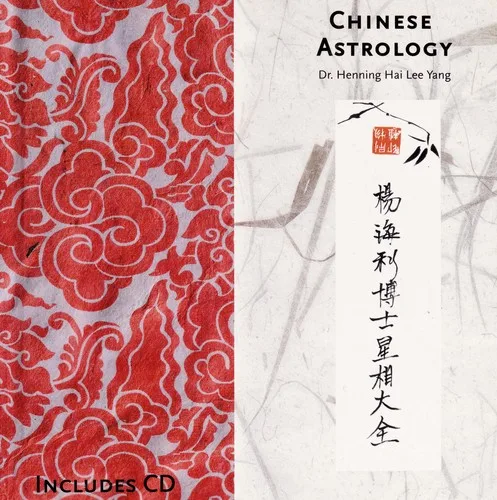




More Free Astrology & Cosmology Books
View all →