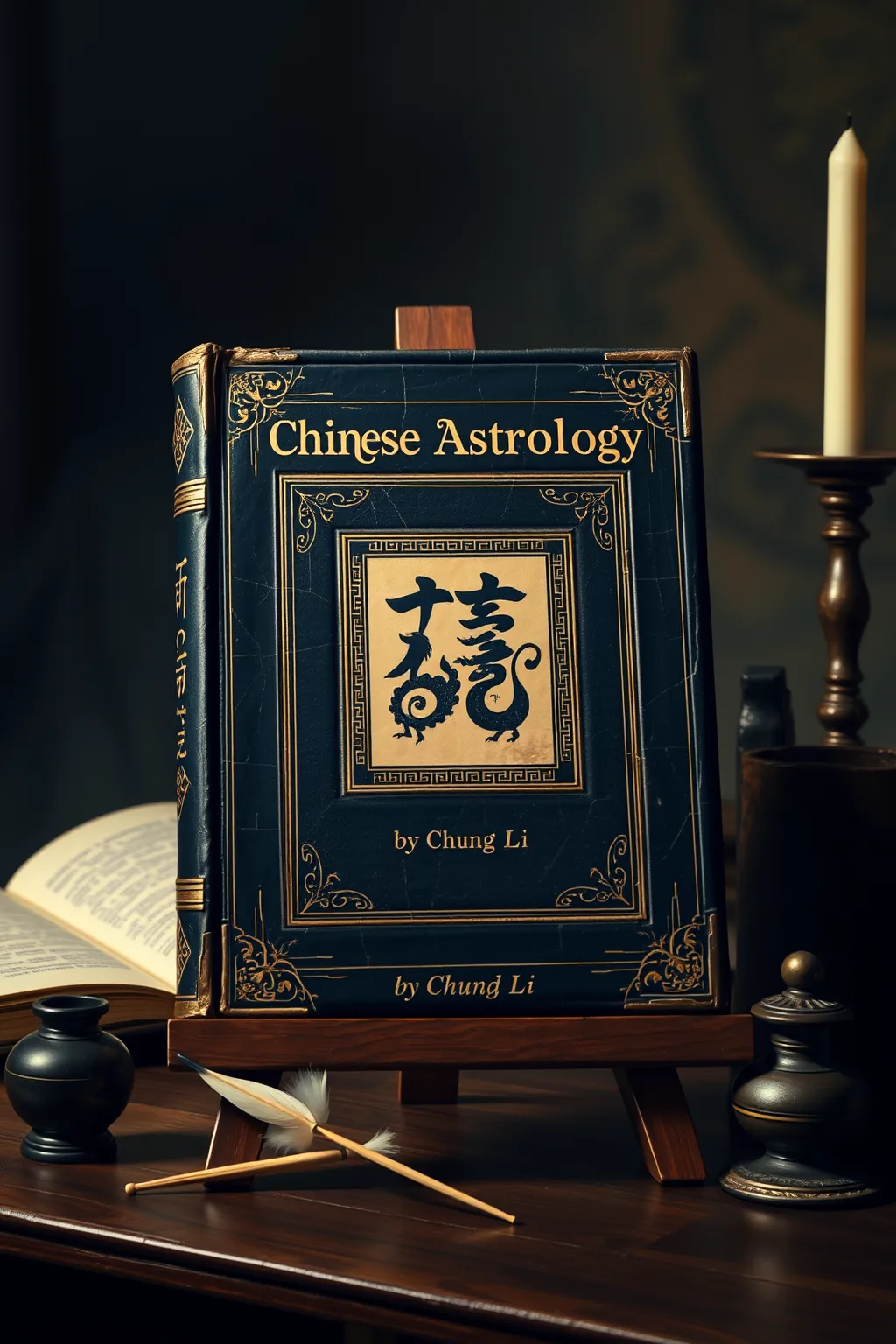
Chinese Astrology
 71
71

Chinese Astrology
Chung Li's "Chinese Astrology" approaches the subject with a refreshing emphasis on self-understanding rather than predictive fortune-telling. The work excels in demystifying the core mechanics of the zodiac, particularly the twelve animal signs and their associated characteristics. A notable strength is its clear explanation of how the system integrates with broader Chinese philosophical concepts, offering a more holistic view. However, the book occasionally feels overly generalized, particularly when touching upon the more intricate subdivisions of month, day, and hour, which are mentioned but not fully explored. The section detailing the interaction between the Heavenly Stems and Earthly Branches, for instance, offers a glimpse into deeper layers but leaves the reader wanting more detailed examples. Despite this, the book provides a solid foundation for anyone interested in this ancient system, steering clear of sensationalism. It offers a grounded perspective on understanding oneself through the lens of the Chinese Zodiac.
📝 Description
71
Chung Li's 2008 book introduces the Chinese Zodiac's philosophical basis.
This book by Chung Li acts as a guide to the Chinese Zodiac system, focusing on its philosophical roots and application to self-understanding. It distinguishes itself from Western astrology by emphasizing internal reflection rather than external predictions. The text details the twelve-year animal cycle, explaining the specific characteristics and energies each year's animal imparts, which in turn shape personality and life direction.
It is written for anyone interested in non-Western astrological systems or seeking a deeper path to self-discovery. The book welcomes those new to Eastern esoteric thought and also appeals to individuals with existing astrological knowledge who want to study the Chinese tradition. Readers engaged with comparative spirituality, cultural studies, or personal growth will find its content valuable.
The Chinese Zodiac system, as presented in this work, has roots stretching back over two thousand years in ancient Chinese astronomy and cosmology. Its development is intertwined with Taoist philosophy and the rhythms of agricultural life. The system's longevity owes much to its skillful combination of numerology, elemental theories, and a traditional Chinese understanding of time's cyclical nature. This book examines how these ancient observations inform personal understanding.
💡 Why Read This Book?
• Gain an understanding of the twelve Chinese Zodiac animals and their inherent characteristics, moving beyond superficial personality traits to explore their philosophical underpinnings as presented in Chung Li's work. • Learn about the cyclical nature of the Chinese Zodiac, specifically the twelve-year sequence, and how it has been integrated into traditional Chinese cosmology and philosophy for millennia. • Discover the concept of the Five Elements (Wu Xing) and Heavenly Stems as they interact with the animal signs, offering a more nuanced interpretive framework than commonly found in Western astrology.
⭐ Reader Reviews
Honest opinions from readers who have explored this book.
❓ Frequently Asked Questions
When was "Chinese Astrology" by Chung Li first published?
The book "Chinese Astrology" by Chung Li was first published on April 26, 2022, making it a relatively recent exploration of this ancient subject.
What is the primary focus of Chung Li's "Chinese Astrology"?
The book's primary focus is on the philosophical and spiritual wisdom of the Chinese Zodiac, emphasizing introspection and self-understanding rather than event prediction.
Does "Chinese Astrology" explain the concept of the Chinese Zodiac animals?
Yes, the book details the twelve-part cycle of years represented by different animals (Rat, Ox, Tiger, etc.) and their associated characteristics.
Are there other layers to Chinese Astrology mentioned in the book besides the year animal?
Yes, Chung Li's work explains that the system is further divided by month, day, and hour of birth, revealing what are referred to as one's inner, true, and secret animals.
Is "Chinese Astrology" suitable for beginners?
Absolutely. It is presented as an introductory guide, making the ancient philosophical and spiritual wisdom of the Chinese Zodiac accessible to those new to the subject.
What makes Chinese Astrology different from Western Astrology according to this book?
The book highlights that Chinese Astrology focuses more on the person and introspection, offering a philosophical perspective, whereas Western astrology often concentrates more on external events.
🔮 Key Themes & Symbolism
The Twelve Animal Cycles
This theme explores the foundational twelve-year cycle of the Chinese Zodiac, where each year is embodied by an animal sign such as the Dragon or Tiger. The work details the unique energetic signatures and personality archetypes associated with each creature. It posits that understanding one's birth animal offers profound self-awareness, moving beyond simple categorization to an appreciation of the inherent qualities and potential challenges that influence an individual's life path and temperament.
Introspection Over Prediction
A central tenet presented is the system's focus on internal understanding rather than external forecasting. Unlike some Western astrological approaches, Chinese Astrology, as outlined by Chung Li, prioritizes self-reflection and personal growth. It encourages readers to examine their inner nature, motivations, and innate capacities, viewing the zodiac as a mirror for self-discovery and philosophical inquiry into the human condition.
Integration of Philosophy and Cosmology
This theme underscores how Chinese Astrology is deeply interwoven with broader philosophical traditions, particularly Taoism, and ancient Chinese cosmology. It's not merely a system of signs but a reflection of a worldview that perceives interconnectedness between the human, terrestrial, and celestial realms. The work touches upon how concepts like Yin and Yang, and the Five Elements, inform the astrological interpretations, providing a rich, holistic framework.
The Multi-layered Birth Chart
Beyond the well-known annual animal, the book introduces the concept of a more complex birth chart. It explains that an individual's astrological profile is further refined by considerations of their birth month, day, and even hour. This layering reveals 'inner,' 'true,' and 'secret' animals, suggesting a nuanced understanding of personality where different aspects of the self are represented by these distinct cosmic influences.
💬 Memorable Quotes
Direct passages from the work, attributed to the author.
“The system is further divided by month, day, and hour of birth—revealing one's inner, true, and secret animals.”
— This highlights the intricate nature of Chinese Astrology, suggesting that a complete understanding of an individual requires looking beyond just the year they were born, incorporating other temporal elements for a richer psychological profile.
“Focusing more on the person than on events, it offers more philosophical and introspective.”
— This statement expresses the book's core premise: Chinese Astrology as a tool for self-knowledge and philosophical exploration, rather than a predictive science focused on external occurrences.
“One of the oldest forms of spiritual wisdom, Chinese astrology remains one of the most popular and powerful zodiac systems.”
— This emphasizes the enduring relevance and widespread appeal of the Chinese Zodiac, positioning it as a significant and potent system of understanding the cosmos and human nature.
“Following a twelve-part cycle of years represented by different animals.”
— This provides a concise explanation of the fundamental structure of the Chinese Zodiac, introducing the core concept of animal-year associations that forms the basis of the entire system.
“This introductory guide reveals the ancient philosophical and spiritual wisdom of the Chinese Zodiac.”
— This frames the book's purpose: to make accessible the deep, ancient knowledge embedded within the Chinese Zodiac, focusing on its wisdom and spiritual dimensions.
🌙 Esoteric Significance
Tradition
The work aligns with the broader tradition of Chinese Metaphysics, a vast field encompassing various divination and cosmological systems that have developed over millennia. It is not directly tied to Western esoteric lineages like Hermeticism or Kabbalah but shares with them an underlying principle of correspondence – the idea that macrocosmic patterns (celestial movements, natural cycles) reflect microcosmic realities (human lives, personality). Its philosophical underpinnings are deeply rooted in Taoism and Confucianism, focusing on harmony, balance, and the cyclical nature of existence.
Symbolism
Key symbols include the twelve animals, each representing a specific set of virtues, flaws, and archetypal energies (e.g., the Dragon symbolizing power and charisma, the Rabbit representing gentleness and sensitivity). Another crucial symbolic layer involves the Five Elements (Wood, Fire, Earth, Metal, Water), which are not merely physical substances but represent dynamic forces and phases of transformation that interact with the animal signs, influencing their expression and potential. The cyclical nature of the calendar itself, marked by the progression of these animals and elements, symbolizes the constant flux and renewal inherent in the cosmos.
Modern Relevance
In contemporary esoteric circles, Chinese Astrology continues to be relevant for its holistic approach to personality and destiny. Thinkers and practitioners in fields like transpersonal psychology, comparative mythology, and mindfulness practices find value in its emphasis on self-awareness and understanding one's place within natural cycles. Schools dedicated to Chinese Metaphysics globally continue to study and apply these principles, often integrating them with Feng Shui and Qimen Dunjia. The system's focus on balance and elemental harmony also speaks to modern ecological and wellness movements.
👥 Who Should Read This Book
• Individuals seeking to explore astrological systems beyond the Western Zodiac, particularly those interested in Eastern philosophies and comparative spirituality. • Beginners to esoteric studies who desire a foundational understanding of the Chinese Zodiac's principles and its introspective applications. • Readers interested in personal development and self-discovery who wish to gain new perspectives on their personality traits and life path through an ancient, culturally rich framework.
📜 Historical Context
The intellectual landscape into which Chung Li's "Chinese Astrology" enters is one shaped by a resurgence of interest in traditional esoteric systems. While the Chinese Zodiac itself has roots stretching back over two millennia, its codification and popularization occurred over centuries, influenced by Taoist philosophy, Buddhist cosmology, and empirical observation of celestial and natural cycles. By the time of its first publication in 2022, the field of astrology was diverse, with Western Tropical astrology and its various offshoots being dominant in many parts of the world. However, a growing counter-movement sought to explore non-Western traditions, driven by globalization and a desire for alternative perspectives on spirituality and self-understanding. Unlike the Hellenistic astrological traditions that heavily influenced Western practices, Chinese Astrology is deeply embedded in a different cosmological framework, emphasizing cyclical time, elemental interactions (Wu Xing), and the concept of Qi (vital energy). Its reception, particularly in a contemporary context, often positions it as a complementary system, offering insights into character and destiny through a lens distinct from Cartesian dualism or the solar-centric focus of Western systems. There was no major censorship or specific reception event noted for this particular 2022 publication, but its existence speaks to the ongoing academic and popular engagement with ancient wisdom traditions.
📔 Journal Prompts
The twelve animal archetypes in Chinese Astrology; consider your birth year animal's core traits.
The concept of 'inner, true, and secret animals'; reflect on how these might represent different facets of your personality.
The philosophical focus on the person over events; how does this perspective shift your view of astrological interpretation?
The cyclical nature of the years represented by different animals; contemplate patterns you observe in your own life's cycles.
The integration of the Five Elements with the animal signs; explore potential elemental influences on your core animal characteristics.
🗂️ Glossary
Chinese Zodiac
A cyclical system based on twelve years, each represented by an animal sign (Rat, Ox, Tiger, Rabbit, Dragon, Snake, Horse, Goat, Monkey, Rooster, Dog, Pig), used in Chinese culture to describe personality traits and predict destiny.
Twelve-part cycle
Refers to the fundamental sequence of twelve years, with each year associated with a specific animal and its unique characteristics, forming the basis of the Chinese astrological system.
Inner, True, and Secret Animals
Concepts within Chinese Astrology that represent deeper layers of an individual's personality, derived from astrological calculations based on the month, day, and hour of birth, in addition to the year.
Heavenly Stems
A set of ten cyclical characters used in traditional Chinese calendars and astrology, often paired with the Earthly Branches (animals) to provide more detailed and nuanced interpretations.
Five Elements (Wu Xing)
The five fundamental elements – Wood, Fire, Earth, Metal, and Water – that are believed to interact and influence each other, playing an important role in Chinese Astrology by modifying the characteristics of the animal signs.
Philosophical Wisdom
The underlying ethical, spiritual, and metaphysical principles embedded within the Chinese Zodiac system, emphasizing self-understanding, balance, and harmony rather than mere prediction.
Introspective
Characterized by or given to examination of one's own thoughts and feelings; the book emphasizes this approach to understanding oneself through astrology.