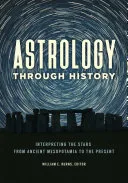
Astrology through History
 82
82

Astrology through History
William E. Burns's *Astrology through History* is a monumental undertaking, offering an alphabetically arranged compendium that functions as a much-needed scholarly reference. Its strength lies in its sheer breadth, extending beyond the familiar Western tradition to encompass astrological thought in Islamic, Indian, East Asian, and Mesoamerican civilizations. This comparative approach is crucial for understanding astrology not as a monolithic entity but as a diverse, culturally specific practice. For instance, the detailed entries on Mesopotamian astrology, tracing its roots back to the second millennium BCE, provide essential foundational context. However, the encyclopedic format, while thorough, can sometimes feel dry, lacking narrative flow. The book's limitation is its academic focus; it is a reference for historians and scholars, not a guide for aspiring practitioners. Burns’s work is an indispensable, if dense, resource for anyone serious about the historical and cultural dimensions of astrology.
📝 Description
82
William E. Burns's Astrology through History traces celestial interpretation from ancient Mesopotamia to the 21st century.
Published by William E. Burns, Astrology through History offers a wide survey of astrological traditions across millennia and continents. The book details historical astrological practices, beginning with their roots in ancient Mesopotamia and extending to the 21st century. It covers not only Western astrology but also its parallels in Islamic, Indian, East Asian, and Mesoamerican cultures, showing the global and lasting nature of astrological thought. This work is an academic resource for understanding how observing and interpreting the stars shaped human intellectual, cultural, and social life.
This volume is primarily for academic researchers, graduate students, and serious amateur historians of science, magic, and culture. Its scholarly approach and broad scope are valuable for anyone studying astrology's historical role in intellectual life, from ancient cosmologies to modern societies. Individuals interested in comparative cultural studies, the history of ideas, or the development of divination practices will find substantial material. The book focuses on a rigorously researched overview, not introductory astrological instruction.
This book examines astrology not as mere superstition, but as a complex system of thought that has informed human understanding of the cosmos and its relation to earthly events for millennia. It places astrological practices within their specific historical and cultural contexts, acknowledging their role in shaping intellectual traditions and societal structures. By detailing astrological systems across diverse global cultures, the work highlights a shared human impulse to find meaning in celestial patterns, a practice deeply embedded in various esoteric traditions worldwide.
💡 Why Read This Book?
• Gain a comprehensive understanding of astrological traditions beyond the Western canon, examining specific developments in Islamic and Indian astrology as detailed in the book's entries. • Appreciate the historical integration of astrology with intellectual life, understanding its role in ancient Mesopotamia and its impact on various cultures as documented by Burns. • Discover the academic recognition of astrology's significance by historians and sociologists, as highlighted in the book's exploration of its modern cultural importance.
⭐ Reader Reviews
Honest opinions from readers who have explored this book.
❓ Frequently Asked Questions
What is the primary focus of Astrology through History?
The primary focus is a historical and cultural survey of astrological practices worldwide, presented through alphabetically arranged entries from ancient Mesopotamia to the 21st century, covering Western, Islamic, Indian, East Asian, and Mesoamerican traditions.
Is Astrology through History suitable for beginners learning to practice astrology?
No, this book is an academic reference for historians and scholars interested in the intellectual and cultural history of astrology, rather than a practical guide for astrological practice.
Which ancient civilizations' astrology is covered in the book?
The book covers astrological traditions originating in ancient Mesopotamia, alongside others from the Islamic, Indian, East Asian, and Mesoamerican worlds.
When was Astrology through History first published?
Astrology through History by William E. Burns was first published on July 20, 2018.
What academic disciplines does the book engage with regarding astrology?
The book engages with history, sociology, and anthropology, recognizing astrology's centrality to past intellectual life and its importance in modern cultures.
Does the book only cover Western astrology?
No, the book explicitly surveys the Western tradition but also explores Islamic, Indian, East Asian, and Mesoamerican astrology.
🔮 Key Themes & Symbolism
Global Astrological Traditions
This work meticulously chronicles the diverse manifestations of astrology across various cultures and epochs. It moves beyond a singular Western-centric view to detail the distinct astrological systems developed in Islamic, Indian, East Asian, and Mesoamerican societies. By examining these varied traditions, Burns illustrates how celestial observation and interpretation served distinct philosophical, religious, and social functions, highlighting the universal human impulse to find meaning in the cosmos, yet demonstrating its culturally specific expressions.
Astrology and Intellectual History
Burns positions astrology as a vital component of past intellectual life, intricately linked with the development of astronomy, philosophy, and medicine. The book demonstrates how astrological frameworks influenced worldview and decision-making in historical societies, from royal courts to scholarly circles. It underscores that understanding historical thought requires engaging with astrological systems not as mere superstition, but as sophisticated interpretive tools that shaped scientific inquiry and cultural understanding for centuries.
The Evolution of Astrological Practice
The book traces the historical trajectory of astrology, charting its origins in ancient Mesopotamia and its subsequent evolution through various cultural filters. It explores how concepts, techniques, and theories were transmitted, adapted, and transformed across different civilizations and time periods. This evolutionary perspective reveals astrology as a dynamic field, constantly reshaped by new discoveries, philosophical shifts, and societal needs, rather than a static body of knowledge.
Sociocultural Importance of Astrology
Astrology through History highlights the significant role astrology has played in the social and cultural fabric of numerous societies. It examines how astrological beliefs and practices permeated everyday life, influenced political decisions, and informed religious cosmology. The book underscores that astrology was often a central organizing principle for understanding human destiny and the natural world, reflecting its deep integration into the broader cultural landscape.
💬 Memorable Quotes
Direct passages from the work, attributed to the author.
“Alphabetically arranged entries cover the history of astrology from ancient Mesopotamia to the 21st century.”
— This direct description from the blurb highlights the book's encyclopedic structure and vast chronological scope, emphasizing its utility as a comprehensive reference tool for researchers.
“In addition to surveying the Western tradition, the book explores Islamic, Indian, East Asian, and Mesoamerican astrology.”
— This statement underscores the book's significant contribution by offering a comparative, global perspective on astrology, moving beyond Eurocentric narratives to include diverse cultural expressions.
“The field of astrology is growing rapidly, as historians recognize its centrality to the intellectual life of the past.”
— This highlights the academic re-evaluation of astrology, positioning it as a subject worthy of serious scholarly inquiry rather than mere dismissal, and signaling the book's contribution to this trend.
“Sociologists and anthropologists treat its importance in a number of modern cultures.”
— This points to the book's relevance in understanding contemporary societal phenomena, illustrating that astrological beliefs and practices continue to hold significance in various modern cultural contexts.
“Despite the historical and cultural significance of the sub-discipline...”
— This suggests the book addresses the often-underestimated importance of astrology, implying that its historical and cultural weight has been overlooked and that this work aims to rectify that oversight.
🌙 Esoteric Significance
Tradition
While not strictly adhering to a single esoteric lineage, *Astrology through History* engages with the historical roots of many traditions that have esoteric dimensions. It acknowledges astrology's pervasive influence across cultures, many of which developed complex metaphysical and occult systems. By detailing the evolution of astrological thought from Mesopotamian beginnings through to its integration into various philosophical and religious frameworks, the book provides essential historical context for understanding movements like Hermeticism, Kabbalah, and Theosophy, which often incorporated or built upon astrological principles.
Symbolism
The book implicitly explores a vast array of astrological symbols and motifs that carry esoteric weight. For instance, the twelve signs of the zodiac, originating from ancient Babylonian astronomy, became foundational symbols within Western Hermeticism and Kabbalah, representing archetypal forces and stages of spiritual development. Similarly, the planetary intelligences and their associated hierarchies, a concept central to astrological practice across many cultures, represent a complex symbolic language for understanding cosmic influence and divine order, linking celestial phenomena to terrestrial events and spiritual states.
Modern Relevance
Contemporary thinkers and practitioners in fields ranging from cultural history to comparative religion draw upon the detailed historical accounts found in works like *Astrology through History*. Scholars studying the resurgence of interest in divination and esoteric practices in the 21st century find invaluable context here. Furthermore, modern astrological communities, while often focused on practice, benefit from understanding the deep historical roots and diverse cultural expressions of their art, as meticulously documented by Burns, fostering a more informed and historically grounded approach.
👥 Who Should Read This Book
['• Academic historians and students of comparative religion: They will gain a comprehensive, cross-cultural understanding of astrological systems as historical phenomena influencing belief and practice.', '• Researchers in the history of science and intellectual history: This book offers critical context for understanding the role of astrology in shaping scientific thought and philosophical discourse across millennia.', '• Cultural anthropologists and sociologists: Readers interested in the enduring influence of astrology in modern societies will find detailed insights into its historical development and societal integration.']
📜 Historical Context
William E. Burns's *Astrology through History*, published in 2018, emerges within a contemporary academic landscape that has increasingly recognized the value of studying esoteric traditions with scholarly rigor. The late 20th and early 21st centuries saw a burgeoning interest among historians of science and culture in previously marginalized subjects, including alchemy, magic, and astrology. Unlike earlier periods where astrology was often dismissed as mere superstition, scholars like Nicholas Campion, whose extensive works on astrology's history were influential, paved the way for more nuanced analyses. Burns's book directly engages with this intellectual current, providing a comprehensive global overview that situates astrological systems as crucial elements of past intellectual life and contemporary cultural practices. Its publication date places it firmly within an era where comparative studies of global belief systems are highly valued, contributing to a broader understanding of humanity's relationship with the cosmos.
📔 Journal Prompts
The development of astrological systems from ancient Mesopotamia: Trace key conceptual shifts.
The integration of Western astrology with Islamic and Indian traditions: Identify points of cross-cultural influence.
The role of astrology in historical intellectual life: Reflect on its connection to astronomy and medicine.
Modern cultural significance of astrology: Analyze its continued presence and impact.
Comparative analysis of East Asian and Mesoamerican astrology: Discuss unique cosmological frameworks.
🗂️ Glossary
Ancient Mesopotamia
Refers to the civilizations of the Tigris-Euphrates river valley, including Sumerians, Akkadians, Babylonians, and Assyrians, where some of the earliest recorded astrological observations and practices originated.
Western Tradition
Encompasses the astrological systems that developed primarily in Europe, influenced by Hellenistic, Roman, and later Arabian and medieval European sources, forming the basis of modern Western astrology.
Islamic Astrology
The astrological practices and theories developed and transmitted within the Islamic world, often preserving and expanding upon Hellenistic and Persian traditions, and notably influencing European astrology.
Indian Astrology (Jyotisha)
A traditional Hindu system of astrology, deeply intertwined with Vedic cosmology and philosophy, featuring distinct zodiacal calculations and interpretive methods.
East Asian Astrology
Refers to astrological systems originating in East Asia, such as Chinese astrology, which is based on a sexagenary cycle and lunar calendar, and its related traditions in Korea and Vietnam.
Mesoamerican Astrology
The complex calendrical and divinatory systems developed by pre-Columbian civilizations in Mesoamerica, such as the Maya and Aztec, which were intricately linked to religious and social life.
Intellectual Life
The collective thoughts, ideas, and scholarly pursuits of a society or historical period, often encompassing philosophy, science, religion, and the arts.