Astrology
 82
82

Astrology
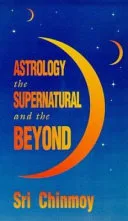
Sri Chinmoy's "Astrology" offers a peculiar, almost anti-astrological perspective, treating celestial bodies and occult phenomena as secondary to the primacy of divine will and individual spiritual striving. The book’s strength lies in its unwavering focus on the inner life, framing all external events, including supposed astrological influences, as opportunities for spiritual growth. However, its limitation is the absence of conventional astrological frameworks; readers seeking natal chart analysis or predictive techniques will find none. A notable section discusses how 'God's grace transcends fate,' presenting a compelling argument for spiritual agency over deterministic forces. The work ultimately serves less as a guide to astrological interpretation and more as a spiritual discourse on overcoming perceived limitations through divine consciousness. It is a text for the advanced seeker, not the curious beginner.
📝 Description
82
Sri Chinmoy's 1973 book "Astrology" goes beyond horoscopes to address spiritual causation.
Published in 1973, Sri Chinmoy's "Astrology" is not a typical guide to horoscopes. Instead, it presents a spiritual question and answer format that tackles esoteric subjects beyond everyday planetary influences. The book confronts phenomena such as ghosts, spirits, and hostile forces. Chinmoy places these within a context of spiritual causes and divine intervention. He examines the nature of occult power, and the subtle signs, both positive and negative, that appear on one's spiritual path.
This work is for serious spiritual seekers who have moved beyond basic occult ideas. It addresses deeper questions about spiritual conflict, divine mercy, and the balance between fate and personal choice. Readers who question standard astrological views and seek answers rooted in inner change and a connection to the divine will find value here. A basic grasp of spiritual principles is beneficial.
First released in 1973, "Astrology" appeared during a time of growing Western interest in Eastern spiritual ideas. The 1970s saw many Indian spiritual teachers gain followings in the West. Chinmoy himself began his public spiritual work in New York around this time. This period sought direct spiritual experience and questioned materialistic views, making works that discussed occult events and spiritual causes relevant to those on the spiritual vanguard.
💡 Why Read This Book?
• Gain a unique perspective on fate and free will, learning how Sri Chinmoy posits divine grace can supersede astrological determinism, as discussed in his analyses of prophecy and destiny. • Understand the spiritual interpretation of 'hostile forces' and warning signs, moving beyond simplistic occult notions to grasp their role in inner transformation, a concept explored throughout the Q&A format. • Discover how astrological and occult phenomena are reframed as spiritual indicators rather than fixed predictions, offering a path to self-realization grounded in divine connection, as presented in the book's original publication year of 1973.
⭐ Reader Reviews
Honest opinions from readers who have explored this book.
❓ Frequently Asked Questions
Does Sri Chinmoy's 'Astrology' provide birth chart readings?
No, Sri Chinmoy's "Astrology" does not offer traditional birth chart readings or horoscopes. Its focus is on answering seekers' questions about esoteric topics, including spiritual causation, divine grace, and the nature of occult phenomena, rather than predictive astrology.
What does Sri Chinmoy say about hostile forces?
In "Astrology," Sri Chinmoy discusses 'hostile forces' as potential psychic obstacles or negative influences that can impede spiritual progress. He frames them within a context of spiritual warfare, suggesting they can be overcome through divine grace and dedicated spiritual practice.
How does the book approach the concept of fate?
The book explores how God's grace is presented as a force that can transcend or transform fate. It challenges deterministic views by emphasizing the power of divine intervention and the seeker's inner spiritual capacity to overcome predetermined outcomes.
Is 'Astrology' by Sri Chinmoy a practical guide to using astrological techniques?
No, it is not a practical guide for astrological techniques. Published in 1973, the work addresses spiritual questions, including those related to occult power and prophecy, from a philosophical and devotional standpoint, not as a manual for astrological practice.
What kind of questions does 'Astrology' answer?
The book answers questions on unusual spiritual and esoteric topics such as ghosts, planets, spirits, hostile forces, prophecy, occult power, warning signs, positive signs, and how divine grace interacts with fate.
When was Sri Chinmoy's 'Astrology' first published?
Sri Chinmoy's "Astrology" was first published in 1973. This places its origins within a period of significant interest in Eastern spirituality and esoteric studies in the Western world.
🔮 Key Themes & Symbolism
Divine Grace Overcoming Fate
A central theme is the concept of divine grace as a potent force capable of altering or nullifying the effects of fate and astrological predispositions. Chinmoy posits that through dedicated spiritual practice and surrender, seekers can access a higher power that transcends karmic patterns and predetermined destinies. This perspective shifts the focus from passive acceptance of astrological influence to active spiritual engagement, where divine intervention plays a central role in shaping one's path and overcoming obstacles.
Spiritual Interpretation of Phenomena
The book reinterprets phenomena often discussed in occult circles, such as ghosts, spirits, and 'hostile forces.' Rather than viewing them solely as external entities, Chinmoy often frames them as manifestations of psychic energies or internal challenges. Warning signs and positive signs are discussed not merely as predictive omens but as spiritual indicators of one's inner state and progress on the path to self-realization. The emphasis is on understanding these through a lens of spiritual causation and divine guidance.
Occult Power and Prophecy
Chinmoy addresses questions concerning occult power and the nature of prophecy. He suggests that true spiritual power comes from the soul and divine connection, not from superficial manipulation of esoteric forces. Prophecy is viewed not as an absolute prediction but as a potential future glimpsed through higher consciousness, which can be influenced by present spiritual action. The work encourages seekers to rely on inner guidance and divine wisdom rather than external or arcane powers.
Planets as Spiritual Indicators
While the title is 'Astrology,' the book treats planets and celestial bodies not as primary drivers of destiny but as secondary indicators of spiritual conditions. Their influence is often seen as subordinate to the soul's journey and the unfolding of divine will. The work implies that understanding planetary positions can offer insights into one's spiritual challenges and opportunities, but ultimate control and transformation lie within the spiritual aspirant's connection to the Divine.
💬 Memorable Quotes
Direct passages from the work, attributed to the author.
“God's grace transcends fate.”
— This concise statement expresses a core philosophical tenet of the book, asserting that divine intervention possesses a power superior to any predetermined destiny or astrological influence, offering hope and agency to the spiritual seeker.
“Warning signs and positive signs.”
— These phrases refer to spiritual indicators that alert the seeker to potential pitfalls or favorable conditions on their path. They are presented not as fixed predictions but as opportunities for increased awareness and conscious spiritual action.
“Hostile forces can be confronted.”
— This suggests that challenges perceived as external negative influences or spiritual adversaries are not insurmountable. The work implies that through inner strength and divine connection, these forces can be faced and overcome.
“The nature of occult power.”
— This points to an exploration of forces beyond the mundane, questioning their source and efficacy. The book likely distinguishes between true spiritual power derived from the soul and more superficial or potentially misleading arcane abilities.
“Ghosts, spirits, and planets.”
— These are presented as subjects of inquiry for the spiritually curious, framed within a broader discussion of esoteric phenomena and their place within a divinely ordered universe, rather than as objects of fear or deterministic belief.
🌙 Esoteric Significance
Tradition
While drawing on a universal spiritual philosophy, Chinmoy's work departs from strict adherence to any single esoteric lineage like Hermeticism or Kabbalah. It aligns more with devotional traditions emphasizing the primacy of divine grace and the soul's journey towards God-realization. The approach to astrological and occult phenomena is functional, serving to illuminate the path of inner transformation rather than adhering to specific ritualistic or divinatory systems.
Symbolism
The book engages with symbols such as 'planets' and 'spirits,' reinterpreting them not as fixed entities of fate or external forces but as indicators within a larger spiritual cosmology. 'Hostile forces' can symbolize internal psychic obstacles or negative mental states that the seeker must overcome. 'Warning signs' and 'positive signs' function symbolically as intuitive nudges or spiritual feedback mechanisms guiding the aspirant.
Modern Relevance
In contemporary spirituality, which often seeks practical application and integration of esoteric knowledge, Chinmoy's approach remains relevant. Thinkers and practitioners interested in the intersection of consciousness, spirituality, and seemingly external phenomena find value in his emphasis on inner causation and divine agency over deterministic interpretations of astrology or occultism. His Q&A format also appeals to the demand for direct, accessible spiritual guidance.
👥 Who Should Read This Book
['• Advanced spiritual seekers questioning the nature of fate and free will, looking for a perspective that prioritizes divine grace over deterministic astrological influences.', '• Individuals interested in the philosophical underpinnings of esoteric phenomena like ghosts, spirits, and psychic forces, seeking a spiritual interpretation rather than a purely occult one.', "• Followers of Sri Chinmoy's teachings or those exploring devotional paths that emphasize inner transformation and the soul's direct connection with the Divine."]
📜 Historical Context
Sri Chinmoy's "Astrology," first published in 1973, emerged during a period when Western interest in Eastern spirituality was burgeoning. The 1970s saw figures like Meher Baba, Swami Prabhupada, and Maharishi Mahesh Yogi gaining significant followings, popularizing concepts from Vedanta, Yoga, and other Indian philosophical traditions. Chinmoy, who began his public spiritual activities in New York in 1964, presented a distinct path focused on inner transformation and the pursuit of God-realization. Unlike the more academic explorations of comparative religion or the analytical astrology prevalent in Western esotericism, Chinmoy's work offered direct spiritual answers to seekers' questions. This era also witnessed a counter-cultural rejection of purely materialistic worldviews, creating fertile ground for metaphysical and esoteric literature that addressed phenomena like psychic powers, fate, and spiritual causation.
📔 Journal Prompts
The role of divine grace in transcending fate.
Confronting 'hostile forces' on the spiritual path.
Interpreting warning signs as spiritual indicators.
The ultimate source of occult power.
Reflecting on planetary influences as spiritual opportunities.
🗂️ Glossary
Divine Grace
A spiritual force or blessing bestowed by the Divine, believed to have the power to override karmic destiny, facilitate spiritual progress, and offer protection and guidance to the seeker.
Fate
The predetermined course of events, often associated with astrological influences or karma. The book posits that fate is not absolute and can be transformed or transcended through spiritual means.
Hostile Forces
Entities or influences, often perceived as negative or adversarial, that can impede spiritual growth. In Chinmoy's philosophy, these can be external psychic energies or internal mental obstacles.
Occult Power
Abilities or influences beyond the scope of ordinary physical laws, often associated with esoteric practices. Chinmoy differentiates true spiritual power derived from the soul from other forms of psychic or arcane abilities.
Prophecy
Foresight into future events, often perceived as divinely inspired. The book treats prophecy not as an unalterable decree but as a glimpse into potential futures guided by higher consciousness.
Warning Signs
Indications or omens that alert an individual to potential danger, spiritual pitfalls, or negative influences, serving as a prompt for increased vigilance and spiritual awareness.
Positive Signs
Indications or omens that suggest favorable conditions, spiritual progress, or divine favor, encouraging the seeker on their path.