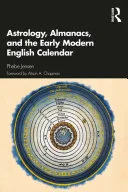
Astrology, Almanacs, and the Early Modern English Calendar
 71
71

Astrology, Almanacs, and the Early Modern English Calendar
Phebe Jensen’s "Astrology, Almanacs, and the Early Modern English Calendar" admirably demystifies texts that have long seemed opaque to modern eyes. The book’s strength lies in its clear exposition of the complex astrological and medical theories underpinning these documents, particularly its explanation of how the English Reformation influenced calendar standardization. Jensen expertly guides the reader through the evolution of the almanac, showcasing its role beyond mere timekeeping to become a vital medium for cultural discourse. A slight limitation is the dense academic prose in places, which occasionally hinders the accessibility promised in the introduction. However, the chapter detailing the integration of astrological prognostication into daily life, especially concerning harvest cycles and public health, is particularly illuminating. This work is an indispensable resource for historians and curious lay readers alike.
📝 Description
71
Phebe Jensen's 2023 book deciphers the complex meanings within early modern English calendars and almanacs.
This work explains the cosmological, astrological, and medical theories that shaped early modern English calendars and almanacs. It follows the calendar's development from medieval times through the English Reformation, showing how the almanac became a significant cultural item. For students of English cultural, religious, or scientific history between 1500 and 1700, this book offers necessary tools. It provides the theoretical background to understand primary sources that were important in daily life, revealing popular beliefs, scholarly arguments, and how time was perceived. Understanding these texts leads to a better grasp of the period's intellectual world.
The book demonstrates that English almanacs were more than simple date records. They served as active channels for astrological predictions, medical advice, moral lessons, and political commentary. Examining their content and changes offers a distinct view of early modern society's concerns, hopes, and intellectual currents. It shows how the era connected divine will with natural philosophy. Jensen's research carefully rebuilds the astrological and medical systems used to interpret calendar information. It details the belief that celestial arrangements affected earthly events and human health, and how this idea was built into the yearly cycles of almanacs.
This book situates early modern English almanacs within a tradition where celestial observation and terrestrial affairs were deeply intertwined. It examines how astrological frameworks, which understood cosmic influences on human life and events, were not fringe beliefs but integral to the intellectual and daily life of the period. The work shows how these systems were embedded in commonly circulated texts, demonstrating a widespread engagement with symbolic interpretations of the cosmos and their perceived impact on health, fortune, and the social order. It highlights a historical moment where natural philosophy and esoteric traditions coexisted and informed popular understanding.
💡 Why Read This Book?
• Learn the foundational astrological and medical theories that structured early modern timekeeping, enabling you to read historical almanacs with unprecedented clarity, as detailed in Jensen's analysis of humoral theory. • Understand the specific impact of the English Reformation on calendar reform and the subsequent evolution of the English almanac as a cultural and informational medium, a key focus in Chapter 2. • Gain practical skills to interpret the cosmological and religious content of historical calendars, unlocking insights into the worldview of figures like Nicholas Culpeper, who relied on such texts.
⭐ Reader Reviews
Honest opinions from readers who have explored this book.
❓ Frequently Asked Questions
What specific astrological concepts does "Astrology, Almanacs, and the Early Modern English Calendar" explain?
The book details concepts such as planetary dignities, aspects, houses, and the calculation of celestial positions, explaining how these were used to generate forecasts and interpret events within the early modern context.
How did the English Reformation affect calendar production?
The Reformation led to shifts in religious observances and the standardization of calendar formats, influencing the content and structure of almanacs. Jensen discusses the move away from purely ecclesiastical calendars towards more secular and informational ones.
What is a key difference between medieval and early modern calendars discussed in the book?
Early modern calendars, influenced by scientific advancements and Reformation pressures, began to incorporate more secular information like astronomical data, prognostication, and practical advice, moving beyond the primarily religious focus of medieval versions.
Can this book help me understand medical advice found in old almanacs?
Yes, it provides a thorough grounding in the humoral theory and astrological medicine prevalent during the period, explaining how physicians and laypeople used almanacs for health-related predictions and remedies.
Who was Phebe Jensen and what is her expertise?
Phebe Jensen is a scholar specializing in the history of science, literature, and culture. Her work on early modern calendars demonstrates expertise in the intellectual and social history of the period.
Is "Astrology, Almanacs, and the Early Modern English Calendar" suitable for beginners?
Yes, the book is designed as a handbook for modern readers, offering clear explanations of complex historical theories and practices, making it accessible even without prior specialized knowledge.
🔮 Key Themes & Symbolism
Calendar as Cultural Artifact
This work positions early modern calendars and almanacs not merely as timekeeping devices but as crucial cultural artifacts. Jensen illustrates how these texts served as platforms for disseminating astrological forecasts, medical advice, and religious doctrine, reflecting the complex worldview of the era. By tracing their evolution from medieval liturgical calendars through the English Reformation, the book reveals how these documents mirrored societal anxieties and intellectual shifts, becoming essential tools for understanding daily life, popular belief, and the very construction of time itself.
Astrological and Medical Frameworks
Jensen meticulously reconstructs the cosmological, astrological, and medical theories that provided the interpretive lens for early modern calendars. The book explains how concepts like planetary influences, humoral theory, and celestial prognostication were integrated into almanac content, influencing everything from agricultural advice to predictions of public events. This deep dive into the period's scientific understanding allows readers to grasp the rationale behind almanac entries, revealing a society deeply connected to celestial and terrestrial forces.
Reformation's Influence on Time
The book highlights the lasting impact of the English Reformation on the development and content of early modern calendars and almanacs. Jensen traces how religious upheavals led to shifts in the ecclesiastical calendar and encouraged the incorporation of more secular information. This context is crucial for understanding the almanac's transformation into a versatile medium, balancing religious observance with practical knowledge, political commentary, and astrological prediction, thereby shaping a distinctively early modern approach to temporality.
Decoding Popular Knowledge
Jensen's handbook is a key to unlocking the popular knowledge embedded within early modern calendars and almanacs. It clarifies the specialized language and concepts—from astrological calculations to medical remedies—that underpinned these texts. By providing a clear framework for understanding these sources, the book empowers modern readers to engage directly with the intellectual and spiritual lives of people in the period, offering a unique window into their understanding of the cosmos and their place within it.
💬 Memorable Quotes
Direct passages from the work, attributed to the author.
“Calendars and almanacs were not passive records but active agents in shaping how early modern English people understood time, health, and fortune.”
— This statement emphasizes the dynamic role these texts played in daily life, suggesting they actively influenced perceptions and decisions rather than just reflecting them.
“The transition from medieval to early modern calendrical practices occurred against the backdrop of significant religious and scientific change.”
— This highlights the historical forces, particularly the Reformation and emerging scientific thought, that reshaped how time was conceived and recorded in England.
“Understanding humoral theory is essential for grasping the medical advice presented in early modern almanacs.”
— This points to the necessity of knowing the dominant medical paradigm of the era to make sense of the health-related content found in historical almanacs.
“Astrological prognostication was deeply interwoven with the agricultural and social rhythms of early modern life.”
— This interpretation underscores the pervasive influence of astrology, showing its practical application in everyday matters like farming and community events.
“The English almanac evolved into a versatile medium, carrying everything from divine providence to mundane notices.”
— This captures the broad spectrum of content found in almanacs, illustrating their complex nature as communication tools in the period.
🌙 Esoteric Significance
Tradition
This work primarily engages with the Hermetic and Neoplatonic currents that underpinned early modern Western esotericism. The detailed exploration of astrological cosmology and medical theory connects directly to the Hermetic principle of 'As Above, So Below,' where celestial patterns are seen as reflecting and influencing terrestrial events and human health. While not strictly a grimoire or ritual text, it illuminates the foundational knowledge base from which many magical and divinatory practices of the era were derived, fitting within the broader tradition of occult philosophy.
Symbolism
Central symbols explored include the zodiacal signs and their associated planetary rulers, representing archetypal forces and influences on human character and destiny. The concept of the 'Man of Signs' or 'Microcosmus,' depicted in many almanacs, symbolizes the macrocosm-microcosm correspondence, linking celestial bodies and configurations to specific parts of the human body, a core tenet in Hermetic medicine. The cyclical nature of the calendar itself, marked by solstices, equinoxes, and planetary cycles, represents the eternal rhythm of creation and dissolution.
Modern Relevance
Contemporary practitioners of Western esotericism, particularly astrologers and those interested in Hermeticism, draw heavily on the historical understanding provided by Jensen's work. It informs modern approaches to medical astrology and psychological astrology by grounding them in their historical development. Furthermore, scholars and occultists researching the history of divination, folk magic, and the integration of esoteric knowledge into everyday life find this book essential for understanding the conduits through which such beliefs were disseminated and maintained.
👥 Who Should Read This Book
• Students of early modern English history and culture seeking to understand the primary texts that structured daily life and belief systems. • Practitioners and scholars of Western esotericism interested in the historical foundations of astrology, medical cosmology, and their integration into popular literature. • Researchers in the history of science and medicine who need to grasp the pre-modern understanding of celestial influence and humoral theory as presented in accessible almanacs.
📜 Historical Context
Phebe Jensen's work situates "Astrology, Almanacs, and the Early Modern English Calendar" within the tumultuous intellectual and religious field of England, primarily from the late 15th to the 17th centuries. This era witnessed the profound shifts of the English Reformation, which challenged established religious practices and the authority of the Church, directly impacting the content and form of calendars. Simultaneously, the burgeoning Scientific Revolution and the enduring influence of Renaissance humanism fostered new ways of understanding the cosmos and human place within it. The book traces the evolution of the calendar from its medieval, predominantly religious function to its early modern format, which increasingly incorporated secular information. Jensen examines the almanac as a key site where popular astrology, medical theories (like humoralism), and nascent scientific observations intersected. The period saw intense debate over astrology, with figures like William Lilly gaining prominence, while others faced criticism or censorship. Jensen's work implicitly engages with scholars who have studied the history of science and popular culture, such as Keith Thomas, by providing a focused lens on the calendrical texts that permeated everyday life.
📔 Journal Prompts
The cosmological theories underpinning almanac construction.
Early modern conceptions of time as influenced by the Reformation.
The integration of planetary dignities in astrological prognostication.
Humoral theory's application to medical advice in calendars.
The evolution of the English almanac from medieval to early modern formats.
🗂️ Glossary
Humoral Theory
The ancient medical doctrine, prevalent in the early modern period, that health depends on the balance of four bodily fluids (humors): blood, phlegm, yellow bile, and black bile, each associated with specific qualities and temperaments.
Prognostication
The practice of forecasting future events, particularly weather, health outcomes, or significant occurrences, based on astrological calculations, celestial observations, or other divinatory methods.
Cosmology
The study of the origin, evolution, and structure of the universe, including the relationship between celestial bodies and terrestrial phenomena, as understood within a specific historical or philosophical framework.
English Reformation
The series of political and religious events in 16th-century England by which the Church of England broke away from the authority of the Pope and the Roman Catholic Church.
Planetary Dignities
A system in astrology that assigns relative strengths or weaknesses to planets based on their placement within zodiacal signs, influencing the interpretation of their effects.
Microcosm/Macrocosm
The philosophical concept that the human being (microcosm) is a reflection or miniature model of the universe (macrocosm), with corresponding structures and influences.
Man of Signs
An anatomical illustration often found in early modern almanacs, depicting the human body with its parts linked to the twelve signs of the zodiac and corresponding planets.