The Esoteric Tarot
 74
74

The Esoteric Tarot
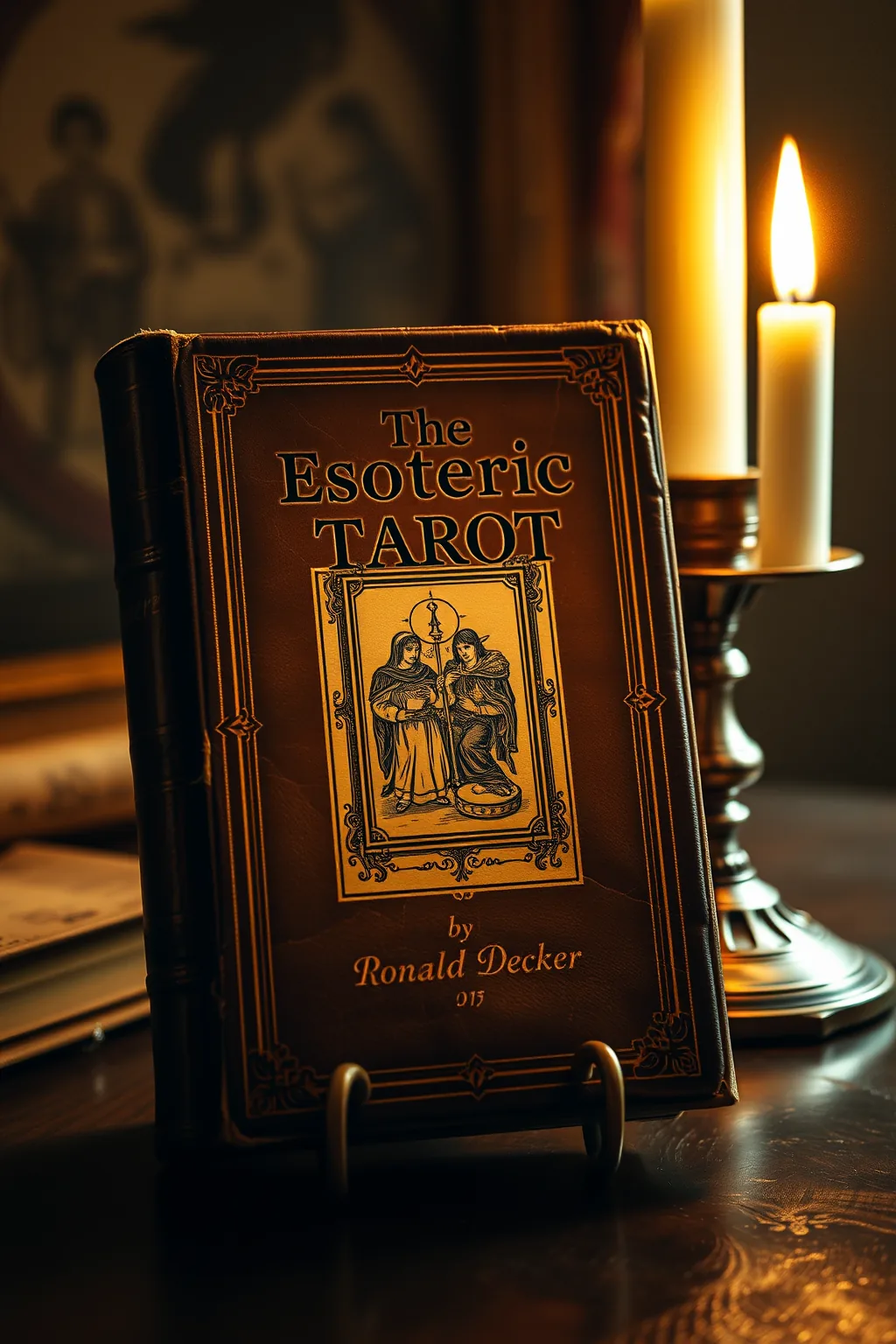
Ronald Decker’s "The Esoteric Tarot" performs a necessary, if unglamorous, act of historical excavation. It directly confronts and debunks the persistent, romantic myth of the Tarot’s Egyptian origins, a claim that has long clouded genuine scholarship. Decker’s meticulous tracing of the four-suit deck to Asia Minor before 1000 AD and its subsequent Italian court development provides a solid chronological framework. The book’s strength lies in its rigorous scholarship, offering a much-needed counterpoint to speculative esotericism. However, for readers seeking deep dives into the occult symbolism or divinatory practices themselves, the focus remains resolutely on historical genesis, which might feel limiting. A particularly illuminating section details the transition of these cards from game pieces to elements of esoteric systems. This is essential reading for anyone tired of received wisdom and eager for a factual foundation.
📝 Description
74
Ronald Decker's 2010 book argues the Tarot's origins are not ancient Egyptian but lie elsewhere.
This book challenges the common belief that the Tarot originated in ancient Egypt for divinatory purposes. Ronald Decker traces the historical development of the Tarot, arguing its roots are in a four-suit deck invented in Asia Minor before 1000 AD. He details its subsequent evolution within Italian courts, separating historical fact from later occult interpretations. Decker focuses on the original intent behind the deck's structure, distinguishing between the Minor Arcana and the Major Arcana, or trump cards. The work moves beyond later esoteric overlays to emphasize the historical trajectory from a game to a divinatory tool.
Academics and serious Tarot practitioners seeking a historically grounded perspective will find this volume useful. It suits those who prefer a rigorous, evidence-based approach to understanding the cards' development over speculative theories. Readers interested in the history of games and playing cards will also discover relevant material within its pages. The book provides a scholarly examination of the Tarot's actual historical progression, moving away from romanticized notions of its genesis.
While many esoteric traditions have woven elaborate narratives around the Tarot's mystical origins, often linking it to ancient Egypt or lost civilizations, this book offers a counterpoint. It grounds the Tarot's history in verifiable documentation, examining its emergence as a game before its adoption for occult purposes. This approach does not dismiss esoteric interpretations but rather seeks to understand them as later developments, distinct from the deck's original conception and early historical context. It addresses the tradition of Tarot scholarship that prioritizes empirical research over speculative reconstruction.
💡 Why Read This Book?
• Gain a historically accurate understanding of the four-suit deck's invention in Asia Minor before 1000 AD, challenging prevalent myths. • Learn how the Tarot cards evolved from their initial conception as a game into later divinatory tools, separating historical fact from esoteric speculation. • Understand the distinct origins of the Minor Arcana and Major Arcana, as presented by Decker’s scholarly research into their early development.
⭐ Reader Reviews
Honest opinions from readers who have explored this book.
❓ Frequently Asked Questions
What is the primary myth about Tarot origins that Ronald Decker debunks?
Ronald Decker debunks the widespread romantic misconception that the Tarot originated in ancient Egypt as a divinatory tool. He presents scholarly evidence for its actual historical evolution.
When and where does Ronald Decker suggest the four-suit deck was invented?
Decker's research indicates the four-suit deck, a precursor to the Minor Arcana, was invented in Asia Minor before 1000 AD.
What is the difference between the Minor and Major Arcana according to the book's historical perspective?
The book explains that the Minor Arcana (four suits) have an earlier origin in Asia Minor, while the Major Arcana, or "trump" cards, represent a later development within the Tarot's evolution.
Is "The Esoteric Tarot" suitable for complete beginners to Tarot?
While informative, the book focuses heavily on historical scholarship and debunking myths. Beginners seeking practical divinatory techniques might find it dense, but it provides crucial foundational knowledge.
What scholarly approach does Ronald Decker take in "The Esoteric Tarot"?
Decker employs meticulous scholarship, prioritizing verifiable historical evidence to trace the Tarot's development, rather than relying on speculative or esoteric traditions.
Does the book discuss later occult interpretations of the Tarot?
The book acknowledges later esoteric interpretations but primarily focuses on the original intent and historical evolution of the cards as understood by their inventor(s) before such overlays became common.
🔮 Key Themes & Symbolism
Debunking Egyptian Origins
This work directly confronts and dismantles the persistent, romanticized myth that the Tarot originated in ancient Egypt as a divinatory system. Decker meticulously presents historical evidence to demonstrate that this belief lacks foundation. The focus shifts from unsubstantiated claims to a factual tracing of the cards' invention and evolution, aiming to provide practitioners and academics with a grounded understanding of the Tarot's true historical trajectory.
The Four-Suit Deck
A central theme is the invention and early development of the four-suit deck, which forms the basis of the Minor Arcana. Decker argues for an origin in Asia Minor predating 1000 AD. This section contrasts the historical reality of a gaming deck's creation with later esoteric appropriations, emphasizing its initial function and structure before significant occult symbolism was widely attached.
Original Intent vs. Later Esotericism
The book critically examines the distinction between how the Tarot was initially conceived and how it was later interpreted through various esoteric and occult lenses. Decker seeks to reveal the meanings and functions as understood by the inventor(s), separating this original context from the layers of symbolism added over centuries by traditions like Hermeticism or Theosophy.
Evolution from Game to Divination
A significant thread explores the transformation of the Tarot from its probable origins as a game into a tool for divination and esoteric study. The work charts this historical progression, highlighting the societal and intellectual shifts that led to the cards being imbued with deeper, symbolic meanings beyond their initial playful or courtly function.
💬 Memorable Quotes
Direct passages from the work, attributed to the author.
“The Tarot consists of the Minor Arcana, four suits of cards similar to our modern deck, and the Major Arcana, twenty-two allegorical or "trump" cards.”
— This foundational statement clearly delineates the two primary components of the Tarot deck. It sets the stage for the book's historical analysis by defining the structure that Decker will trace back through time.
“That the Tarot originated in ancient Egypt as a divinatory tool is a romantic misconception.”
— This sentence expresses the core thesis of Decker's work: a direct refutation of popular, yet historically unsupported, beliefs about the Tarot's ancient Egyptian origins.
“Decker says the four-suit deck was invented in Asia Minor before AD 1000; Italian court”
— This highlights a specific historical claim regarding the invention of the four-suit deck, placing its origin geographically and chronologically, and suggesting its subsequent development within Italian courtly culture.
“Ron Decker's meticulous scholarship will surprise practitioners and academics alike, revealing the Tarot's true evolution and meanings as its inventor(s) understood it.”
— This asserts the book's scholarly rigor and its aim to uncover the authentic historical context and original meanings of the Tarot, challenging existing assumptions held by both casual users and academic researchers.
💡 Key Ideas
Editorial paraphrase of the work's core concepts — not direct quotes.
The Tarot consists of the Minor Arcana... and the Major Arcana, twenty-two allegorical or "trump" cards.
This quote serves as a basic structural definition, essential for readers to grasp the components that the book will then analyze historically, separating the development of each part.
🌙 Esoteric Significance
Tradition
While the book's primary focus is historical debunking rather than advancing a specific esoteric tradition, it implicitly engages with the lineage of Western Esotericism. By challenging foundational myths, it seeks to provide a historically accurate bedrock upon which later esoteric interpretations, such as those found in Hermetic or Kabbalistic Tarot studies, can be more critically assessed. It serves as a grounding text for those within these traditions who seek to understand the origins of their symbolic systems.
Symbolism
The book addresses the evolution of symbolism by distinguishing between the initial conception of the cards and later layers of meaning. While not delving deeply into specific esoteric symbols, it highlights the transition of the Minor Arcana (four suits) from a probable game context to a divinatory one. The Major Arcana, or trump cards, are presented as allegorical figures whose original intent is explored before they became heavily laden with Kabbalistic or astrological associations.
Modern Relevance
Contemporary scholars and critical Tarot practitioners find value in Decker's work as a vital corrective to speculative history. Thinkers focused on the sociology of esotericism or the material history of occult objects might draw upon his findings. It provides a crucial reference point for anyone seeking to understand the historical development of the Tarot deck separate from the myriad of esoteric interpretations that have accrued over time, influencing how modern occult scholarship approaches the subject.
👥 Who Should Read This Book
• Students of Western Esotericism seeking to critically examine the historical foundations of Tarot symbolism, moving beyond unsubstantiated myths. • Comparative religion and history scholars interested in the evolution of playing cards and their transition into divinatory tools. • Dedicated Tarot practitioners who desire a rigorous, evidence-based understanding of the deck's origins, distinct from popular occult lore.
📜 Historical Context
Published in 2013, Ronald Decker's "The Esoteric Tarot" emerged during a period of continued popular interest in Tarot, often fueled by New Age spirituality and occult revival movements. While many authors focused on symbolic interpretations or historical occult traditions, Decker positioned his work as a rigorous corrective. He directly challenged the prevailing narratives, particularly the persistent myth of ancient Egyptian origins, a concept widely disseminated by earlier esotericists like Paul Christian in the 19th century. Decker's approach contrasts sharply with that of authors like A.E. Waite, who, while also a scholar of esoteric traditions, synthesized them into influential Tarot systems. By grounding his analysis in the history of playing cards and tracing the deck's invention to Asia Minor before 1000 AD and its subsequent development in Italian courts, Decker offered a counter-narrative to the more romanticized and mystical accounts that dominated much of the literature.
📔 Journal Prompts
The four-suit deck's invention in Asia Minor before AD 1000.
The evolution from Minor Arcana as game cards to divinatory elements.
The contrast between original intent and later esoteric interpretations.
The concept of "trump" cards within the Major Arcana's historical development.
Ronald Decker's scholarly approach to challenging common Tarot myths.
🗂️ Glossary
Minor Arcana
The four suits of the Tarot deck (e.g., Wands, Cups, Swords, Pentacles), similar to a standard playing card deck. Decker traces their origin to Asia Minor before 1000 AD.
Major Arcana
The twenty-two allegorical or "trump" cards of the Tarot deck, such as The Fool or The Magician. Their historical development is a key focus of the book.
Four-suit deck
A deck of cards divided into four suits, considered by Decker to be the precursor to the Minor Arcana of the Tarot, invented in Asia Minor before 1000 AD.
Trump cards
An alternative term for the Major Arcana, referring to the allegorical cards that were historically distinct from the standard suits.
Divinatory tool
An instrument or system used for seeking knowledge of the future or the unknown. The book challenges the notion that the Tarot was initially created for this purpose.
Meticulous scholarship
A rigorous and detailed approach to research, emphasizing accuracy and evidence, as employed by Ronald Decker in analyzing the Tarot's history.
Italian court
Refers to the historical settings in Italy where playing cards, including early forms of the Tarot, were developed and used, particularly in aristocratic circles.