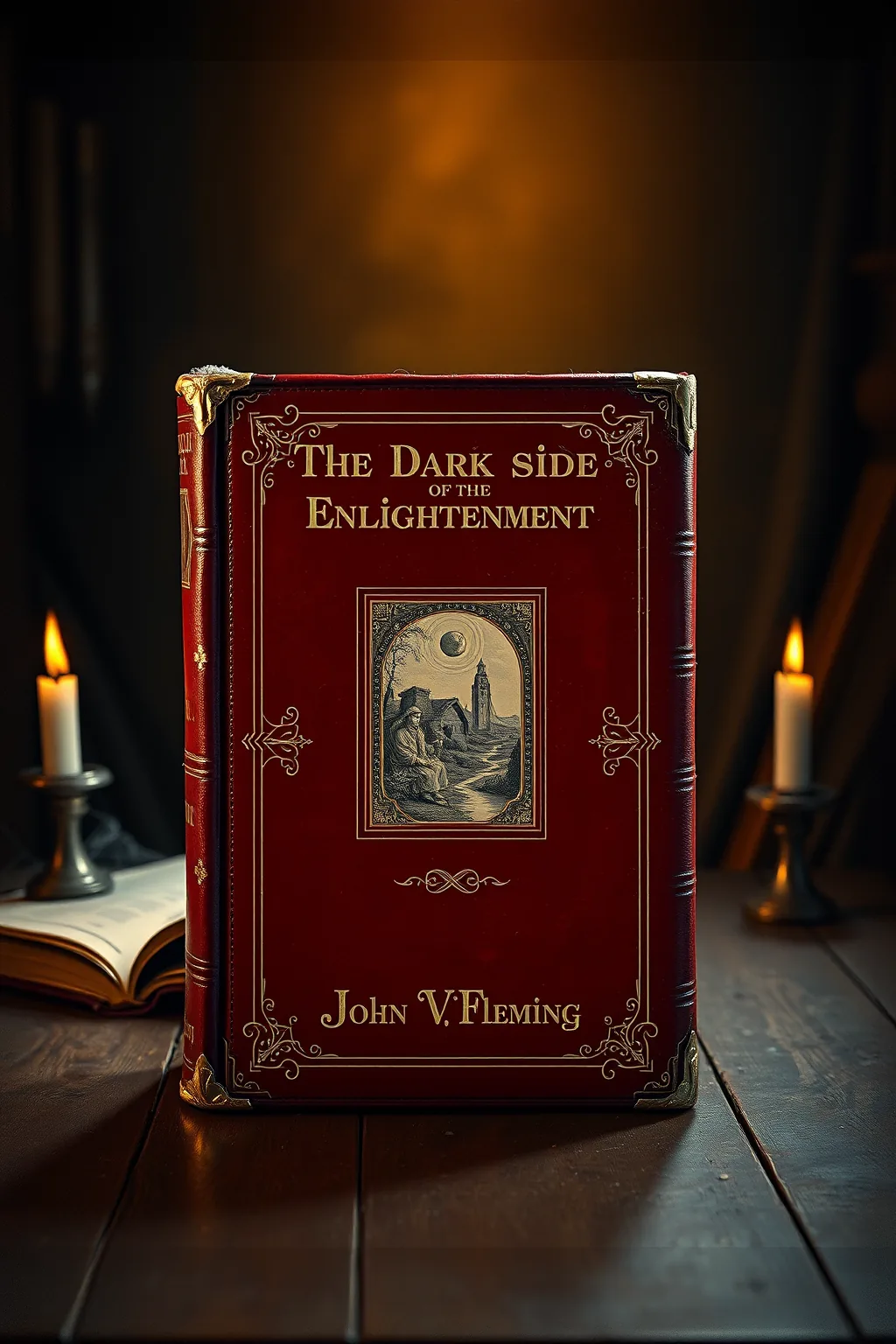
The dark side of the enlightenment
 81
81

The dark side of the enlightenment
Fleming's "The Dark Side of the Enlightenment" presents a compelling, if sometimes unsettling, counter-narrative to the triumphalist story of reason. He adeptly dissects how the very mechanisms of Enlightenment progress—classification, scientific method, rational governance—could become instruments of oppression and alienation. A particularly striking section details the burgeoning psychiatric classifications of the era, showing how 'reason' began to define and confine the 'unreasonable.' While the book offers a vital corrective, its relentless focus on the negative can occasionally feel overwhelming, obscuring the genuine emancipatory aspects of Enlightenment thought. Nevertheless, Fleming forces a crucial re-examination of a period too often viewed through rose-tinted spectacles. It is a necessary, if challenging, read for anyone invested in understanding the foundations of modernity.
📝 Description
81
John V. Fleming's 2018 book scrutinizes the Enlightenment's darker impulses and consequences.
This book examines the intellectual and cultural currents of the Enlightenment, moving beyond its celebrated ideals of reason and progress. It looks at the often overlooked darker impulses and consequences that accompanied this era in Western thought. The analysis shows how the very forces that propelled scientific advancement and secularization also fostered new forms of control, exclusion, and anxieties about the human condition. The work is intended for readers who question received narratives and seek a more thorough understanding of history. It appeals to those interested in intellectual history, the philosophy of science, cultural studies, and the enduring impact of the Enlightenment on contemporary society. Scholars and students of these fields may find its critical perspective valuable for re-evaluating foundational Western concepts.
The book is situated within the 18th century, a time when thinkers like Voltaire and Rousseau championed human rights and rational inquiry. Fleming's analysis highlights the paradoxes of this era: the simultaneous rise of empirical science and the persistence of superstition, the ideals of liberty alongside colonial expansion, and the pursuit of order that could lead to rigid social structures and suppression of dissent. Central to the book's argument is the exploration of how the Enlightenment's emphasis on rationality created its own shadows. It investigates concepts like the categorization of human populations, the medicalization of deviance, and the emergence of new disciplinary powers that sought to manage and normalize individuals according to rationalized norms. The work questions whether the pursuit of enlightenment inadvertently paved the way for new forms of darkness.
While not strictly an esoteric text in the occult sense, Fleming's work engages with the darker undercurrents of intellectual history, a common concern in some esoteric traditions that examine the hidden or suppressed aspects of human development. It echoes Gnostic critiques of a purely material or rationalist worldview, suggesting that the Enlightenment's focus on reason, while beneficial, also cast long shadows and generated new forms of limitation or control, a theme often explored in traditions that seek a more holistic understanding of consciousness and society.
💡 Why Read This Book?
• Understand how Enlightenment ideals of reason paradoxically fueled new forms of social control and categorization, offering a critical lens on modern governance. • Gain insight into the historical development of concepts like 'deviance' and 'normalization' as they emerged from 18th-century scientific and philosophical discourse. • Re-evaluate the legacy of thinkers like Voltaire by exploring the shadow aspects of their era, moving beyond simplistic heroic portrayals.
⭐ Reader Reviews
Honest opinions from readers who have explored this book.
❓ Frequently Asked Questions
What specific historical period does "The Dark Side of the Enlightenment" primarily focus on?
The book centers on the 18th century, the core period of the European Enlightenment, examining its intellectual and cultural manifestations.
What is the main argument concerning 'reason' in the book?
Fleming argues that the Enlightenment's emphasis on reason, while progressive, also created new mechanisms for control, exclusion, and the definition of deviance.
Which key Enlightenment figures or movements are discussed?
The work engages with the broader intellectual currents of the era, referencing figures associated with rationalism and scientific inquiry, and the development of new social sciences.
How does the book relate to contemporary issues?
It provides a historical framework for understanding modern issues of surveillance, social categorization, and the power dynamics inherent in rationalized systems.
Is this book primarily about occult or esoteric themes?
No, while the Esoteric Library curates it, the book itself is a work of intellectual and cultural history, critically examining the Enlightenment's broader societal impact.
What is the significance of the year 2013 mentioned in relation to the book?
2013 marks the original publication year of John V. Fleming's "The Dark Side of the Enlightenment," indicating its relatively recent contribution to the discourse.
🔮 Key Themes & Symbolism
Rationality as a Tool of Power
The book dissects how the Enlightenment's celebrated rationality was not merely a neutral pursuit of truth but often served as a justification for new forms of social control. Fleming explores how systems of classification, developed under the banner of scientific objectivity, were used to categorize, manage, and marginalize populations. This includes the burgeoning fields of psychiatry and social sciences, which began to define norms and pathologize deviations from them, laying groundwork for modern disciplinary societies.
The Enlightenment's Exclusions
Beyond its universalist claims, the Enlightenment era engendered significant exclusions. Fleming examines how the very pursuit of order and reason could lead to the suppression of dissenting voices, the marginalization of non-Western cultures, and the reinforcement of existing hierarchies under a new, rationalized guise. The book questions the universal applicability of Enlightenment ideals when confronted with the realities of colonialism, nascent racial theories, and the subjugation of women.
The Shadow of Progress
This theme addresses the unintended consequences and inherent contradictions within the Enlightenment project. While proponents heralded an age of unprecedented progress, Fleming highlights the emergence of anxieties, the potential for technological or bureaucratic overreach, and the ways in which the emphasis on secular reason could lead to a disenchantment or alienation from traditional sources of meaning. The work probes whether the quest for enlightenment inadvertently created new forms of darkness.
Medicalization and Normalization
Fleming explores how medical and scientific discourses of the 18th century began to shape societal understanding of behavior. Concepts of 'normality' and 'abnormality' were increasingly defined through a rational, often clinical, lens. This led to the medicalization of various social issues and individual behaviors, transforming them into problems to be treated or managed rather than moral or spiritual concerns, thereby extending the reach of rational governance into personal lives.
💬 Memorable Quotes
Direct passages from the work, attributed to the author.
“Reason could become a cage, defining deviance by its own standards.”
— This highlights Fleming's central thesis: that the very tools of Enlightenment thought, particularly the imposition of rational order, could inadvertently create new forms of confinement and judgment.
“The desire for order often outpaced the commitment to liberty.”
— This interpretation points to the tension within the Enlightenment, suggesting that the pursuit of societal structure and predictability sometimes overshadowed the radical ideals of individual freedom.
“Enlightenment's light cast long, unexamined shadows.”
— This concise summary captures the book's core argument: that the celebrated intellectual and cultural advancements of the era had significant, often negative, consequences that were overlooked by contemporaries.
“The pursuit of objective knowledge could justify subjective control.”
— This interpretation suggests that the claim to scientific objectivity in the Enlightenment was sometimes used to legitimize the imposition of power and control over individuals and groups.
💡 Key Ideas
Editorial paraphrase of the work's core concepts — not direct quotes.
Classification systems created the 'other' by defining the 'normal'.
This paraphrase emphasizes how the scientific impulse to categorize during the Enlightenment led to the active construction of marginalized identities by establishing strict boundaries of acceptable behavior and thought.
🌙 Esoteric Significance
Tradition
While not strictly an esoteric text, "The Dark Side of the Enlightenment" offers a critical lens valuable to esoteric traditions. It examines the historical roots of rationalism and scientific materialism, which often stand in tension with mystical and occult worldviews. By deconstructing the Enlightenment's perceived triumph, it implicitly validates alternative modes of knowing and experiencing reality that were often marginalized during this period.
Symbolism
The book implicitly critiques the Enlightenment's often sterile, geometric symbolism of order and reason. It highlights how the era's focus on empirical observation and categorization could obscure deeper, more complex symbolic meanings found in nature and human experience. The 'darkness' itself can be seen as a symbol for the repressed, the unconscious, or the irrational, elements often central to esoteric exploration.
Modern Relevance
Contemporary movements seeking to integrate technology and spirituality, or those questioning the dominance of purely rationalistic frameworks, find resonance in Fleming's work. Thinkers and practitioners in fields like critical theory, post-structuralism, and even certain branches of depth psychology draw upon this historical critique to understand the limitations of modern secular paradigms and the enduring need for holistic perspectives.
👥 Who Should Read This Book
• Students of intellectual history seeking a critical perspective on the Enlightenment, moving beyond foundational texts to explore its contested legacies. • Critical theorists and cultural analysts interested in the historical development of power structures, social control mechanisms, and the concept of 'normalcy'. • Individuals drawn to esoteric or alternative philosophies who wish to understand the historical forces that marginalized non-rational modes of understanding and being.
📜 Historical Context
Published in 2013, John V. Fleming's "The Dark Side of the Enlightenment" arrived at a time when critical re-evaluations of Western modernity were gaining academic traction. The 18th century, the crucible of the Enlightenment, saw the rise of figures like Kant and Diderot championing reason and human rights. However, Fleming’s work engages with a counter-tradition of critique that acknowledges the era's darker undercurrents. Unlike celebratory accounts, it positions itself against the straightforward veneration of Enlightenment ideals. Contemporaries like Michel Foucault had already explored power/knowledge dynamics, and Fleming builds upon such critiques by focusing specifically on how the Enlightenment's internal logic fostered new modes of discipline and exclusion, challenging the notion of an entirely emancipatory project.
📔 Journal Prompts
The Enlightenment's definition of 'reason'.
The paradox of 'progress' in the 18th century.
Mechanisms of social control.
The construction of 'deviance'.
The Enlightenment's relationship with marginalized knowledge.
🗂️ Glossary
Enlightenment
An 18th-century intellectual and cultural movement emphasizing reason, individualism, skepticism, and scientific inquiry, which profoundly shaped Western thought and society.
Rationalism
A philosophical stance emphasizing reason as the primary source and test of knowledge, often contrasted with empiricism or faith.
Classification Systems
The organized method of grouping and categorizing phenomena, individuals, or concepts based on shared characteristics, often employed in science and governance.
Normalization
The process by which certain behaviors, ideas, or individuals are established as standard or acceptable within a society, often through social or institutional pressures.
Medicalization
The process by which human conditions and problems come to be defined and treated as medical issues, often expanding the scope of medical authority.
Discipline
In a Foucauldian sense, systems of order, control, and training that shape individuals' behavior and thought, often through surveillance and normalization.
Secularization
The historical process by which religious influence declines in society, and public life becomes increasingly separated from religious institutions and beliefs.
🔮 Readers Also Liked
Browse all →









More by John V. Fleming
All books →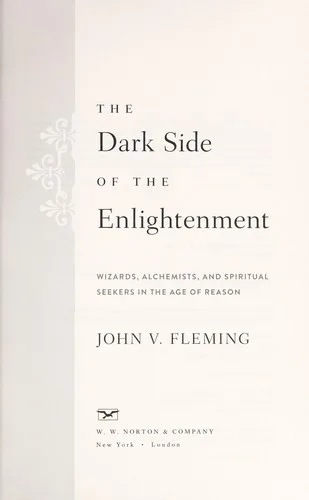
More Free Alchemy & Hermeticism Books
View all →