The Alchemical Body

 72
72

The Alchemical Body
David Gordon White's "The Alchemical Body" provides a much-needed corrective to overly simplified views of alchemy, firmly rooting its origins and purpose within the sophisticated physiological and spiritual aims of Indian yogic traditions. White meticulously details the Nath siddhas' pursuit of the "perfect body," a tangible, immortal form achieved through practices involving mercury, sulfur, and intricate yogic disciplines. His strength lies in his rigorous scholarship, drawing extensively from Sanskrit sources to illuminate concepts like the *rasayana* (rejuvenation) and the manipulation of the *bindu* (semen). A limitation, however, is the book's density; it demands considerable prior knowledge of Indian religious and philosophical systems, making it less accessible to the casual reader. The chapter detailing the alchemical processes for achieving the *deha-siddhi* (perfection of the body) is particularly revelatory, showcasing the materialist, yet profoundly spiritual, orientation of these practices. This is an essential, albeit challenging, text for understanding the global history of transformation.
📝 Description
72
David Gordon White's 1996 book examines the alchemical transformation of the human body in Indian yogic traditions.
David Gordon White's "The Alchemical Body" (1996) examines the connections between Indian yogic traditions, especially the Nath siddhas, and alchemical practices. The book argues that alchemy in India centered on perfecting the human body, not just on turning base metals into gold. White challenges Western views of alchemy by showing a complex system focused on internal transformation.
This work is for scholars and advanced students of comparative religion and esoteric traditions, particularly those familiar with Indian philosophy and yogic practices. It addresses the historical development of asceticism, tantra, and the philosophical ideas behind bodily transformation cults. White's research highlights the sophisticated theoretical frameworks for bodily manipulation and immortality found in these traditions, predating and influencing later practices.
This book situates Indian yogic and alchemical traditions within a global history of esoteric thought, moving beyond Eurocentric interpretations. White demonstrates how practices focused on the perfection and immortality of the physical body were central to South Asian asceticism. It connects the manipulation of bodily fluids, breath control, and the use of substances like mercury and sulfur to a sophisticated theory of achieving a divine, perfected state. The work illuminates the deep roots of these practices within traditions like Tantra and Yoga.
💡 Why Read This Book?
• Gain a nuanced understanding of alchemy beyond Western metallurgy, specifically the Indian yogic pursuit of the "perfect body" as detailed in chapters discussing *rasayana* practices. • Explore the historical connections between asceticism and alchemical goals, learning how figures like the Nath siddhas aimed for physical immortality, a concept elaborated through their use of mercury and sulfur. • Appreciate the philosophical depth of yogic traditions by examining their sophisticated theories of bodily transformation and the subtle body, as White presents them in contrast to solely materialist aims.
⭐ Reader Reviews
Honest opinions from readers who have explored this book.
❓ Frequently Asked Questions
What is the primary focus of David Gordon White's "The Alchemical Body"?
The book primarily examines the connections between Indian yogic traditions, particularly the Nath siddhas, and alchemical practices. It argues that a major focus of these traditions was the transformation and perfection of the human body into an immortal form, rather than solely material transmutation.
Who were the Nath siddhas and what was their role in alchemy?
The Nath siddhas were a medieval Indian yogic and alchemical tradition. White highlights their central role in developing practices aimed at achieving *deha-siddhi* (perfection of the body) through yogic techniques and the use of substances like mercury and sulfur.
What does "alchemical body" refer to in the context of this book?
The "alchemical body" signifies the subtle, energetic, and perfected physical form that practitioners sought to achieve. This ideal body was considered divine, immortal, and possessed of supernatural powers, attained through rigorous yogic and alchemical regimens.
Does the book discuss Western alchemy at all?
While the book's main focus is on Indian traditions, it implicitly contrasts them with common Western understandings of alchemy. White's work serves to re-contextualize alchemy globally, showing its diverse philosophical underpinnings and aims.
What kind of research does David Gordon White draw upon?
White bases his research on extensive study of Sanskrit texts, historical yogic and alchemical literature, and scholarly analysis of South Asian religious and philosophical traditions. His work is grounded in primary source material from the relevant historical periods.
Is "The Alchemical Body" suitable for beginners in esoteric studies?
The book is quite scholarly and academic, requiring some familiarity with Indian religious and philosophical concepts. It is best suited for advanced students, researchers, or those with a dedicated interest in the specific intersection of yoga, alchemy, and bodily transformation.
🔮 Key Themes & Symbolism
The Perfected Body
The central theme revolves around the concept of achieving a perfected, immortal physical body through alchemical and yogic means. This is not merely a metaphor but a tangible goal pursued by traditions like the Nath siddhas. White details how practices involving mercury, sulfur, and intricate yogic exercises were employed to transmute the physical form, achieving a state of divine permanence and power, distinct from the Western alchemical focus on transmuting base metals into gold.
Indian Alchemy vs. Western Alchemy
White meticulously distinguishes the Indian alchemical tradition from its Western counterpart. While Western alchemy is often associated with metallurgy and the Philosopher's Stone, the Indian tradition, as explored in this work, is deeply rooted in physiological transformation. The book highlights how substances like mercury (*rasa*) and sulfur were utilized not for wealth, but as potent agents in the yogic quest for longevity, immortality, and supernatural abilities, fundamentally altering the understanding of alchemy's global scope.
The Role of the Nath Siddhas
The Nath siddhas, a prominent yogic and tantric lineage, are central figures in White's analysis. He demonstrates their profound contribution to the theory and practice of bodily alchemy. Their pursuit of *deha-siddhi* (body-perfection) involved complex yogic techniques, control over bodily fluids and energies, and the integration of alchemical substances, positioning them as key innovators in the quest for physical and spiritual transcendence through the body.
Yogic Physiology and Transformation
The book looks at the sophisticated yogic understanding of the human body as a site of profound transformation. White explains how breath control (pranayama), internal alchemy, and the manipulation of subtle energies were integral to the alchemical project. This perspective views the body not as a static vessel, but as a dynamic system capable of being purified, perfected, and ultimately rendered immortal through dedicated practice and the application of specific alchemical principles.
💬 Memorable Quotes
Direct passages from the work, attributed to the author.
“The primary aim of Indian alchemy was the perfection of the body.”
— This concise statement captures White's core argument, shifting the focus from material wealth to the yogic pursuit of an immortal, perfected physical form, highlighting a fundamental difference from common Western alchemical interpretations.
“Siddhas sought to achieve *deha-siddhi* through yogic and alchemical means.”
— This highlights the specific goal of the Nath siddhas: *deha-siddhi*, or the perfection of the body. It emphasizes that their path involved a synthesis of advanced yogic practices with the manipulation of potent alchemical substances.
“Mercury and sulfur were key agents in the yogic transformation of the body.”
— This points to the crucial role of specific alchemical substances within the Indian tradition. Unlike Western alchemy's focus on gold, these elements were employed for their transformative power on the practitioner's own physical and spiritual constitution.
“The quest for immortality was fundamentally a bodily project.”
— This interpretation underscores the materialist, yet spiritual, dimension of Indian alchemy discussed by White. Immortality was not just a spiritual state but a tangible, physical achievement through disciplined bodily practices and alchemical intervention.
“Yogic traditions developed sophisticated theories of the subtle body.”
— This references the intricate understanding of internal physiology within yogic systems. White shows how these concepts of subtle energies, chakras, and nadis were foundational to the alchemical project of bodily perfection and transformation.
🌙 Esoteric Significance
Tradition
This work is firmly situated within the study of Indian esoteric traditions, specifically Tantra and Yoga, with a particular focus on the Nath siddha lineage. It departs from the common Western esoteric frameworks like Hermeticism or Kabbalah by demonstrating a sophisticated, pre-existing system of bodily transformation that can be understood as a form of alchemy. White shows how these Indian traditions offer a potent, embodied path to transcendence that prioritizes physical perfection and longevity as integral to spiritual realization.
Symbolism
Central symbols include mercury (*rasa*) and sulfur, understood not merely as elements but as potent cosmic principles representing semen and vitality, respectively. Their conjunction within the body was believed to catalyze transformation. The *bindu* (semen) itself is a potent symbol of life force, and its conservation and manipulation were key alchemical techniques. The concept of the perfected body, *deha-siddhi*, symbolizes ultimate control over mortality and the attainment of divine attributes through material and energetic manipulation.
Modern Relevance
Contemporary practitioners of yoga and tantra, as well as scholars of comparative religion and esoteric studies, continue to draw upon White's work. His detailed analysis of the historical pursuit of the perfected body informs modern discussions on embodied spirituality, longevity practices, and the philosophical underpinnings of asceticism. Thinkers exploring transhumanism and radical life extension might find historical precedents in the siddhas' alchemical goals, while modern occultists can find rich material for understanding the non-Western roots of transformative practices.
👥 Who Should Read This Book
• Advanced students of comparative religion and South Asian studies: Will gain a deep, scholarly understanding of the intersection between yogic practices and alchemical aims in India, moving beyond superficial interpretations. • Practitioners of yoga and tantra seeking historical context: Will discover the profound historical emphasis on bodily transformation and immortality within their chosen paths, enriching their practice with ancient theoretical frameworks. • Researchers in esoteric traditions and comparative alchemy: Will find crucial insights into a non-Western alchemical lineage, challenging Eurocentric views and expanding the definition of alchemy itself.
📜 Historical Context
Published in 1996, David Gordon White's "The Alchemical Body" emerged within a growing academic interest in the global dissemination of esoteric ideas and the non-Western origins of practices often viewed through a Eurocentric lens. The work directly challenged prevailing assumptions by demonstrating the depth and antiquity of Indian alchemical thought, particularly its focus on bodily transformation, which predated and potentially influenced later traditions. This scholarship contributed significantly to the academic study of Tantra and Yoga, highlighting their sophisticated theoretical frameworks for achieving immortality and supernatural powers. It appeared in a scholarly milieu where scholars like Agehananda Bharati were also examining Indian ascetic traditions, though White's focus on the specific alchemical dimension offered a novel perspective. The book's reception within academia acknowledged its rigorous scholarship and its a central role in reframing the understanding of alchemy beyond its familiar Western context.
📔 Journal Prompts
The yogic pursuit of *deha-siddhi* and its implications for modern conceptions of health.
Reflecting on the symbolic roles of mercury and sulfur in the Nath siddhas' practices.
The concept of the "alchemical body" as a perfected, immortal form: How does this differ from purely spiritual salvation?
Analyzing the historical relationship between asceticism and the goal of physical immortality.
Considering the potential parallels between ancient yogic alchemy and contemporary longevity research.
🗂️ Glossary
Siddha
A realized being, particularly within Indian Tantric and yogic traditions. Siddhas were often yogis, mystics, and alchemists who achieved extraordinary powers and spiritual attainment through rigorous practice.
Nath
A prominent lineage of yogis and ascetics in India, influential from the medieval period onward. They emphasized Hatha Yoga, the control of vital energies, and the pursuit of physical immortality and liberation.
Rasayana
A branch of Indian alchemy and medicine focused on rejuvenation, longevity, and the attainment of an immortal or perfected body. It involves the use of specific herbs, minerals (like mercury), and yogic practices.
Deha-siddhi
Literally, "perfection of the body." In the context of Indian alchemy and yoga, it refers to achieving a transformed, immortal, and often divine physical state through specific practices.
Rasa
Literally 'juice' or 'essence,' but in alchemy, it specifically refers to mercury. Mercury was considered a potent alchemical substance, often associated with the male principle and vital fluids, central to transformative processes.
Bindu
A Sanskrit term often translated as 'drop' or 'point.' In Tantric and yogic traditions, it refers to semen or vital essence, and its conservation and manipulation are crucial for spiritual and alchemical practices aimed at preserving and transforming energy.
Hatha Yoga
A branch of yoga that emphasizes physical postures (asanas), breath control (pranayama), and purification techniques, often as preparation for deeper meditative states or as a means to achieve bodily transformation and immortality.
🔮 Readers Also Liked
Browse all →









More by David Gordon White
All books →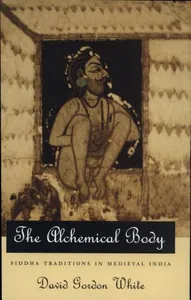


More Free Alchemy & Hermeticism Books
View all →