Alchemy
 83
83

Alchemy
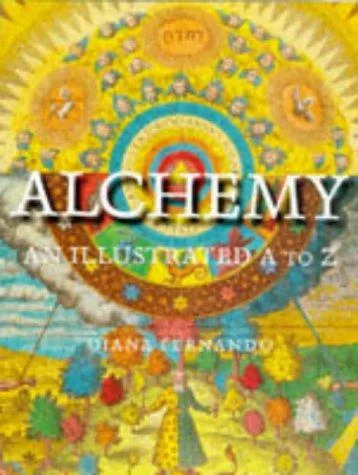
Diana Fernando's "Alchemy" provides a grounded exploration of a subject often shrouded in myth. Unlike treatments that sensationalize or oversimplify, Fernando’s work dissects the practical and philosophical dimensions of alchemical pursuits. A notable strength is its clear exposition of the stages of the Great Work, particularly the symbolic representation of the Nigredo, Albedo, and Rubedo phases. However, the text could benefit from a more robust engagement with the Jungian interpretations that have become so prevalent in modern discourse on alchemy; its focus remains largely historical and theoretical. The discussion on the symbolic role of the Ouroboros, while accurate, feels somewhat brief given its centrality to alchemical symbolism. Fernando’s "Alchemy" serves as a solid, academic introduction for those seeking to understand the historical and theoretical framework of the subject.
📝 Description
83
Diana Fernando's "Alchemy" deciphers the discipline's spiritual and material transformations beyond gold.
Fernando's "Alchemy" offers a detailed examination of a discipline that has long fascinated and mystified. It moves beyond the popular image of turning lead into gold, presenting alchemy as a complex system of spiritual, philosophical, and material transformation. The work examines the historical roots and theoretical underpinnings that guided practitioners for centuries. It positions alchemy as a precursor to modern chemistry, but with a distinct focus on the soul's purification. This text is suited for individuals keen on understanding the esoteric traditions of the West. It appeals to students of Hermeticism, comparative religion, and the history of science who seek to grasp alchemy not merely as a proto-scientific endeavor, but as a spiritual path. Those interested in the symbolic language and philosophical inquiries that shaped early modern thought will find substantial material here. Fernando situates alchemical practices within their historical milieu, tracing their development from Hellenistic Egypt through the Islamic Golden Age and into Renaissance Europe. She highlights the intellectual climate that allowed such pursuits to flourish, noting the interplay between philosophical inquiry, religious heterodoxy, and the nascent scientific method. The work acknowledges the diverse interpretations and applications of alchemical principles across different eras and cultures.
This book situates alchemy within the broader spectrum of Western esoteric traditions, particularly Hermeticism. It connects alchemical pursuits to philosophical inquiries and religious heterodoxy that characterized early modern thought. By tracing alchemy's lineage from Hellenistic Egypt through the Islamic Golden Age and into Renaissance Europe, Fernando illustrates its role as a complex system of spiritual, philosophical, and material transformation. The text emphasizes alchemy's focus on the soul's purification and internal transmutation, differentiating it from purely material pursuits.
💡 Why Read This Book?
• Gain a structured understanding of the Great Work, including its distinct stages like the Nigredo, Albedo, and Rubedo, which provides a framework for understanding alchemical processes not found in superficial accounts. • Explore the concept of the Prima Materia, understanding its multifaceted role as both the fundamental substance and a symbol of primordial potential, offering a unique perspective on material and spiritual beginnings. • Grasp the symbolic significance of the Ouroboros within alchemical texts, learning how this ancient motif represents cyclical transformation and the unity of opposites, a concept central to esoteric thought.
⭐ Reader Reviews
Honest opinions from readers who have explored this book.
❓ Frequently Asked Questions
When was Diana Fernando's "Alchemy" first published?
Diana Fernando's "Alchemy" was first published in 1998. This allows the work to engage with scholarly developments in the history of science and esoteric studies that emerged in the late 20th century.
Does "Alchemy" by Diana Fernando cover modern alchemical practices?
While the book primarily focuses on the historical and theoretical foundations of alchemy, it offers insights into principles that inform some contemporary esoteric practices. Its strength lies in establishing the historical lineage.
What is the "Great Work" as described in Fernando's book?
The "Great Work" (Magnum Opus) in Fernando's "Alchemy" refers to the entire alchemical process, encompassing both the physical creation of the Philosopher's Stone and the spiritual purification and transformation of the alchemist.
Is Diana Fernando's "Alchemy" suitable for beginners?
Yes, the book is accessible to beginners interested in the subject, providing clear explanations of complex concepts. It avoids overly technical jargon, making the historical and philosophical aspects understandable.
What is the symbolic meaning of the Philosopher's Stone?
In Fernando's "Alchemy," the Philosopher's Stone is presented not just as a substance for transmuting metals but as a symbol of spiritual perfection, enlightenment, and the reconciliation of opposites.
Does the book discuss specific alchemists?
The work references numerous historical figures and traditions associated with alchemy, such as Hermes Trismegistus and various Renaissance practitioners, contextualizing their contributions to the field.
🔮 Key Themes & Symbolism
Spiritual Transmutation
Fernando's "Alchemy" emphasizes that the true alchemical pursuit is not merely material manipulation but a profound inner transformation. The laboratory becomes a crucible for the alchemist's own soul, mirroring the processes of purification and refinement. Concepts like the Nigredo, representing dissolution and chaos, are explored as necessary precursors to spiritual enlightenment, aligning with the Hermetic principle that "as above, so below."
The Philosopher's Stone
The book studies the complex symbolism of the Philosopher's Stone, moving beyond its legendary alchemical properties. Fernando presents it as the ultimate goal of the Great Work, representing not just material perfection but also spiritual wholeness and the attainment of gnosis. Its creation is depicted as a synthesis of opposing forces, a key theme in understanding the esoteric aims of alchemy.
Symbolic Language
A significant aspect of Fernando's "Alchemy" is its elucidation of the rich symbolic language employed by alchemists. The text deciphers motifs like the Ouroboros, the hermaphrodite, and the colours associated with different stages of the Work. Understanding this symbolic lexicon is presented as crucial for comprehending the philosophical and spiritual dimensions of alchemical texts, which often veiled their teachings in allegory.
Historical Precursors
The work situates alchemy within the broader context of Western esotericism, tracing its lineage from ancient Egyptian and Hellenistic traditions. Fernando highlights its role as a bridge between ancient mystical philosophies and the emergent scientific thought of the Renaissance. This historical perspective underscores alchemy's influence on fields like medicine and early chemistry, while maintaining its distinct spiritual orientation.
💬 Memorable Quotes
Direct passages from the work, attributed to the author.
“The laboratory is the inner space where the alchemist's soul is purified.”
— This interpretation highlights the esoteric focus of alchemy, presenting the physical workspace as a metaphor for internal spiritual development and cleansing, a core tenet of the discipline.
“Prima Materia signifies the undifferentiated potential from which all creation arises.”
— This concept defines the primordial substance in alchemy not just as a starting material but as a symbol of original, unformed potential, central to understanding alchemical cosmology and creation myths.
“Alchemy sought the unification of opposing forces, symbolized by the celestial and terrestrial.”
— This highlights a fundamental alchemical principle: the reconciliation of dualities, seen as essential for achieving wholeness and completing the Major work, reflecting a core Hermetic concept.
“The Ouroboros embodies the cyclical nature of transformation and the unity of beginning and end.”
— This interpretation explains the symbolic power of the Ouroboros, a serpent consuming its own tail, as representing the perpetual cycles of death and rebirth integral to alchemical and esoteric philosophy.
💡 Key Ideas
Editorial paraphrase of the work's core concepts — not direct quotes.
The stages of Nigredo, Albedo, and Rubedo map the soul's journey through dissolution, purification, and perfection.
This paraphrase captures the essence of the Great Work's phases, framing them as a psychological and spiritual progression towards enlightenment, rather than solely a material process.
🌙 Esoteric Significance
Tradition
Fernando's "Alchemy" is firmly rooted in the Western Hermetic tradition, tracing its lineage from ancient Egyptian and Greek roots through medieval and Renaissance European practitioners. It aligns with the Hermetic principles of correspondence, causality, and spiritual evolution. The work positions alchemy as a practical application of Hermetic philosophy, aiming not just for material alteration but for the spiritual perfection of the practitioner, a hallmark of the Hermetic path.
Symbolism
Key symbols explored include the Ouroboros, representing eternal return, cyclical transformation, and the unity of opposites – a fundamental concept in alchemical thought. The Prima Materia is discussed as the undifferentiated chaos from which all things emerge, symbolizing potentiality and the raw material for both physical and spiritual work. The colours associated with the stages of the Great Work (black, white, red) are also central, signifying dissolution, purification, and final perfection.
Modern Relevance
Contemporary practitioners of Western esoteric traditions, particularly those in Hermetic and Rosicrucian orders, continue to draw on the foundational knowledge presented in works like Fernando's. Modern psychological interpretations, influenced by Carl Jung's work on alchemical symbolism, also find resonance with the principles of inner transformation discussed. The book's clear exposition of historical alchemical processes remains relevant for comparative studies in mysticism and the history of consciousness.
👥 Who Should Read This Book
• Students of Western Esotericism: Those seeking a structured introduction to the historical and philosophical underpinnings of Hermeticism and alchemy will find this book important for understanding its core tenets. • Comparative Religion Scholars: Researchers interested in the intersection of science, philosophy, and spirituality in pre-modern eras will appreciate the book's contextualization of alchemical thought within its historical milieu. • Aspiring Alchemists (Theoretical): Individuals curious about the 'Great Work' and its symbolic stages (Nigredo, Albedo, Rubedo) will gain a foundational theoretical framework before engaging with practical or more advanced studies.
📜 Historical Context
Published in 1998, Diana Fernando's "Alchemy" emerged during a period of renewed academic interest in Western esotericism, building upon scholarship that had begun to re-evaluate occult traditions beyond mere superstition. The late 20th century saw a significant increase in studies on Hermeticism, Gnosticism, and the history of science, with scholars like Frances Yates having previously explored the Renaissance occult revival. Fernando's work contributes to this scholarly conversation by providing a comprehensive overview of alchemical theory and practice. It arrived at a time when Jungian psychology had already widely popularized alchemical symbolism, yet Fernando’s focus remained primarily historical and textual, offering a counterpoint to more purely psychological interpretations. The reception of such works generally reflected a growing academic acceptance of esoteric studies as a legitimate field of historical inquiry, moving away from earlier dismissals.
📔 Journal Prompts
The Prima Materia as undifferentiated potential: How might this concept apply to personal creative blocks?
Reflect on the symbolic meaning of the Ouroboros in relation to a personal cycle of change.
Consider the Nigredo stage: What 'dissolution' is necessary for your own spiritual refinement?
Alchemical color symbolism: How do the stages of black, white, and red manifest in your understanding of transformation?
The laboratory as inner space: Identify one aspect of your inner world needing purification.
🗂️ Glossary
Great Work (Major work)
The entire process of alchemical transformation, encompassing both the creation of the Philosopher's Stone and the spiritual purification of the alchemist.
Prima Materia
The primordial, undifferentiated substance from which all matter and existence are believed to originate in alchemical cosmology.
Philosopher's Stone
A legendary alchemical substance reputed to be capable of transmuting base metals into gold and providing immortality or enlightenment.
Nigredo
The first stage of the Great Work, often symbolized by blackness, representing decomposition, dissolution, and chaos.
Albedo
The second stage, or 'whitening,' symbolizing purification and the removal of impurities after the Nigredo.
Rubedo
The final stage, or 'reddening,' representing perfection, completion, and the attainment of the Philosopher's Stone.
Ouroboros
An ancient symbol depicting a serpent or dragon eating its own tail, representing cyclicality, self-creation, and wholeness.
🔮 Readers Also Liked
Browse all →







More Free Alchemy & Hermeticism Books
View all →