T. C Gorrell
Edgar Staley Gorrell was a military officer, aviation pioneer, and advocate for the airline industry.
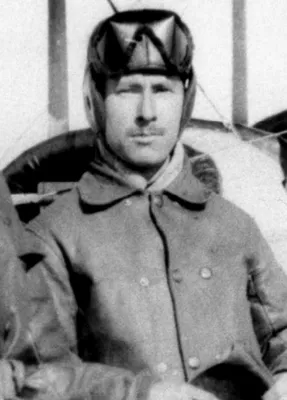
Edgar Staley Gorrell (1891–1945) was an American military officer and aviation pioneer who later became a significant advocate for the airline industry. After graduating from West Point, he served in the Army's Air Service, rising to colonel during World War I. His early career included pioneering work in aviation and engineering, including a significant staff study on strategic bombing that influenced later air power doctrine and the creation of the U.S. Air Force. He also oversaw the compilation of the official "History of the Air Service, AEF."
Following his military service, Gorrell transitioned to private business before dedicating the last nine years of his life to the Air Transport Association of America (ATA). As its first president, he championed airline safety and economic growth. His advocacy was instrumental in shaping the nascent airline industry, including developing strategies for wartime use of commercial airlines that helped prevent their nationalization during World War II. Gorrell's contributions spanned military aviation strategy, engineering, and the foundational development of commercial air transport.
Early Life and Military Beginnings
Born in Baltimore, Maryland, Edgar Staley Gorrell received his early education in the city's public schools before attending Baltimore City College. He secured an appointment to the United States Military Academy at West Point, graduating in 1912. Initially serving in the infantry, Gorrell soon volunteered for the Aviation Section of the Signal Corps, becoming a military aviator in 1915. His initial flying assignment was with the Army's first aviation unit, the 1st Aero Squadron, during the Punitive Expedition into Mexico. This experience highlighted deficiencies in American military aviation, leading to his assignment to MIT for advanced studies in aeronautical engineering, where he earned a Master of Science degree.
World War I and Strategic Air Power
During World War I, Gorrell's expertise in aeronautical engineering led to his involvement in the Bolling Mission and staff duties with the American Expeditionary Forces (AEF). He rapidly advanced through the ranks, becoming a colonel at age 27. A notable contribution was his 1917 staff study proposing a sustained bombing campaign against German industry, an early articulation of strategic bombing concepts that later informed U.S. air doctrine and the establishment of the U.S. Air Force. At the war's conclusion, he was tasked with compiling the official "History of the Air Service, AEF," a monumental 280-volume work known as "Gorrell's History."
Advocacy for the Airline Industry
After leaving the army in 1920, Gorrell pursued business ventures before becoming the first president of the Air Transport Association of America (ATA). In this role, he was a key figure in promoting airline safety and the economic development of the industry. Gorrell also developed crucial strategies for the use of commercial airlines in wartime, which successfully advised President Franklin D. Roosevelt against nationalizing the airline industry at the outset of World War II. His leadership at the ATA helped shape the regulatory and operational framework for modern air transport.
Key Ideas
- Early advocate for strategic bombing concepts.
- Pioneered concepts for the wartime use of commercial airlines.
- Championed airline safety and economic growth.
Books by T. C Gorrell
2 free public domain books · Read online or download