Sanford L. Drob
Kabbalah is a Jewish mystical tradition offering esoteric interpretations of Jewish texts and practices.
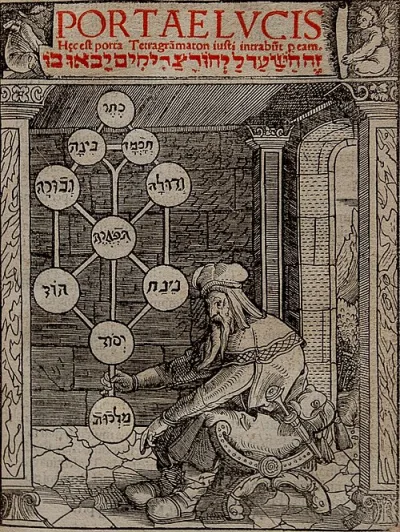
Kabbalah, meaning 'act of receiving' in Hebrew, is a school of thought within Jewish mysticism that forms the basis for mystical interpretations of Judaism. Originating in 12th- to 13th-century Occitania, it developed through key texts like the Bahir and the Zohar, with Moses de León often credited as its author. Later, Isaac Luria significantly shaped contemporary Kabbalah in the 16th century, influencing movements like Hasidism. Academic study, particularly by Gershom Scholem, has furthered research into Kabbalistic traditions. Kabbalists traditionally use classical Jewish scriptures to explain and demonstrate their mystical teachings, viewing them as the concealed, inner dimension of these texts and observances. The tradition encompasses various approaches, including theosophical, meditative, and practical (magical) Kabbalah, each with distinct aims regarding the divine and the world.
Origins and Development of Jewish Mysticism
Jewish mysticism, with Kabbalah as a prominent form, has evolved over millennia. Its roots are traced to biblical figures like Elijah and Ezekiel, continuing through apocalyptic literature and the Hekhalot and Merkabah traditions focusing on heavenly ascents. Kabbalah formally emerged in the 12th and 13th centuries in Occitania and Spain, marked by foundational texts such as the Bahir and the Zohar. These texts explored the divine nature, the universe, and creation through symbolic interpretations of the Torah. The movement of Jews from these regions influenced its spread, including to the Rhineland.
Key Kabbalistic Texts and Traditions
The primary texts in the medieval Jewish tradition include the Bahir, Zohar, Pardes Rimonim, and Etz Chayim. The Sefer Yetzirah, a much earlier document from 200-600 CE, is considered a significant antecedent, influencing the formal inspirations of later Kabbalistic works. Kabbalah is often understood through four levels of Torah interpretation: Peshat (literal), Remez (allusion), Derash (rabbinic), and Sod (esoteric mystery). Modern academic study distinguishes between the Theosophical tradition (focusing on the divine realm and human influence) and the Meditative-Ecstatic tradition (aiming for union with God), alongside the less-favored Practical Kabbalah (focused on magical acts).
Lurianic Kabbalah and Hasidism
Isaac Luria, in the 16th century, is considered the father of contemporary Kabbalah. His teachings introduced concepts like Tzimtzum (divine contraction) and Tikkun (cosmic repair), profoundly impacting Jewish thought. Lurianic Kabbalah was widely disseminated through Hasidic Judaism starting in the 18th century, integrating Kabbalistic ideas into a popular, experiential religious context that emphasized the divine presence in daily life. This period saw a renaissance of Jewish mystical thought.
Key Ideas
- Kabbalah as an esoteric method within Jewish mysticism.
- Four levels of Torah interpretation (Pardes): Peshat, Remez, Derash, Sod.
- Theosophical Kabbalah: understanding the divine realm and human influence.
- Meditative Kabbalah: achieving mystical union with God.
- Practical Kabbalah: using magical methods to influence divine and worldly realms.
- Lurianic concepts of Tzimtzum and Tikkun.
Books by Sanford L. Drob
4 free public domain books · Read online or download