Vedic chronology and vedanga jyotisha
 61
61

Vedic chronology and vedanga jyotisha


By Cassian Rothmann (Senior Critic, Ancient Wisdom) — Tilak's "Vedic Chronology and Vedanga Jyotisha" remains an unparalleled beacon for those seeking to understand the profound astronomical and chronological foundations of the Vedic tradition. Tilak's rigorous scholarship pierces through centuries of interpretation to reveal the sophisticated astronomical knowledge possessed by ancient Indian seers. This work is essential for anyone delving into the esoteric dimensions of Hindu astrology and the deep temporal cycles encoded within the Vedas. It offers unique insights into the predictive sciences and the spiritual cosmogony that informed ancient Indian civilization. Highly recommended for serious students of Vedic sciences and ancient wisdom traditions.
📝 Description
61
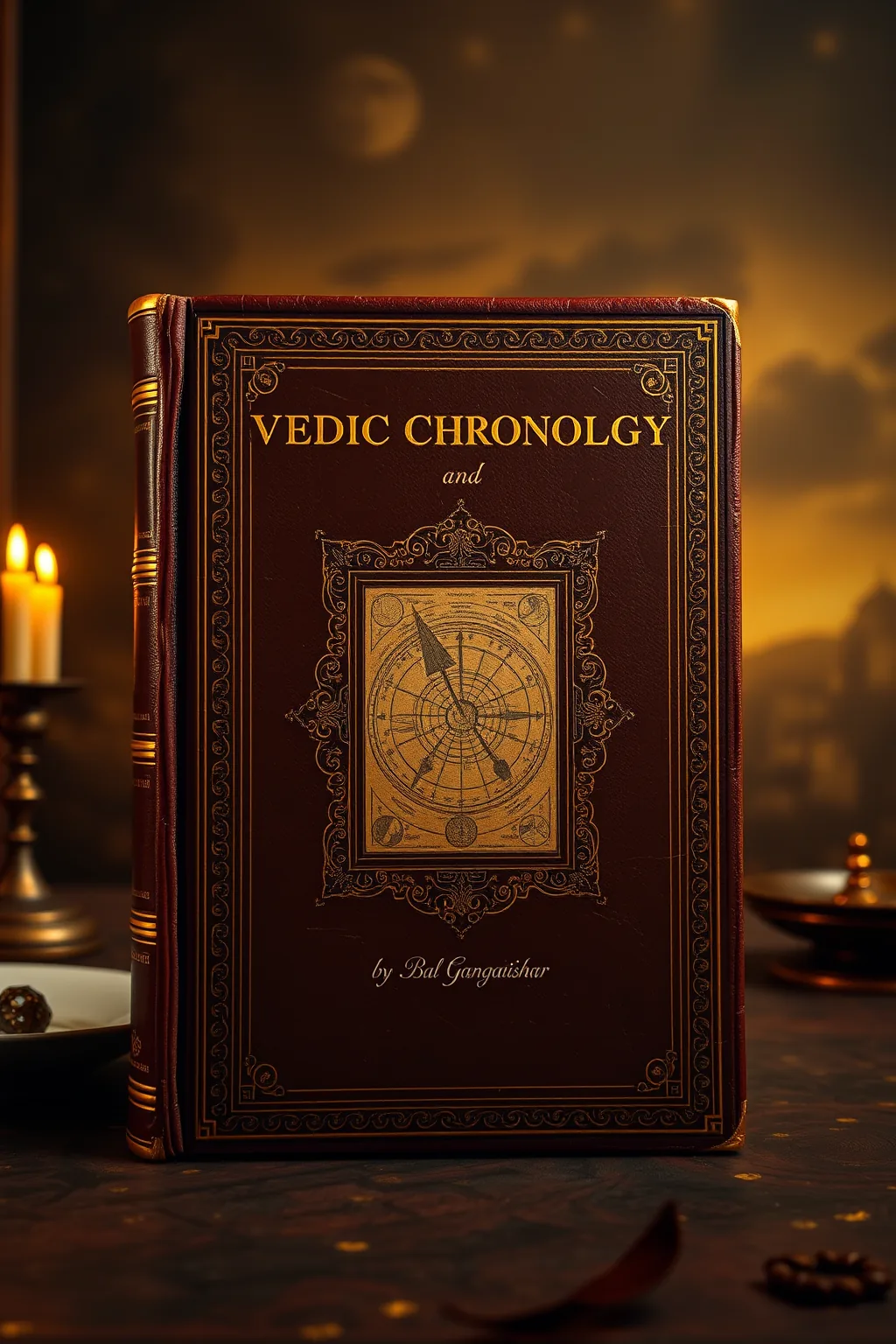
Bal Gangadhar Tilak published "Vedic Chronology and Vedanga Jyotisha" to date the Vedic period using astronomical observations.
In "Vedic Chronology and Vedanga Jyotisha," Bal Gangadhar Tilak examines the astronomical data found in Vedic texts to establish a timeline for ancient Indian civilization. He argues that the Vedanga Jyotisha, a foundational text in Vedic astronomy, contains specific celestial references that can be used to pinpoint the age of the Vedic period. Tilak analyzes the positions of stars and constellations mentioned in these ancient works, correlating them with known astronomical cycles. His research aims to move beyond speculative dating and provide a more concrete chronological framework based on empirical observation. The book details his methodology for interpreting these astronomical passages and the conclusions he draws about the antiquity of Vedic culture. It is a scholarly attempt to anchor Vedic history in the verifiable movements of the heavens.
This work engages with the esoteric tradition by treating Vedic astronomical knowledge not merely as scientific data but as a key to understanding a worldview. Tilak suggests that the ancient Indian sages embedded profound insights into cosmic order and temporal cycles within their celestial observations. The book implies that these observations were part of a larger system of knowledge, connecting the study of stars to spiritual truths and a sophisticated philosophical understanding of existence. It positions the Vedanga Jyotisha as more than just an astronomical manual; it is presented as a document revealing a lost science of consciousness tied to cosmic rhythms.
💡 Why Read This Book?
Uncover the lost astronomical wisdom of the Vedas, revealing a sophisticated understanding of cosmic cycles and their spiritual implications. This book is essential for scholars of ancient Indian history and astronomy, practitioners of Vedic astrology seeking deeper roots, and spiritual seekers yearning to grasp the universe's ancient, divinely ordered rhythm.
⭐ Reader Reviews
Honest opinions from readers who have explored this book.
❓ Frequently Asked Questions
What is Vedanga Jyotisha?
Vedanga Jyotisha is one of the six Vedangas, auxiliary disciplines of Vedic studies. It specifically deals with the astronomical and astrological aspects of the Vedas, providing a framework for understanding time, seasons, and celestial phenomena.
What is the primary focus of this book?
The book focuses on reconstructing Vedic chronology by analyzing the astronomical observations and calculations embedded within the Vedanga Jyotisha text, revealing the ancient Indian understanding of celestial mechanics and timekeeping.
Does this book require prior knowledge of Sanskrit?
While knowledge of Sanskrit would be beneficial for direct textual engagement, Tilak's work is written in English and aims to make these complex concepts accessible to a wider audience interested in Vedic studies.
Who is Bal Gangadhar Tilak?
Bal Gangadhar Tilak was a prominent leader of the Indian independence movement, a renowned scholar, and a passionate advocate for understanding India's ancient heritage. He applied his sharp intellect to deciphering the scientific and historical insights within Vedic literature.
What is the significance of Vedic chronology?
Vedic chronology is crucial for understanding the historical timeline of Vedic civilization, the development of its philosophical and scientific thought, and the accurate interpretation of its sacred texts. It provides a cosmic calendar for ancient Indian spiritual and cultural practices.
🔮 Key Themes & Symbolism
The Cosmic Calendar of the Rishis
Examine the intricate understanding of celestial movements as perceived by ancient Vedic seers. This theme explores how the observation of stars, planets, and lunar cycles was not merely for timekeeping but a profound spiritual practice, revealing the divine order inherent in the cosmos. It highlights the sophisticated astronomical knowledge that allowed for precise prediction of seasons, eclipses, and auspicious timings, deeply interwoven with ritual and philosophical contemplation. The rishis saw the universe as a living, breathing entity, and its calendar was a sacred text in itself.
Decoding the Vedanga Jyotisha
This theme focuses on the Vedanga Jyotisha, a foundational text of Vedic astronomy, and its role in deciphering the chronological framework of the Vedas. Tilak's work meticulously analyzes the astronomical data within this ancient treatise, demonstrating its scientific rigor and its esoteric implications. It explores how this knowledge served as a 'key' to unlocking the temporal layers of Vedic literature, providing insights into the age of the Vedic civilization and the evolution of its cosmology. The text becomes a Rosetta Stone for understanding ancient Indian temporal consciousness.
The Intertwined Nature of Time and Spirituality
Explore the profound connection between the measurement of time and spiritual realization within the Vedic worldview. This theme emphasizes that for the ancient Indians, chronology was not a secular pursuit but a sacred science. The cyclical nature of celestial events mirrored the cycles of birth, death, and rebirth, offering a framework for understanding karma and the soul's journey. The accurate charting of time was thus intrinsically linked to spiritual discipline, auspicious action, and the pursuit of liberation (moksha).
💬 Memorable Quotes
Direct passages from the work, attributed to the author.
“Time itself is a river, flowing through cosmic epochs.”
— This evokes the cyclical and eternal nature of time as understood in Vedic cosmology, where epochs (yugas) unfold and repeat, mirroring the continuous flow of existence.
“The calendar is the scripture of the heavens.”
— This highlights the sacredness and importance placed on astronomical calculations and the resulting calendar, viewing it as a divine text that reveals cosmic truths.
“To know the stars is to know the divine rhythm.”
— This emphasizes the spiritual and philosophical significance of astronomy in Vedic thought, linking the study of celestial movements to an understanding of the underlying divine order of the universe.
“Ancient wisdom whispers through the cycles of the moon.”
— This poetic statement points to the subtle yet profound messages embedded in natural celestial phenomena, suggesting that by observing them, one can access ancient spiritual knowledge.
💡 Key Ideas
Editorial paraphrase of the work's core concepts — not direct quotes.
The stars are not merely distant fires, but celestial guides.
This quote suggests that ancient Vedic wisdom viewed celestial bodies not just as physical objects but as having a profound influence and communicative role in human life and destiny.
🌙 Esoteric Significance
Tradition
This work is deeply rooted in the esoteric tradition of Vedic scholarship, particularly within the Vedanga Jyotisha. It represents an attempt to retrieve and interpret ancient astronomical and astrological knowledge that was often considered sacred and passed down through oral traditions. The esoteric aspect lies in viewing celestial mechanics not just as science, but as a symbolic language revealing cosmic truths, divine will, and the interconnectedness of the macrocosm and microcosm, offering a path to spiritual understanding.
Symbolism
The symbolism in Vedic chronology is profound. Celestial bodies and their movements are not merely markers of time but represent divine energies and cosmic principles. The cyclical nature of Yugas (cosmic ages) symbolizes the eternal recurrence and the grand cosmic dance of creation and dissolution. Specific constellations and planetary positions are seen as potent symbols influencing terrestrial events and individual destinies, acting as a cosmic map for spiritual evolution and a reflection of the divine order.
Modern Relevance
In an age often characterized by a disconnect from natural rhythms and cosmic cycles, Tilak's work offers a vital re-connection. Its modern relevance lies in its ability to inspire a deeper appreciation for ancient wisdom, the cyclical nature of time, and the interconnectedness of all things. For practitioners of Vedic astrology, it provides foundational knowledge. For spiritual seekers, it offers a cosmic perspective that can enhance mindfulness and a sense of belonging within the grand collection of existence, encouraging a more holistic understanding of life.
👥 Who Should Read This Book
This book is indispensable for serious scholars of ancient Indian history, comparative mythology, and the history of science. Vedic astrologers will find it an invaluable resource for understanding the historical and astronomical underpinnings of their practice. Spiritual seekers interested in the cosmic worldview of ancient civilizations will discover profound philosophical insights. Furthermore, anyone curious about the sophisticated scientific and spiritual knowledge held by early Indian sages, and the esoteric connections between the cosmos and human existence, will find this a deeply rewarding read.
📜 Historical Context
Bal Gangadhar Tilak penned "Vedic Chronology and Vedanga Jyotisha" during an important era in Indian history (early 20th century), a time of burgeoning nationalist sentiment and a fervent desire to reclaim and re-establish India's ancient intellectual and spiritual heritage. As the British colonial rule sought to impose its own historical narratives, scholars like Tilak embarked on rigorous research to demonstrate the depth and sophistication of indigenous knowledge systems. This work emerged as a powerful counter-narrative, challenging prevailing Eurocentric views of ancient history and asserting the scientific and philosophical prowess of the Vedic civilization. It was a critical endeavor to authenticate India's past, providing a robust chronological framework for the Vedas and revealing their advanced understanding of astronomy and cosmology, thereby fueling pride and a sense of continuity with a glorious ancient lineage.
📔 Journal Prompts
Reflect on a time when you felt a deep connection to the cosmos. What celestial events were occurring, and how did you perceive them?
How does the Vedic concept of cyclical time differ from modern linear conceptions, and what are the spiritual implications of each?
Tilak suggests that astronomical observation was a spiritual practice. How can observing natural celestial phenomena today lead to a deeper sense of spiritual awareness?
Consider the symbolism of a specific celestial body (e.g., the Moon, a particular planet). What esoteric meanings might it hold for you?
If the calendar is the scripture of the heavens, what messages do you believe the current celestial alignments are conveying to humanity?
🗂️ Glossary
Vedanga Jyotisha
A foundational Sanskrit text and one of the six auxiliary disciplines (Vedangas) of Vedic studies, focusing on astronomy and astrology for ritualistic purposes and timekeeping.
Yuga
A cosmic epoch or age within Hindu cosmology, representing a vast cycle of time, typically divided into four stages (Satya, Treta, Dvapara, and Kali Yuga).
Rishi
A sage or seer in ancient Vedic tradition, credited with perceiving and transmitting divine knowledge, often through hymns and scriptures.
Cosmology
The scientific and philosophical study of the origin, evolution, and ultimate fate of the universe, often incorporating spiritual and metaphysical perspectives.
Chronology
The science of arranging events in the order of their occurrence, particularly in history, and the study of historical periods and their dating.
This book appears in 2 collections
🔮 Readers Also Liked
Browse all →









From the “Astrology” Collection
View all →







More Free Astrology & Cosmology Books
View all →