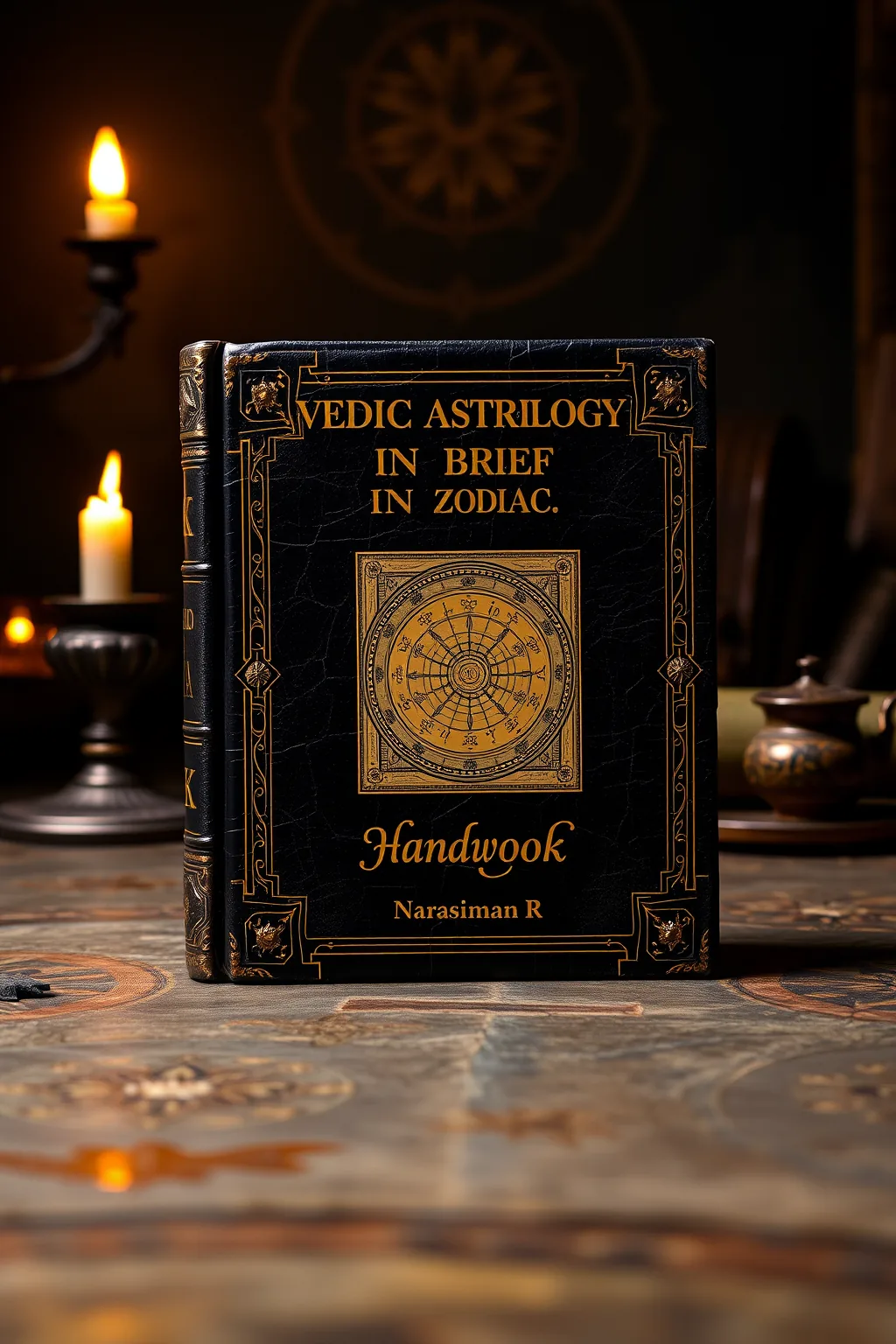
Vedic Astrology in Brief for 12 Zodiac / Rasi Signs - Handbook!
 61
61

Vedic Astrology in Brief for 12 Zodiac / Rasi Signs - Handbook!



Alaric Kestrel, Metaphysical Studies Reviewer — Narasimhan R's "Vedic Astrology in Brief" is a luminous beacon in the often-obscured landscape of Jyotisha. This handbook masterfully distills the profound esoteric insights of Vedic astrology, presenting them with clarity and reverence. It transcends mere horoscopic interpretation, offering a philosophical framework for understanding cosmic influences on the human psyche. The author's strength lies in his ability to convey complex astrological principles with an accessible yet deeply resonant tone. Ideal for both nascent stargazers and seasoned practitioners seeking a concise yet potent refresher on the Rasi system, this work serves as an indispensable tool for navigating the subtle energies that shape our destinies.
📝 Description
61
Narasimhan R's 2017 handbook explains Vedic astrology's 12 zodiac signs.
This handbook breaks down Vedic astrology for each of the 12 zodiac (Rasi) signs. It clarifies the principles of Jyotisha, the traditional Indian system of astrology. The book examines how the sidereal zodiac, called Rasi, functions as a blueprint for individual lives. Each sign represents a specific cosmic pattern influencing karma and spiritual development. Narasimhan R explains the symbolic language of planets and constellations. The goal is to help readers gain self-awareness and understand their destiny.
The text presents astrology not just as a predictive tool, but as a way to view the universe and one's life within a larger order. It connects the cosmic realm with individual experience. This approach aims to provide a framework for interpreting life's events and personal growth. The book is intended for those interested in esoteric knowledge and the relationship between the universe and the self.
Vedic astrology, or Jyotisha, is a system rooted in ancient Indian philosophical and spiritual traditions. It views celestial bodies not merely as physical objects but as divine influences that shape human life and consciousness. Jyotisha operates on the sidereal zodiac, which aligns with the actual constellations, unlike the tropical zodiac used in Western astrology. This system is concerned with karma, dharma, and the soul's evolution across lifetimes. The book places itself within this tradition by explaining these core concepts in relation to the individual zodiac signs.
💡 Why Read This Book?
Embark on a profound journey of self-discovery by unlocking the ancient cosmic code embedded within your birth chart. This handbook offers a concise yet potent exploration of Vedic astrology's symbolic language, revealing the hidden influences of the Rasi signs on your life's path. It's an essential read for spiritual seekers, aspiring astrologers, and scholars of esoteric traditions yearning to connect with the universe's profound wisdom.
⭐ Reader Reviews
Honest opinions from readers who have explored this book.
❓ Frequently Asked Questions
What is Vedic Astrology (Jyotisha)?
Vedic Astrology, or Jyotisha, is an ancient Indian system of astrology that uses a sidereal zodiac. It is considered a Vedanga, or limb of the Vedas, and provides insights into karma, destiny, and spiritual growth through celestial mapping.
What are Rasi signs in Vedic Astrology?
Rasi signs are the twelve zodiac constellations used in Vedic astrology, corresponding to the sidereal zodiac. Each Rasi represents a unique cosmic energy and archetypal influence on an individual's life and personality.
How does this handbook differ from Western Astrology?
This handbook focuses on the sidereal zodiac used in Vedic astrology, which differs from the tropical zodiac of Western astrology. It emphasizes karma, dharma, and spiritual evolution as central themes.
Is this book suitable for beginners?
Yes, "Vedic Astrology in Brief" is designed for those new to Jyotisha. It provides a foundational understanding of the Rasi signs and their core significations in an accessible manner.
What are the benefits of understanding Vedic Astrology?
Understanding Vedic Astrology can lead to greater self-awareness, a deeper comprehension of life's challenges and opportunities, and guidance for navigating one's spiritual path and fulfilling one's destiny.
🔮 Key Themes & Symbolism
The Cosmic Blueprint and Karmic Threads
This book examines the concept of the birth chart as a divine blueprint, intricately woven with karmic threads from past lives. It explores how the planetary positions and Rasi signs at the moment of birth serve as a map of one's inherent tendencies, challenges, and spiritual potential. The esoteric understanding here is that these celestial arrangements are not random but are divinely orchestrated to guide the soul's evolutionary journey, offering useful insights into the lessons one is meant to learn and the destiny one is destined to fulfill.
Symbolic Language of the Rasi Archetypes
Each of the twelve Rasi signs is presented not just as a zodiacal segment but as a potent cosmic archetype, imbued with detailed symbolism and specific energetic vibrations. The book illuminates the hidden meanings behind these archetypes, connecting them to universal forces and human psychological states. Understanding this symbolic language allows the reader to perceive the subtle influences shaping their personality, relationships, and life circumstances, fostering a deeper connection to the cosmic order and their place within it.
Jyotisha as a Path to Self-Realization
Beyond mere prediction, "Vedic Astrology in Brief" positions Jyotisha as a sacred science, a profound tool for self-realization and spiritual awakening. The book emphasizes how by understanding the celestial influences, individuals can gain clarity on their dharma (life purpose) and navigate their path with greater wisdom and intention. It encourages a shift from passive observation to active engagement with one's astrological chart, using this esoteric knowledge to foster personal growth, overcome obstacles, and ultimately align with their highest potential and cosmic destiny.
💬 Memorable Quotes
Direct passages from the work, attributed to the author.
“Each Rasi is a divine signature etched upon the soul.”
— This highlights the profound and inherent nature of astrological influences, viewing them as unique spiritual imprints guiding individual destiny.
“The celestial dance mirrors the inner landscape.”
— This emphasizes the interconnectedness between the cosmos and the human psyche, suggesting that outer planetary movements reflect inner psychological states.
“Jyotisha: the light that illuminates the path of karma.”
— This defines Vedic astrology as a guiding force that helps individuals understand and read through the consequences of their actions, both past and present.
“Perceive the universe as a sacred text.”
— An invitation to view existence through a spiritual lens, where all phenomena, including celestial events, hold profound meaning and guidance.
💡 Key Ideas
Editorial paraphrase of the work's core concepts — not direct quotes.
The stars do not command, they counsel.
This quote suggests that astrological influences are not deterministic but offer guidance and potential pathways, empowering individuals to make conscious choices.
🌙 Esoteric Significance
Tradition
This work is deeply rooted in the Vedic tradition of Jyotisha, an ancient Indian system of astrology considered a Vedanga. It draws upon the philosophical underpinnings of Hinduism, particularly the concepts of karma, reincarnation, and dharma. Esoterically, it views the cosmos as a living, conscious entity, and the birth chart as a divine map designed to guide the soul's evolution through successive lifetimes.
Symbolism
The book examines the detailed symbolism of the Rasi signs, planets (Grahas), and houses (Bhavas). Each celestial body and zodiacal sign is imbued with complex meanings, representing archetypal energies, psychological tendencies, and karmic patterns. The esoteric significance lies in interpreting these symbols not as mere indicators of events, but as keys to understanding the underlying spiritual forces at play in an individual's life and the universe.
Modern Relevance
In a world often characterized by uncertainty and disconnection, "Vedic Astrology in Brief" offers a timeless framework for self-understanding and spiritual alignment. Its modern relevance lies in providing individuals with a profound tool for navigating personal challenges, identifying their life's purpose, and fostering a deeper connection to the cosmic order. It empowers readers to move beyond material concerns and engage with the subtler, more profound dimensions of existence, promoting holistic well-being and conscious evolution.
👥 Who Should Read This Book
This informative handbook is crafted for a diverse audience of seekers and scholars. For the **beginner**, it offers an accessible yet profound introduction to the foundational principles of Vedic astrology and the Rasi signs. **Aspiring astrologers** will find it an invaluable primer, laying a solid groundwork for further study. **Spiritual seekers** drawn to ancient wisdom traditions will discover a powerful lens through which to understand their life's journey and karmic patterns. **Practitioners** of other esoteric arts, and indeed anyone interested in the profound connection between the cosmos and the human experience, will benefit from its clear exposition and useful insights.
📜 Historical Context
Vedic Astrology, or Jyotisha, is an ancient system originating in India, with roots tracing back to the Vedic period (circa 1500 BCE to 500 BCE). It developed as a Vedanga, one of the six auxiliary disciplines associated with the study of the Vedas, the foundational scriptures of Hinduism. Its development was intertwined with advancements in astronomy and mathematics, with key texts like the Surya Siddhanta codifying its principles. Throughout centuries, Jyotisha evolved, influenced by philosophical schools and regional traditions, yet retaining its core emphasis on karma, dharma, and destiny. Its dissemination has been largely through oral traditions and handwritten manuscripts until the advent of printing, making works like Narasimhan R's handbook crucial for accessing this profound esoteric knowledge in the modern era.
📔 Journal Prompts
Reflect on the dominant Rasi sign in your birth chart. How do its archetypal energies manifest in your daily life and personality?
Consider a challenging planetary aspect mentioned for your Rasi. What spiritual lesson might this configuration be intended to teach you?
How does the concept of 'karma' as presented in Vedic astrology resonate with your personal experiences and beliefs?
If your birth chart is a divine blueprint, what aspects of your destiny do you feel most called to explore or manifest?
In what ways can understanding your Rasi sign help you to better align with your spiritual path and life purpose?
🗂️ Glossary
Jyotisha
The ancient Indian system of astrology, derived from Sanskrit meaning 'light' or 'celestial body'. It is considered a Vedanga, a limb of Vedic knowledge, and focuses on celestial influences on human life and destiny.
Rasi
The twelve zodiacal signs used in Vedic astrology, corresponding to the sidereal zodiac. Each Rasi represents a distinct energetic archetype and influence on an individual's chart.
Graha
In Vedic astrology, the planets that exert influence on earthly affairs. These are typically the Sun, Moon, Mercury, Venus, Mars, Jupiter, and Saturn, along with the shadow planets Rahu and Ketu.
Dharma
A core concept in Indian philosophy and religion, referring to one's righteous duty, purpose in life, and moral order. In Vedic astrology, understanding one's dharma is a key objective.
Karma
The principle of cause and effect, where actions in this life and past lives determine future circumstances and experiences. Vedic astrology is seen as a tool to understand and navigate one's karmic patterns.
This book appears in 2 collections
🔮 Readers Also Liked
Browse all →









More by Narasimhan R
All books →
From the “Astrology” Collection
View all →









More Free Astrology & Cosmology Books
View all →