Vedic Astrology for Beginners
 62
62

Vedic Astrology for Beginners


Pamela McDonough's 'Vedic Astrology for Beginners' is a beacon for those venturing into the profound depths of Jyotish. As an editor steeped in esoteric traditions, I commend McDonough for demystifying complex astrological principles with clarity and reverence. She masterfully bridges the gap between ancient wisdom and the modern seeker, presenting Vedic astrology not as a deterministic fate, but as a sacred map of karmic patterns and spiritual potential. The emphasis on the philosophical underpinnings and symbolic language of Jyotish is particularly noteworthy, offering profound insights for personal transformation. This book is an essential primer for anyone seeking to understand the esoteric architecture of their being through the lens of the stars.
📝 Description
62
Pamela McDonough's 2019 guide, 'Vedic Astrology for Beginners,' introduces Jyotish.
This book explains the fundamentals of Jyotish, the traditional Indian system of astrology. McDonough moves beyond simple horoscopes to show how planetary positions and signs relate to personal development and understanding karma. The text details how each planet, house, and zodiac sign functions as a dynamic symbol connected to larger cosmic forces.
Readers will learn to interpret the symbolic meanings within the structure of existence, gaining insight into the forces that shape their lives. The book is intended for individuals seeking to understand the cosmos and their own inner capacities. It encourages a view of the universe as a conscious, interconnected system that guides human progress toward spiritual awareness.
Jyotish, or Vedic astrology, is an ancient Indian system rooted in the Vedas, the oldest scriptures of Hinduism. It operates on the principle that the movements and positions of celestial bodies at the time of birth reflect an individual's karma and potential life path. Unlike Western astrology, which often focuses on psychological archetypes, Jyotish emphasizes predictive accuracy and remedial measures (like gemstones or mantras) to mitigate negative astrological influences. It is considered a sacred science, a tool for understanding divine timing and the soul's evolutionary journey.
💡 Why Read This Book?
Unlock the ancient, mystical wisdom of Vedic astrology. This book provides a clear, accessible pathway to understanding your unique cosmic blueprint and the karmic currents influencing your life. Ideal for spiritual seekers, aspiring astrologers, and anyone desiring a deeper connection to the universal energies that shape our existence. It offers profound insights for self-discovery and personal transformation.
⭐ Reader Reviews
Honest opinions from readers who have explored this book.
❓ Frequently Asked Questions
What is Vedic Astrology (Jyotish)?
Vedic Astrology, known as Jyotish in Sanskrit, is an ancient Indian system of astrology that uses the sidereal zodiac. It is deeply rooted in Vedic philosophy and aims to understand the karmic influences on an individual's life and potential for spiritual growth.
Is this book suitable for absolute beginners?
Absolutely. This book is meticulously crafted for those with no prior knowledge of astrology, guiding them step-by-step through the fundamental concepts and terminology of Vedic astrology with clarity and ease.
What are the key differences between Vedic and Western astrology?
The primary difference lies in the zodiac used: Vedic astrology employs the sidereal zodiac, which is fixed to the constellations, while Western astrology typically uses the tropical zodiac, which is based on the seasons. Vedic astrology also places a greater emphasis on karma and spiritual development.
What is a 'natal chart' in Vedic astrology?
A natal chart, or Janam Kundali, is a celestial map of the planets, houses, and zodiac signs at the exact moment and location of your birth. It serves as a unique blueprint revealing your inherent strengths, challenges, and life path.
Can Vedic astrology predict the future?
Vedic astrology is not about rigid predestination but rather about understanding potential karmic patterns and tendencies. It offers insights and guidance, empowering individuals to navigate their life with greater awareness and make conscious choices to shape their destiny.
🔮 Key Themes & Symbolism
The Celestial Blueprint of Karma
Explore the profound concept of karma as imprinted within the celestial arrangement at birth. This theme explores how the planets and their positions in the Vedic astrological chart serve as a cosmic record of past actions and their resultant influences on the present life. It emphasizes that understanding this blueprint is not about fatalism, but about gaining awareness of karmic tendencies and opportunities for spiritual evolution, empowering individuals to consciously engage with their destiny.
Symbolism and Archetypes in Jyotish
Uncover the wide range of symbolism and archetypes that form the language of Vedic astrology. Each planet, zodiac sign, and house represents fundamental cosmic forces and universal human experiences. This theme illuminates how these symbols offer clear insights into the psyche, relationships, and life's journey. By understanding the archetypal meanings, readers can decode the intricate messages of their birth chart, fostering a deeper connection to the symbolic universe and its wisdom.
The Path of Spiritual Evolution
Vedic astrology is presented as more than a predictive tool; it is a sacred science guiding individuals toward spiritual awakening. This theme explores how Jyotish illuminates the soul's journey, highlighting areas of spiritual challenge and potential growth. By understanding the planetary influences and their potential for transformation, readers are encouraged to engage with their chart as a map for self-realization, inner peace, and the ultimate unfolding of their divine potential.
💬 Memorable Quotes
Direct passages from the work, attributed to the author.
“Your birth chart is a cosmic fingerprint, unique and revealing.”
— This highlights the individuality and specificity of an astrological chart, likening it to a divine signature that holds the essence of one's being and destiny.
“Jyotish offers a mirror to the soul, reflecting its less-obvious layers.”
— This emphasizes the introspective and psychological power of Vedic astrology, suggesting it helps individuals confront and understand their inner selves, motivations, and subconscious patterns.
“The dance of planets is the rhythm of your soul's unfolding.”
— This poetic metaphor connects the movements of celestial bodies to the personal journey of spiritual growth and self-discovery, portraying life as a dynamic, divinely orchestrated process.
💡 Key Ideas
Editorial paraphrase of the work's core concepts — not direct quotes.
The stars whisper secrets to those who learn their language.
This quote expresses the core esoteric premise of astrology – that celestial bodies are not merely distant objects but carriers of profound knowledge, accessible through dedicated study and intuitive understanding.
To know the stars is to know yourself, and to know yourself is to know the divine.
This quote articulates the ultimate aim of esoteric astrological study: achieving self-knowledge through cosmic understanding, leading to a realization of one's connection to the universal consciousness.
🌙 Esoteric Significance
Tradition
Jyotish is intrinsically linked to the Vedic tradition, one of the oldest spiritual and philosophical systems known. It is considered a sacred science, a 'light' (Jyoti) to illumine the path of life. Its esoteric significance lies in its role as a tool for understanding karma, dharma (one's righteous duty), and the soul's journey through reincarnation. It provides a framework for working through the material world while striving for spiritual liberation (moksha), viewing astrological configurations as divine guidance and opportunities for growth.
Symbolism
The symbolism in Vedic astrology is profound and multi-layered. Planets (Grahas) are not mere celestial bodies but represent divine energies and archetypal forces influencing human life. Zodiac signs (Rashis) symbolize distinct temperaments and life experiences, while houses (Bhavas) represent different areas of life. The interplay of these elements, along with aspects (Drishti) and yogas (planetary combinations), creates a rich symbolic language that mirrors the complexities of human consciousness and the universe. Understanding this symbolism unlocks deeper insights into one's innate potentials and challenges.
Modern Relevance
In contemporary times, Vedic astrology offers a powerful antidote to the perceived randomness and existential angst of modern life. Its emphasis on karma provides a framework for understanding life's challenges as opportunities for growth, fostering resilience and personal responsibility. The insights into one's unique blueprint can empower individuals with self-awareness, guiding them towards fulfilling careers, harmonious relationships, and spiritual practices. It serves as a vital tool for working through the complexities of the 21st century with wisdom, purpose, and a profound connection to the cosmic order.
👥 Who Should Read This Book
This book is a treasure for the earnest spiritual seeker yearning to understand the deeper currents of their existence. Aspiring astrologers will find it an indispensable primer, clarifying the foundational principles of Vedic astrology. Scholars interested in ancient wisdom traditions and comparative cosmology will appreciate its historical and philosophical depth. For practitioners of mindfulness, yoga, or meditation, it offers a celestial map that complements their inner journey, providing a cosmic perspective on personal growth and the unfolding of destiny.
📜 Historical Context
Vedic Astrology, or Jyotish, emerged from the ancient Indian subcontinent, deeply intertwined with the Vedic traditions that flourished thousands of years ago. It is considered one of the Vedangas, auxiliary disciplines of the Vedas, essential for understanding the timing of rituals and sacrifices. Its roots lie in a worldview where the cosmos is seen as a manifestation of divine consciousness, and celestial movements are believed to reflect cosmic order and influence earthly affairs. Over millennia, Jyotish developed a sophisticated system of calculations, interpretations, and remedial measures, drawing heavily on concepts like karma, reincarnation, and dharma. Its transmission occurred through oral traditions, scholarly texts, and the lineage of astrologer-priests. While it has evolved, its core philosophical underpinnings remain tied to the ancient Indian pursuit of spiritual knowledge and cosmic harmony. Its influence has historically extended across Asia and, in modern times, has gained global recognition.
📔 Journal Prompts
Reflect on the planetary influences in your natal chart that resonate most strongly with your current life experiences. How do these energies manifest in your daily life?
Consider the symbolism of your Ascendant (Lagna) and its ruling planet. What does this combination reveal about your core identity and approach to life?
Explore the concept of karma as presented in Vedic astrology. How does understanding your karmic patterns empower you to make conscious choices?
Identify a challenging planetary combination in your chart. How can you approach this aspect with awareness and transform its potential obstacles into opportunities for growth?
Imagine your natal chart as a sacred text. What central message or lesson do you believe it holds for your soul's evolution?
🗂️ Glossary
Jyotish
The Sanskrit term for Vedic Astrology, meaning 'the science of light.' It refers to the ancient Indian system of celestial interpretation, aiming to illuminate the path of life and understand cosmic influences.
Graha
Literally 'seizer' or 'planet' in Sanskrit. In Vedic astrology, the nine primary Grahas (Sun, Moon, Mars, Mercury, Jupiter, Venus, Saturn, Rahu, Ketu) are celestial bodies that exert influence on earthly life and human destiny.
Rashi
The Sanskrit word for 'zodiac sign.' Vedic astrology uses the sidereal zodiac, comprising twelve Rashis (Aries, Taurus, Gemini, Cancer, Leo, Virgo, Libra, Scorpio, Sagittarius, Capricorn, Aquarius, Pisces), each with unique characteristics and symbolism.
Bhava
The Sanskrit term for 'house' in an astrological chart. There are twelve Bhavas, each representing a different sphere of life, such as self, wealth, siblings, home, children, health, relationships, career, and spirituality.
Dasha
A planetary period system in Vedic astrology, most commonly the Vimshottari Dasha. Dashas indicate the timing of specific planetary influences and the unfolding of events throughout a person's life.
This book appears in 2 collections
🔮 Readers Also Liked
Browse all →








More by Pamela McDonough
All books →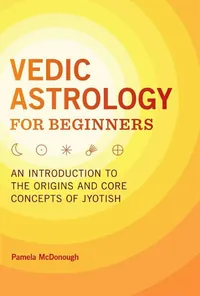
From the “Astrology” Collection
View all →









More Free Astrology & Cosmology Books
View all →