Thelema Unicursal Hexagram Journal
 75
75

Thelema Unicursal Hexagram Journal
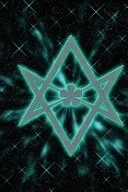
The Thelema Unicursal Hexagram Journal functions precisely as advertised: a blank slate for personal inscription. Its strength lies in its simplicity and the potent symbolism of the unicursal hexagram adorning its cover, a visual anchor for disciplined reflection. The decision to use lined pages is practical, facilitating legible note-taking over loose-leaf scribbles. However, its very simplicity is also a limitation; it offers no guidance, no prompts beyond the implied call to record. While the blurb encourages "reaching higher," the journal itself provides no specific framework for doing so, leaving the user entirely to their own devices. The cover's unicursal hexagram, a symbol representing the union of opposites and the divine, invites contemplation of larger cosmic principles alongside personal minutiae. The journal is a tool, effective if wielded with intent, but offering no inherent direction. It serves its purpose as a repository, but the journey it facilitates is entirely dictated by the user's own will and understanding.
📝 Description
75
### What It Is
The Thelema Unicursal Hexagram Journal is a blank, lined notebook designed for personal record-keeping and spiritual exploration. Published in 2016, it offers a physical space for users to document their thoughts, experiences, and aspirations.
### Who It's For
This journal is intended for individuals engaged in personal development, esoteric studies, or any pursuit requiring consistent reflection. It serves practitioners of various spiritual paths seeking a dedicated medium for their insights.
### Historical Context
While this specific journal is a modern publication from 2016, its purpose aligns with a long tradition of spiritual and philosophical journaling dating back centuries. The use of the unicursal hexagram links it to occult traditions that gained prominence in the late 19th and early 20th centuries, particularly within the milieu of figures like Aleister Crowley and the Thelemic current.
### Key Concepts
The journal's central concept is the act of recording one's life and ideas. The inclusion of the unicursal hexagram suggests an intention to align personal reflections with a symbol of unity, macrocosm and microcosm, and the divine union. The emphasis is on practical application: writing down thoughts to retain them and to foster personal growth.
💡 Why Read This Book?
• Gain a dedicated space for tracking your spiritual or philosophical progress, using the journal's lined pages to document insights gained from studying esoteric traditions like Thelema, first articulated in the early 20th century. • Integrate the symbolic power of the unicursal hexagram into your daily practice, providing a visual reminder of cosmic unity and personal integration during your writing sessions. • Cultivate a habit of self-reflection and idea retention, ensuring that fleeting thoughts and experiences are captured and can be revisited, aligning with the practical advice found in the book's blurb.
⭐ Reader Reviews
Honest opinions from readers who have explored this book.
❓ Frequently Asked Questions
What is the significance of the unicursal hexagram on the journal cover?
The unicursal hexagram, a symbol often associated with Aleister Crowley and Thelema, represents the union of the macrocosm and microcosm, divine unity, and the balance of opposing forces.
Is this journal suitable for beginners in occult studies?
Yes, its blank pages are ideal for beginners to record initial thoughts and questions as they explore esoteric subjects, without the pressure of guided prompts.
When was Thelema Unicursal Hexagram Journal first published?
The journal was first published on October 19, 2016, making it a contemporary tool for modern practitioners.
Does the journal contain any specific writing prompts?
No, the journal provides entirely blank lined pages, encouraging freeform writing rather than structured prompts, as indicated by its original blurb.
What is the primary purpose of this journal?
Its primary purpose is to serve as a personal record for thoughts, ideas, experiences, and aspirations, encouraging users to document their lives and "keep reaching higher."
Who is the author of Thelema Unicursal Hexagram Journal?
The author is listed as 'Cool Image', with the first publication date in 2016.
🔮 Key Themes & Symbolism
Personal Record Keeping
The core function of this journal is to provide a dedicated space for individuals to meticulously record their life experiences, ideas, and reflections. This act of documentation is presented as essential for retaining valuable insights and fostering personal growth. The journal encourages a proactive approach to memory and self-awareness, urging users to capture fleeting thoughts before they are lost.
Spiritual Aspiration
Beyond mere record-keeping, the journal implicitly encourages users to 'keep reaching higher' and 'live the best life you can.' This aspiration is linked to the symbolic significance of the unicursal hexagram, suggesting a desire for personal evolution and alignment with higher principles through consistent introspection and application.
The Unicursal Hexagram
The prominent placement of the unicursal hexagram on the cover is a deliberate choice, linking the journal to specific esoteric traditions. This symbol, often associated with the union of macrocosm and microcosm, represents wholeness, balance, and the divine spark within all things. Its presence invites users to imbue their personal reflections with a sense of universal connection.
Practical Application of Esotericism
This journal embodies the practical side of esoteric philosophy. It moves beyond theoretical study by providing a tool for direct application. The act of writing serves as a bridge between abstract concepts and lived experience, transforming contemplation into tangible records that can inform future actions and understanding.
💬 Memorable Quotes
“A life worth living is worth recording...”
— This opening statement frames the journal not just as a notebook, but as an essential tool for anyone seeking to value and preserve their personal journey and intellectual development.
“...these lined pages crave your scribbled notes, thoughts, ideas, experiences, and notions.”
— This anthropomorphic phrasing imbues the journal with an active desire to receive the user's input, emphasizing its readiness as a vessel for unfiltered self-expression and memory.
“Fill the lines, remember your life, don't lose your ideas...”
— This is a direct imperative, highlighting the journal's function as an aid to memory and a safeguard against the ephemeral nature of thought and experience.
“...and keep reaching higher to live the best life you can.”
— This phrase encapsulates the aspirational aspect of the journal's purpose, suggesting that the act of recording and reflecting is intrinsically linked to personal growth and self-actualization.
“It all starts here, folks, but you'll need your own pen or pencil.”
— This pragmatic closing remark grounds the lofty ideals in simple necessity, reminding the user that the tool itself is inert without their active participation and basic supplies.
🌙 Esoteric Significance
Tradition
This journal aligns with the modern Thelemic current, which emerged from the teachings of Aleister Crowley in the early 20th century. Thelema emphasizes the Law of Thelema ('Do what thou wilt shall be the whole of the Law') and the concept of the True Will. This journal serves as a practical tool for individuals within this tradition to document their personal gnosis, magical workings, and spiritual insights, facilitating the exploration of their unique path.
Symbolism
The primary symbol is the unicursal hexagram, a variation of the Star of David that can be drawn in one continuous line. In esoteric traditions, it represents the union of macrocosm and microcosm, the five elements, and the divine interconnectedness of all things. Its presence on the journal encourages users to see their personal reflections as part of a larger cosmic order and to strive for inner balance and integration.
Modern Relevance
Contemporary practitioners of Thelema, Chaos Magick, and general ceremonial magic find value in such journals. They offer a straightforward, unbound space for documenting personal experiments, tracking spiritual progress, and capturing insights that arise from practices influenced by figures like Crowley or modern occult authors such as Lon Milo DuQuette or Frater U.D. The journal supports the modern emphasis on personalized spiritual paths and self-initiated magical work.
👥 Who Should Read This Book
• Aspiring Thelemites seeking a dedicated space to record their understanding of the Law of Thelema and document personal magical operations. • Practitioners of Western Esotericism interested in integrating symbolic representation, like the unicursal hexagram, into their daily reflective practices. • Individuals engaged in any form of personal development or philosophical inquiry who value tangible records of their thoughts, ideas, and life experiences.
📜 Historical Context
The Thelema Unicursal Hexagram Journal, published in 2016, emerges from a long lineage of Western Esotericism, particularly the magical and philosophical currents that flourished in the late 19th and early 20th centuries. The unicursal hexagram itself gained significant traction through the work of Aleister Crowley, a pivotal figure in occultism whose system, Thelema, was founded upon his 1904 reception of The Book of the Law. This journal taps into the Thelemic emphasis on individual will and the recording of personal gnosis. It exists within a broader context where practices of journaling and diary-keeping were integral to the development of magical and philosophical systems, employed by figures like Helena Blavatsky and Aleister Crowley himself. While not directly engaging with a specific competing school of thought in its content, its symbolic choice places it firmly within the Neo-Thelemic and broader Hermetic milieu, distinct from, for example, the more ritualistic focus of Golden Dawn traditions prior to Crowley's schism.
📔 Journal Prompts
Your personal definition of True Will, inspired by the unicursal hexagram's symbolism.
Reflect on an experience that demonstrated the union of opposites in your life.
Record three ideas you wish to manifest in the coming lunar cycle.
Detail a moment of personal gnosis or profound realization.
How can the principles symbolized by the unicursal hexagram guide your daily actions?
🗂️ Glossary
Thelema
A religious philosophy and spiritual practice founded by Aleister Crowley, based on his reception of the Book of the Law in 1904. Its central tenet is 'Do what thou wilt shall be the whole of the Law.'
Unicursal Hexagram
A hexagram (six-pointed star) that can be drawn in a single continuous line, symbolizing unity, the macrocosm/microcosm connection, and the integration of divine and human will.
Gnosis
Knowledge, particularly spiritual or mystical knowledge obtained through direct experience or intuition, often considered transformative.
True Will
In Thelemic philosophy, the unique purpose or destiny of an individual, distinct from egoic desires. Discovering and enacting one's True Will is a central goal.
Macrocosm
The universe or the greater world, often contrasted with the microcosm (the individual human being or the small world).
Microcosm
The small world or universe, often referring to the individual human being as a reflection or miniature of the greater universe (macrocosm).
Esotericism
Systems of thought and practice concerned with hidden knowledge, spiritual transformation, and often originating from ancient traditions, typically intended for initiates.