The Good Tarot
 79
79

The Good Tarot


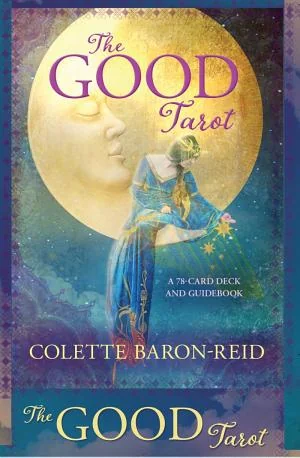
Colette Baron-Reid’s *The Good Tarot* attempts to demystify the often-daunting world of tarot for a contemporary audience, and largely succeeds in its aim to reframe the cards as tools for empowerment. The strength of the deck lies in its accessible artwork and Baron-Reid’s direct, encouraging prose, which steers clear of overly arcane jargon. For instance, the interpretation of the "Unburdened" card, which replaces a more traditional, potentially negative card, exemplifies this positive reframing. However, the work occasionally leans too heavily into self-help platitudes, which might feel reductive to those seeking deeper philosophical engagement with the tarot's historical symbolism. While the intention is to make the practice more approachable, some of the nuanced historical context of tarot archetypes is consequently simplified. Despite this, *The Good Tarot* offers a valuable entry point for modern seekers.
This is a well-intentioned modern oracle for accessible self-guidance.
📝 Description
79
### What It Is The Good Tarot presents a modern approach to divination, utilizing a deck of 78 cards designed for intuitive guidance. Colette Baron-Reid, the author, offers a system that moves beyond traditional fortune-telling, emphasizing personal empowerment and self-discovery. The deck and its accompanying guide are structured to facilitate a dialogue with one's inner wisdom, making it accessible to both neophytes and experienced practitioners seeking a fresh perspective.
### Who It's For This work is intended for individuals interested in contemporary spiritual practices and self-help tools. It appeals to those who are curious about tarot but may find older systems intimidating, as well as seasoned diviners looking for a contemporary oracle. Anyone seeking clarity on life's challenges, confirmation of their intuition, or a structured method for self-reflection will find value here. It's particularly suited for those drawn to positive psychology and manifestation principles.
### Historical Context While tarot has roots stretching back to the 15th century in Europe, with decks like the Visconti-Sforza serving as early examples, *The Good Tarot* emerges from a late 20th and early 21st-century resurgence of interest in divination and esoteric studies. This period saw a shift from purely predictive methods towards psychological and self-development applications of tools like tarot, influenced by figures such as Carl Jung and the New Age movement. Baron-Reid's approach aligns with this evolution, focusing on archetypal patterns and personal growth.
### Key Concepts The core of *The Good Tarot* lies in its emphasis on intuitive interpretation, archetypal imagery, and the concept of "sacred contracts." The deck's structure, featuring Major and Minor Arcana, is re-envisioned with accessible language and modern themes. Concepts like "divine timing" and "aligning with your soul's purpose" are central, encouraging users to see their life path as a series of opportunities for growth and wisdom rather than predetermined fates. The work promotes the idea that the cards are mirrors reflecting inner truths.
💡 Why Read This Book?
• You will learn to access your own intuition through a structured, visually appealing card system, fostering greater self-reliance in decision-making. • You will gain a fresh perspective on archetypal wisdom, understanding how universal life lessons can be applied to contemporary personal challenges. • You will experience a method of self-reflection that prioritizes personal growth and positive affirmation, rather than deterministic outcomes.
why_read
⭐ Reader Reviews
Honest opinions from readers who have explored this book.
❓ Frequently Asked Questions
What is the primary difference between The Good Tarot and traditional Rider-Waite tarot decks?
The Good Tarot, published in 2017, emphasizes intuitive guidance and personal empowerment over traditional predictive meanings. It features modern artwork and language, aiming for accessibility, whereas traditional decks like the Rider-Waite system (popularized in the early 20th century) often carry more complex historical symbolism.
Is Colette Baron-Reid a well-known figure in the esoteric community?
Yes, Colette Baron-Reid is an internationally renowned spiritual medium, intuitive counselor, and author. She has published several popular oracle decks and books since the late 1990s, establishing a significant following in contemporary spiritual and metaphysical circles.
How does The Good Tarot relate to concepts of manifestation or positive psychology?
The deck aligns closely with principles of manifestation and positive psychology by framing card interpretations around personal agency, potential, and the power of intention. It encourages users to focus on their inner resources and desired outcomes, fostering a proactive approach to life.
Can beginners use The Good Tarot effectively without prior tarot knowledge?
Absolutely. The Good Tarot is specifically designed for accessibility. The accompanying guide provides clear explanations for each card, and the emphasis is on developing personal intuition rather than memorizing rigid meanings, making it ideal for newcomers.
What kind of imagery is featured on The Good Tarot cards?
The imagery is contemporary and often symbolic, drawing on archetypal themes but presented in a modern artistic style. It aims to evoke a sense of inner knowing and connection to universal energies, often featuring nature, spiritual figures, and abstract representations of concepts.
Does The Good Tarot offer a complete divination system?
Yes, it comprises a 78-card deck structured similarly to traditional tarot (though with some renamed suits and archetypes) and a comprehensive guidebook. This allows for a full range of readings and explorations of personal questions and life paths.
🔮 Key Themes & Symbolism
Intuitive Self-Guidance
The work champions the development of personal intuition as a primary source of wisdom. It presents the tarot deck not as a tool for external prediction, but as a mirror reflecting the user's inner knowing and subconscious insights. The emphasis is on cultivating a dialogue with oneself, using the cards as prompts to unlock inherent understanding and make empowered choices aligned with one's authentic path.
Archetypal Wisdom
Baron-Reid reinterprets universal archetypes within the tarot structure, translating them into accessible concepts relevant to modern life. These archetypes, drawing from a rich history of symbolic representation found in mythologies and spiritual traditions worldwide, serve as metaphors for common human experiences, challenges, and growth opportunities. Understanding these archetypes helps users recognize patterns in their lives.
Personal Empowerment
A central tenet of *The Good Tarot* is the belief in the user's inherent power to shape their reality. The interpretations and spreads are designed to foster a sense of agency, encouraging individuals to take responsibility for their choices and to view challenges as catalysts for growth. This contrasts with more fatalistic interpretations of divination, positioning the cards as collaborators in self-actualization.
Sacred Contracts & Soul Purpose
The book explores the idea that individuals enter into 'sacred contracts'—inherent life purposes or lessons meant for soul growth. The tarot readings are framed as a way to gain clarity on these contracts and align one's actions with their soul's purpose. This perspective adds a layer of profound meaning to everyday experiences, suggesting a divinely guided journey.
💬 Memorable Quotes
“The cards are here to help you remember who you are and what you came here to do.”
— This statement encapsulates the book's core philosophy: that divination tools are primarily for self-remembrance and alignment with one's life mission, rather than external fortune-telling.
“Every card is a teacher, and every reading is a lesson.”
— This highlights the educational and growth-oriented approach of the deck, framing each interaction with the cards as an opportunity for learning and personal development.
“Your intuition is your inner divine guidance system.”
— This emphasizes the author's belief in the power of personal intuition as a reliable, inherent source of wisdom and direction, positioning the tarot as a tool to access it.
“The universe is always conspiring to help you find your way.”
— This reflects a perspective of benevolent synchronicity and divine support, suggesting that life's events, when viewed through the lens of the tarot, can be seen as guiding forces.
“You are the creator of your reality.”
— A clear statement of personal agency, reinforcing the idea that individuals have the power to influence their circumstances through their thoughts, intentions, and actions.
🌙 Esoteric Significance
Tradition
While drawing loosely from the archetypal framework inherent in the tarot's history, dating back to 15th-century Italy, *The Good Tarot* significantly departs from traditional esoteric lineages like Hermeticism or Kabbalah. It operates within the modern spiritual-wellness movement, which often synthesizes psychological principles with intuitive practices. Baron-Reid's approach emphasizes personal revelation and empowerment, aligning more with contemporary oracle traditions than with historically codified systems of divination.
Symbolism
The deck utilizes modern, often symbolic imagery. For example, the 'Unburdened' card replaces traditional 'Death' or 'Tower' archetypes with a figure shedding weight, symbolizing release and transformation in a less intimidating manner. The 'Sacred Contract' card, a recurring theme, represents the soul's purpose, a concept interpreted through a lens of personal destiny and growth rather than preordained fate, drawing on archetypal imagery of journeys and commitments.
Modern Relevance
Works like *The Good Tarot* are highly relevant to contemporary spiritual seekers who prefer intuitive, self-directed practices. They resonate with communities focused on personal development, mindfulness, and the integration of spiritual tools into daily life. Thinkers and practitioners in positive psychology, manifestation coaching, and modern oracle reading often reference or are influenced by this accessible, empowerment-focused approach to divination.
👥 Who Should Read This Book
• Individuals new to tarot seeking an approachable entry point without the intimidation of complex historical symbolism. • Practitioners of modern spirituality and self-help looking for tools to enhance intuition and personal empowerment. • Those interested in contemporary divination systems that focus on guidance and self-discovery over predictive outcomes.
📜 Historical Context
Published in 2017, *The Good Tarot* by Colette Baron-Reid arrived during a period of intense popular interest in divination, mindfulness, and self-help practices. The early 21st century saw a significant shift in how esoteric tools were perceived; many, like tarot, moved from the fringes into mainstream wellness culture. This era was influenced by New Age philosophies and psychological approaches to spirituality, which emphasized personal empowerment and subjective experience over dogmatic systems. Unlike earlier, more traditional tarot interpretations that might have focused on strict symbolism or predictive accuracy, Baron-Reid's work aligns with contemporaries like Doreen Virtue (who transitioned away from angel cards around this time) and James Van Praagh, who popularized accessible, intuitive approaches to spiritual guidance. The reception for such works often highlights their user-friendliness and positive messaging, appealing to a generation seeking practical tools for navigating modern life challenges.
📔 Journal Prompts
How does the concept of a 'sacred contract' apply to a current challenge in my life?
Which card from The Good Tarot most vividly represents my current inner state?
What does 'unburdening' mean for me right now, and what can I release?
In what ways can I be more attuned to my 'inner divine guidance system' this week?
How can I consciously act as the 'creator of my reality' in a specific situation?
🗂️ Glossary
Archetype
A universal, inherited pattern of thought or imagery derived from the collective unconscious, as described by Carl Jung, often appearing in myth and symbolism.
Intuition
The ability to understand something immediately, without the need for conscious reasoning; an inner knowing or gut feeling.
Sacred Contract
A concept suggesting an inherent life purpose or soul mission that an individual is meant to fulfill, guiding their experiences and growth.
Oracle
A person or agency considered to be a source of divine wisdom or prophetic prediction; or, the communication from such a source, often via a tool like cards or runes.
Divination
The practice of seeking knowledge of the future or the unknown by supernatural means, often through symbolic interpretation.
Manifestation
The process of bringing something into physical reality through thought, belief, and focused intention, often associated with spiritual and New Thought traditions.
Minor Arcana
The four suits of a tarot deck (typically Wands, Cups, Swords, Pentacles), representing the everyday experiences and challenges of life.