The Enchantment of Lily Dahl
 73
73

The Enchantment of Lily Dahl
Siri Hustvedt's "The Enchantment of Lily Dahl" offers a keenly observed study of a young woman navigating the cusp of adulthood in a seemingly ordinary setting. The strength of the novel lies in its subtle yet potent portrayal of atmosphere; the Ideal Café and its environs become a palpable presence, shaping Lily's perceptions. Hustvedt excels at sketching characters who are both familiar and unsettling, hinting at deeper currents beneath their surface interactions. However, the narrative's deliberate pacing, while contributing to its realism, occasionally risks losing momentum, particularly in its middle sections. A particularly striking element is the way Hustvedt describes Lily's internal reactions to the gazes of others – a concept that feels both specific to Lily and universally recognizable. The novel ultimately succeeds as a nuanced exploration of self-discovery within a confined social sphere.
📝 Description
73
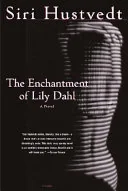
### What It Is Siri Hustvedt's "The Enchantment of Lily Dahl," first published in 2013, is a narrative set in the fictional town of Webster, Minnesota. It centers on Lily Dahl, a nineteen-year-old waitress living above the Ideal Café. The novel presents a portrait of a young woman at a crossroads, surrounded by a diverse and often peculiar cast of characters who inhabit the café and her life. The story unfolds through Lily's experiences, exploring themes of identity, perception, and the subtle undercurrents of human interaction.
### Who It's For This work will appeal to readers who appreciate character-driven narratives and psychological depth. Those interested in explorations of provincial life, the formation of self, and the often-unseen dynamics between individuals will find much to engage with. It is suitable for those who enjoy literary fiction that examines the intricacies of everyday existence without resorting to sensationalism.
### Historical Context Published in 2013, "The Enchantment of Lily Dahl" emerged during a period where literary fiction continued to grapple with post-modern sensibilities, focusing on subjective experience and fragmented realities. While not directly aligned with a specific philosophical movement, Hustvedt's work shares common ground with authors like Alice Munro or Elizabeth Strout in its meticulous depiction of small-town life and the inner lives of its inhabitants. The year 2013 also saw a continued interest in autofiction and explorations of the author's own life, though Hustvedt maintains a distinct narrative voice here.
### Key Concepts The novel introduces the concept of "enchantment" not as simple magic, but as a complex psychological state, a fascination that can be both illuminating and deceptive. It examines how individuals perceive themselves and are perceived by others, particularly within the confined social ecosystem of a small town. The Ideal Café serves as a microcosm, a stage where relationships, desires, and hidden tensions play out, influencing Lily's developing understanding of the world and her place within it.
💡 Why Read This Book?
• Gain insight into the subtle power of perception as explored through Lily Dahl's experiences in Webster, Minnesota, understanding how external observation shapes internal identity. • Explore the concept of "enchantment" as a complex psychological phenomenon, distinct from overt magic, and its influence on human connection and self-understanding. • Appreciate a meticulously crafted depiction of small-town life, examining the intricate social dynamics within the Ideal Café and its impact on character development.
⭐ Reader Reviews
Honest opinions from readers who have explored this book.
❓ Frequently Asked Questions
What is the primary setting of "The Enchantment of Lily Dahl"?
The novel is primarily set in the fictional small town of Webster, Minnesota, with much of the action revolving around the Ideal Café where the protagonist, Lily Dahl, works as a waitress.
Who is the author of "The Enchantment of Lily Dahl"?
The book was written by Siri Hustvedt, an American novelist and essayist.
When was "The Enchantment of Lily Dahl" first published?
"The Enchantment of Lily Dahl" was first published on June 11, 2013.
What are some of the key themes explored in the novel?
The novel delves into themes of identity, perception, the formation of self, the nature of observation, and the intricate social dynamics within a small community.
Is "The Enchantment of Lily Dahl" part of a series?
No, "The Enchantment of Lily Dahl" is a standalone novel and is not part of a series.
What is the significance of the Ideal Café in the story?
The Ideal Café serves as a central hub and a microcosm of the town's social life, a stage where characters interact and their relationships, desires, and tensions are revealed.
🔮 Key Themes & Symbolism
The Gaze and Self-Perception
The novel meticulously examines how the act of being observed, the "gaze" of others, shapes an individual's sense of self. Lily Dahl, the protagonist, is acutely aware of how she is perceived by the patrons of the Ideal Café and the inhabitants of Webster, Minnesota. This external scrutiny influences her internal monologue and her developing identity, highlighting the performative aspects of selfhood in social environments. The work explores how these perceptions, whether accurate or not, become internalized, impacting one's choices and self-definition.
Provincial Life as Microcosm
Webster, Minnesota, and specifically the Ideal Café, function as a contained world where complex human behaviors and relationships are amplified. Hustvedt uses this setting to dissect the subtle social hierarchies, unspoken rules, and hidden desires that characterize small-town existence. The limited scope allows for an intense focus on character interactions, revealing the often-surprising depths and contradictions within seemingly ordinary lives. It demonstrates how universal human experiences can manifest intensely within a confined geographical and social space.
The Nature of "Enchantment"
The title itself points to a central exploration: what constitutes "enchantment"? In this context, it is less about overt sorcery and more about the profound psychological and emotional draw individuals have on one another, or the compelling fascination one can develop with a place or an idea. It examines how these forces can be both seductive and potentially disorienting, leading characters to misinterpret situations or become fixated. The novel probes the subjective nature of these attractions and their impact on Lily's journey.
Coming of Age and Identity Formation
At nineteen, Lily Dahl stands on the precipice of adulthood, a period marked by intense self-discovery and the formation of a stable identity. Her experiences in Webster, her work at the café, and her interactions with the eclectic cast of characters all contribute to this process. The novel traces her evolving understanding of herself, her desires, and her place in the world. It captures the vulnerability and uncertainty inherent in this transitional phase, as well as the burgeoning strength and self-awareness.
💬 Memorable Quotes
“Lily's life revolved around the Ideal Café.”
— This simple statement anchors Lily's existence to a specific physical location, emphasizing the café's role not just as a workplace but as the central stage for her social and psychological development.
“A nineteen-year-old girl poised on the brink of womanhood.”
— This phrase captures Lily's transitional state, highlighting her liminal position between adolescence and adulthood, a period rife with potential, uncertainty, and self-definition.
“The work explores the subtle undercurrents of human interaction.”
— This interpretation suggests the novel's focus on unspoken dynamics, unspoken desires, and the often-invisible forces that shape relationships between characters.
“Webster, Minnesota, served as the backdrop for Lily's experiences.”
— This highlights the importance of the specific, seemingly mundane setting in shaping the narrative and the characters' lives, grounding the story in a tangible, albeit fictional, reality.
“The novel presents a bizarre cast of characters.”
— This points to the unique and perhaps eccentric individuals who populate Lily's world, suggesting they play a significant role in her journey and the unfolding of the plot.
🌙 Esoteric Significance
Tradition
While "The Enchantment of Lily Dahl" is primarily a work of literary fiction, its deep exploration of perception, selfhood, and the subtle forces that shape human consciousness can be viewed through a lens informed by esoteric traditions concerned with the nature of reality and the mind. It aligns with certain Gnostic ideas about the illusory nature of the mundane world and the internal struggle for self-knowledge, or Hermetic principles concerning the correspondence between the inner and outer worlds. The "enchantment" can be seen as a metaphor for the veils that obscure true understanding.
Symbolism
The Ideal Café functions as a symbolic space, a microcosm of the external world where characters perform their roles and interact under a form of scrutiny. Lily's own development can be seen as a symbolic journey towards self-awareness, moving from a state of being defined by others' perceptions to a nascent understanding of her own agency. The act of observation itself becomes a symbolic motif, representing the power dynamics and the construction of reality through subjective experience.
Modern Relevance
Contemporary thinkers and practitioners in fields such as consciousness studies, narrative therapy, and even certain branches of psychological astrology might find resonance in Hustvedt's depiction of how external narratives and perceptions shape internal reality. The novel's nuanced portrayal of identity formation and the subjective experience of enchantment speaks to ongoing discussions about authenticity, self-creation, and the influence of social environments on individual psychology, making it relevant for those interested in the intersection of literature and lived experience.
👥 Who Should Read This Book
• Readers interested in character studies and psychological realism, particularly those who appreciate meticulous observation of human behavior and inner thought processes. • Individuals drawn to literary explorations of small-town life and the intricate social dynamics that unfold within confined communities. • Those intrigued by the concept of "enchantment" as a psychological phenomenon and its role in shaping identity and perception, offering a non-magical interpretation.
📜 Historical Context
Published in 2013, "The Enchantment of Lily Dahl" arrived during a literary landscape where psychological realism and explorations of interiority remained prominent. Siri Hustvedt, already an established author, contributed to a continued dialogue on the complexities of human consciousness and social observation. This period saw authors like Zadie Smith and Rachel Cusk examining similar themes of identity and relational dynamics, though often with different stylistic approaches. While Hustvedt's work doesn't engage directly with a specific philosophical movement of the time, its focus on subjective experience and the construction of narrative aligns with broader post-modern literary currents that were still influential. Reception in 2013 noted its characteristic attention to detail and character nuance, a hallmark of literary fiction that year, distinguishing it from more trend-driven narratives.
📔 Journal Prompts
Lily Dahl's awareness of the "gaze" of others.
The Ideal Café as a microcosm of social dynamics.
The multifaceted meaning of "enchantment" in Webster.
The transition from adolescence to womanhood for Lily.
How external perceptions shape internal identity for the characters.
🗂️ Glossary
The Gaze
Refers to the act of looking, observing, and being observed. In the context of the novel, it signifies how external scrutiny and the awareness of being watched profoundly influence a character's self-perception and behavior.
Enchantment
In "The Enchantment of Lily Dahl," this term signifies a complex psychological or emotional draw, a fascination or captivation that can be both alluring and potentially deceptive, rather than literal magic.
Microcosm
A miniature representation of a larger system. The Ideal Café serves as a microcosm of the town of Webster, Minnesota, reflecting its social dynamics, relationships, and underlying tensions.
Identity Formation
The process by which an individual develops a distinct sense of self. The novel explores this through Lily Dahl's experiences as she navigates adolescence and early adulthood.
Provincial Life
Relating to or characteristic of the regions outside the capital or main center. In the novel, it describes the setting of Webster, Minnesota, and its specific social environment.
Liminal State
A transitional phase or state of being, often existing between two distinct stages. Lily Dahl is depicted in a liminal state between girlhood and womanhood.
Subjective Experience
The reality of personal perception, feeling, and consciousness. The novel emphasizes understanding characters through their individual, internal viewpoints.


















![ERIC ED051965: The Remedial [Reading] Teacher: Special Training and Professional Responsibilities.](/img/thumb/eric-ed051965-the-remedial-reading-teacher-special-training-and-professional-responsibilities-eric.webp)