The Dead Sea Scrolls
 84
84

The Dead Sea Scrolls
Sarah Blackmore’s "The Dead Sea Scrolls" avoids the common pitfall of treating these ancient documents as mere archaeological curiosities. Instead, she presents them as vibrant, living texts that speak to profound theological and philosophical questions. The chapter detailing the Qumran community's eschatological expectations, particularly their anticipation of a divinely appointed leader, is meticulously researched and compelling. However, the work occasionally struggles to fully capture the sheer spiritual intensity that many scholars attribute to the scrolls; it remains largely within a historical-critical framework, which, while valuable, can feel somewhat detached from the texts' potential mystical resonance. Nevertheless, Blackmore's scholarly rigor and clear prose make this an authoritative guide for understanding a pivotal set of ancient writings.
📝 Description
84
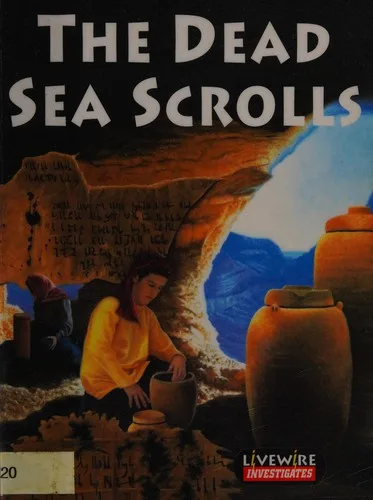
### What It Is The Dead Sea Scrolls, first published in 2000 by Sarah Blackmore, offers a critical examination of the ancient manuscripts discovered near the Qumran caves. It moves beyond sensationalism to present a scholarly yet accessible account of their content, context, and enduring significance.
### Who It's For This work is essential for students of ancient history, biblical studies, and comparative religion, as well as those intrigued by the historical underpinnings of Western esotericism. It serves those seeking a grounded understanding of texts that have shaped religious and philosophical thought for millennia.
### Historical Context Blackmore situates the scrolls within the tumultuous period of Second Temple Judaism, a time marked by diverse messianic expectations and sectarian movements. The discovery, beginning in 1947, challenged established biblical scholarship and provided unprecedented insight into Jewish life and belief in the centuries preceding and encompassing the rise of Christianity.
### Key Concepts The book explores concepts such as the dualistic worldview attributed to the Qumran community, the interpretation of prophetic texts for contemporary events, and the complex relationship between these texts and the nascent Christian movement. It also addresses the ongoing scholarly debates surrounding their authorship and precise theological stance.
💡 Why Read This Book?
• Understand the historical milieu of Second Temple Judaism, learning about the Essenes and other sects that influenced the period leading up to the Common Era. • Grasp the textual critical issues surrounding the Hebrew Bible, as the scrolls provide the oldest known manuscripts of many biblical books, predating previously known copies by a millennium. • Explore the early development of messianic thought, a concept central to both Judaism and Christianity, as evidenced by the varied interpretations of prophecy within the scrolls.
⭐ Reader Reviews
Honest opinions from readers who have explored this book.
❓ Frequently Asked Questions
When were the Dead Sea Scrolls discovered?
The Dead Sea Scrolls were discovered between 1947 and 1956 in caves near the ancient settlement of Qumran on the northwest shores of the Dead Sea.
What languages are the Dead Sea Scrolls written in?
The majority of the scrolls are written in Hebrew, with a significant number in Aramaic and a few in Greek. This linguistic diversity reflects the cultural milieu of Judea during the Second Temple period.
Who is believed to have written the Dead Sea Scrolls?
While debated, a leading theory attributes many of the scrolls to the Essenes, a Jewish sect that lived at Qumran. However, some scrolls likely originated from other Jewish groups or were brought to Qumran from Jerusalem.
What is the significance of the Copper Scroll?
The Copper Scroll is unique for being inscribed on metal (copper) and listing locations of hidden treasures. Its contents and purpose remain a subject of much scholarly discussion and speculation.
How old are the Dead Sea Scrolls?
The scrolls date from the 3rd century BCE to the 1st century CE, making them some of the oldest surviving manuscripts of the Hebrew Bible and related Jewish writings.
Did the Dead Sea Scrolls mention Jesus?
No direct mention of Jesus or early Christianity has been found in the Dead Sea Scrolls. However, they provide crucial context for understanding the religious and social environment in which Christianity emerged.
🔮 Key Themes & Symbolism
Qumran Community Life
The work details the likely daily existence and communal practices of the Qumran sect, often identified with the Essenes. This includes their strict adherence to purity laws, communal meals, and shared property, reflecting a deliberate withdrawal from mainstream Judean society. Blackmore examines how this communal structure was designed to foster spiritual readiness for an anticipated divine intervention, a core tenet of their belief system.
Messianic Expectations
A central theme is the diverse and fervent messianic hopes prevalent during the Second Temple period, as documented in the scrolls. Blackmore analyzes texts that speak of multiple anointed figures—priestly and kingly—and the community's interpretation of Old Testament prophecies to align with their immediate eschatological timeline. This provides a rich backdrop for understanding the socio-religious climate that gave rise to figures like John the Baptist and Jesus.
Dualistic Worldview
The book explores the pronounced dualism present in many Qumran texts, often characterized by an 'angel of light' versus 'spirit of darkness' dichotomy. Blackmore explains how this framework informed the community's self-identity as the true inheritors of God's covenant and their perception of the outside world as corrupt and destined for judgment. This Manichaean-like struggle informs their ethical and spiritual teachings.
Textual Variants and Canon
Blackmore addresses the critical importance of the scrolls for understanding the development of the biblical canon. She highlights how these manuscripts, dating from centuries earlier than previously known copies, reveal variations in biblical texts and shed light on which books were considered authoritative by certain Jewish groups before the formalization of the canon.
💬 Memorable Quotes
“The scrolls offer a window into a Judaism far more diverse than previously imagined.”
— This statement underscores the revolutionary impact of the Qumran discoveries, revealing a spectrum of beliefs and practices within Judaism during the Second Temple period that challenged monolithic interpretations.
“Community discipline at Qumran was rigorously enforced through councils and prescribed punishments.”
— This highlights the structured and hierarchical nature of the Qumran sect, emphasizing their commitment to maintaining purity and order within their ranks through strict governance.
“Interpretation of prophecy was not merely academic but an urgent call to immediate action.”
— This captures the eschatological fervor of the Qumran community, suggesting that their study of ancient texts was directly linked to their belief in imminent divine intervention and a call for spiritual preparedness.
“The texts reveal a profound anxiety regarding the perceived corruption of the Temple and its priesthood.”
— This points to the sectarian nature of the Qumran group, whose alienation from Jerusalem's religious establishment likely stemmed from deep theological disagreements and a sense of spiritual crisis.
“Understanding the scrolls requires grappling with their specific historical and linguistic context.”
— This emphasizes the scholarly approach needed to interpret these ancient documents, cautioning against anachronistic readings and stressing the importance of historical and linguistic accuracy.
🌙 Esoteric Significance
Tradition
While not explicitly a text of a specific esoteric tradition, the Dead Sea Scrolls profoundly impacted later Western esoteric thought, particularly through their exploration of dualism, angelology, and apocalypticism. They provided ancient Jewish roots for concepts later elaborated in Gnosticism, Kabbalah, and Theosophy, offering a pre-Christian framework for understanding spiritual warfare and divine revelation.
Symbolism
Key symbols include the 'Sons of Light' versus 'Sons of Darkness,' representing a cosmic struggle between good and evil that informed the community's worldview and ethical imperatives. The motif of the 'Teacher of Righteousness' functions as a messianic or prophetic figure, embodying divine guidance and opposition to corrupt religious authorities, a concept resonating with esoteric master figures.
Modern Relevance
Contemporary esoteric practitioners and scholars often reference the scrolls for their insights into ancient mystical practices, angelic hierarchies, and dualistic cosmologies. Movements focusing on early Christian mysticism, Jewish mysticism (Kabbalah), and comparative esotericism find in the scrolls a foundational text for understanding the spiritual landscape of antiquity.
👥 Who Should Read This Book
• Students of Second Temple Judaism and early Christian origins seeking primary textual context beyond canonical scriptures. • Researchers in comparative religion interested in the diversity of ancient Jewish sects and their theological expressions. • Enthusiasts of ancient mystery traditions looking for historical antecedents of dualistic and apocalyptic thought prevalent in later esoteric systems.
📜 Historical Context
Sarah Blackmore's work arrives at a crucial juncture in the study of the Dead Sea Scrolls, a period of intense scholarly activity following their initial discovery in 1947. The era was marked by a re-evaluation of early Judaism and the origins of Christianity, with scholars like Geza Vermes and E.P. Sanders also contributing significantly to understanding the Second Temple period. Blackmore's analysis engages with the ongoing debates surrounding the scrolls' provenance, particularly the attribution to the Essenes, a group whose ascetic practices and messianic expectations were distinct from other contemporary Jewish movements like the Sadducees or early Pharisees. The reception of the scrolls themselves was not without controversy; initial delays in publication and access fueled speculation and conspiracy theories, making Blackmore's 2000 publication part of a broader effort to synthesize and clarify findings for a wider audience.
📔 Journal Prompts
The 'Sons of Light' versus 'Sons of Darkness' dichotomy as a framework for personal spiritual conflict.
Reflecting on the Qumran community's interpretation of prophecy and its implications for understanding contemporary societal anxieties.
The role of a 'Teacher of Righteousness' figure in spiritual guidance and the concept of spiritual authority.
Considering the textual variants found in the Dead Sea Scrolls and their impact on the perceived reliability of ancient texts.
Examining the Essene emphasis on communal living and purity laws in relation to modern spiritual disciplines.
🗂️ Glossary
Second Temple Period
The era of Jewish history from the rebuilding of the Second Temple in Jerusalem (c. 516 BCE) until its destruction by the Romans in 70 CE. This was a period of significant religious and political ferment.
Essenes
A Jewish ascetic sect that flourished in Judea during the Second Temple period. Many scholars associate them with the community at Qumran and the authorship of many of the Dead Sea Scrolls.
Apocalypticism
A religious belief characterized by the belief in an imminent end of the world and a divine judgment, often involving visions and symbolic language, prominent in texts from the Second Temple period.
Dualism
A philosophical or religious concept that posits two fundamental opposing principles, such as good and evil, spirit and matter, or light and darkness, as the basis of reality.
Messianism
Belief in a messiah or anointed savior figure. During the Second Temple period, various expectations existed regarding the nature and role of such a figure or figures.
Canon
The official list of books considered authoritative scripture within a religious tradition. The Dead Sea Scrolls provide evidence for the fluid state of the biblical canon in ancient Judaism.
Hebrew Bible
The collection of ancient Jewish scriptures, also known as the Tanakh. The Dead Sea Scrolls include the oldest known manuscripts of many books within the Hebrew Bible.