The Christ Chaplain

 79
79

The Christ Chaplain
Pennington’s exploration of the chaplain as a contemplative archetype offers a fresh perspective on pastoral care. The strength lies in his ability to articulate subtle states of prayer using accessible language, particularly when discussing the "prayer of quiet." However, the work occasionally feels repetitive, revisiting similar points without significant new elaboration, which can slow the reader's engagement. The passage detailing the chaplain's internal disposition during moments of crisis, emphasizing stillness over immediate action, is particularly effective. It highlights how inner contemplative practice can inform outward pastoral response. Ultimately, The Christ Chaplain serves as a valuable, if sometimes circuitous, guide to Christian inner prayer.
📝 Description
79
### What It Is
The Christ Chaplain by M. Basil Pennington, first published in 2007, is not a devotional text in the conventional sense. Instead, it functions as an exploration of Christian contemplation through the lens of contemplative practice, drawing parallels with other contemplative traditions. The work examines the role of the chaplain not merely as a pastoral caregiver but as a figure embodying deep spiritual presence and understanding. Pennington uses this figure to unpack specific meditative and prayerful disciplines.
### Who It's For
This book is for individuals seeking to deepen their understanding of Christian contemplative prayer and meditation. It appeals to those interested in the intersection of psychology and spirituality, particularly within a Christian framework. Readers familiar with contemplative practices from other traditions, such as Buddhism or Sufism, may find Pennington’s comparative approach illuminating. It’s also relevant for chaplains or spiritual directors looking to enhance their own contemplative grounding and pastoral effectiveness.
### Historical Context
Published in 2007, The Christ Chaplain emerges from a period of renewed interest in contemplative spirituality across various religious traditions. Pennington, a Trappist monk, was a significant voice in this resurgence, particularly in the latter half of the 20th century and into the 21st. His work often engaged with contemporary psychological thought and comparative mysticism. The book’s approach reflects a broader academic and spiritual movement seeking to bridge the gap between academic study of religion and lived spiritual experience, moving beyond purely doctrinal discussions.
### Key Concepts
Central to The Christ Chaplain is the concept of "contemplative presence." Pennington argues that the chaplain, in their deepest capacity, embodies a state of being rather than solely performing actions. This "being" is cultivated through specific prayerful disciplines that quiet the ego and foster union with the divine. The book also explores the "prayer of quiet" and the "prayer of simple attention," differentiating these states and outlining methods for their attainment. The "Christ Chaplain" himself is a symbolic figure representing the embodiment of Christ’s loving presence through disciplined, interior prayer.
💡 Why Read This Book?
• Gain practical methods for cultivating "contemplative presence," moving beyond rote prayer to a deeper state of being informed by Christian tradition, as detailed in Pennington's discussions of "prayer of quiet." • Understand the symbolic role of the "Christ Chaplain" as an embodiment of divine presence, offering insights applicable to spiritual leadership and personal spiritual development. • Explore the intersection of Christian contemplative practice and contemporary psychological understanding, drawing on Pennington’s insights into the "prayer of simple attention" to enrich your spiritual life.
⭐ Reader Reviews
Honest opinions from readers who have explored this book.
❓ Frequently Asked Questions
What is the primary focus of M. Basil Pennington's 'The Christ Chaplain'?
The book focuses on Christian contemplation, exploring the role of a "Christ Chaplain" as a figure embodying deep spiritual presence cultivated through disciplined prayer and meditative practices.
When was 'The Christ Chaplain' first published?
M. Basil Pennington's 'The Christ Chaplain' was first published in 2007.
Does 'The Christ Chaplain' require prior knowledge of Christian theology?
While familiarity with Christian concepts is helpful, the book aims to make contemplative practices accessible. It explains terms like "prayer of quiet" and "prayer of simple attention" for a broader audience.
How does Pennington define the 'Christ Chaplain'?
Pennington defines the "Christ Chaplain" not just by pastoral duties but as an embodiment of Christ's loving presence, achieved through interior prayer and cultivating a state of "contemplative presence."
What kind of practices does the book discuss?
The book discusses various Christian contemplative practices, including the "prayer of quiet" and the "prayer of simple attention," emphasizing inner stillness and spiritual grounding.
Is this book a biography of a specific chaplain?
No, 'The Christ Chaplain' uses the figure of the chaplain as a symbolic archetype to explore Christian contemplative prayer and spiritual disciplines, rather than detailing a specific individual's life.
🔮 Key Themes & Symbolism
Contemplative Presence
This theme centers on the idea that spiritual efficacy, particularly for a figure like a chaplain, stems from a state of "contemplative presence." Pennington posits that this presence is cultivated through disciplined interior prayer, quieting the ego, and fostering a direct connection to the divine. It's about 'being' rather than 'doing,' suggesting that a chaplain's most profound service comes from their cultivated inner stillness and attunement to God's presence, enabling them to minister from a place of spiritual depth and peace.
Prayer of Quiet and Simple Attention
Pennington meticulously details specific forms of Christian prayer, notably the "prayer of quiet" and the "prayer of simple attention." These aren't just techniques but pathways to deeper spiritual union. The "prayer of quiet" refers to a state of passive receptivity where divine action is predominant, while the "prayer of simple attention" involves a more focused, yet unforced, awareness of God. He guides the reader on how to cultivate these states, emphasizing gentleness and perseverance over forceful effort.
The Chaplain as Spiritual Archetype
The "Christ Chaplain" serves as a potent archetype within the book. Pennington elevates the role beyond its conventional pastoral duties, framing it as a living embodiment of Christ's compassionate and present love. This archetype is achieved not through external actions alone, but through rigorous internal spiritual practice. It represents the ideal of a spiritual guide whose effectiveness is rooted in their own profound, cultivated relationship with the divine, offering a model for anyone in a ministry or leadership role.
Integration of Psychology and Spirituality
Published in 2007, the work reflects a trend of integrating contemporary psychological insights with traditional spiritual practices. Pennington subtly weaves in an understanding of the human psyche, suggesting that contemplative disciplines address deep-seated human needs for peace and connection. While firmly rooted in Christian tradition, the book acknowledges the psychological dimensions of spiritual growth, making its teachings relevant to a modern audience grappling with inner turmoil and seeking wholeness.
💬 Memorable Quotes
“The chaplain must first be a contemplant.”
— This concise statement encapsulates Pennington's central thesis: effective pastoral care and spiritual guidance originate from a deep, cultivated inner life of prayer and contemplation, rather than solely from outward actions or acquired knowledge.
“True prayer is not a matter of saying many words.”
— This highlights a core tenet of contemplative prayer, contrasting it with more vocal or petitionary forms. It emphasizes quality of presence and interior disposition over quantity of speech or intellectual engagement.
“The prayer of quiet is a state of passive receptivity.”
— This defines a specific stage of contemplative prayer where the individual allows divine action to be primary, moving away from active striving towards a state of surrendered awareness and divine indwelling.
“Presence is the greatest gift.”
— This speaks to the profound impact of simply being present with another, especially from a place of spiritual grounding. It suggests that the most valuable aspect of ministry is the radiating of a divine, centered presence.
“Stillness is the ground of being.”
— This philosophical assertion links inner silence and stillness to fundamental existence. It implies that by cultivating stillness, one accesses a more authentic and profound level of reality and selfhood.
🌙 Esoteric Significance
Tradition
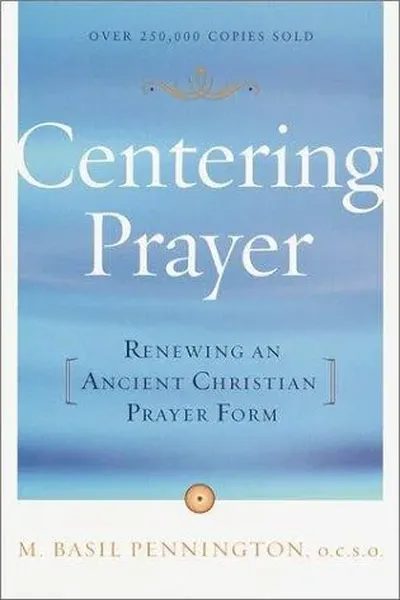
Pennington's work is deeply rooted in the Christian contemplative tradition, particularly drawing from figures like St. John of the Cross and St. Teresa of Avila, and more recently, the monastic contemplative practices that informed the Centering Prayer movement. It fits within the broader lineage of Western esotericism by emphasizing direct, experiential knowledge of the divine over purely intellectual or dogmatic understanding. While not explicitly Hermetic or Gnostic, it shares with these traditions a focus on interior transformation and hidden divine realities accessible through disciplined inner work.
Symbolism
The central symbol is the "Christ Chaplain" himself, representing the embodiment of Christ's loving, present awareness. This figure symbolizes the potential for every individual, through prayer, to become a conduit for divine grace. Other motifs include "stillness" as the fertile ground for divine encounter, and "light" often associated with divine illumination and the quiet unfolding of spiritual awareness within the practitioner.
Modern Relevance
The work remains highly relevant for contemporary Christian contemplative communities and individuals seeking deeper spiritual practice. Thinkers and practitioners in the contemplative Christian sphere, as well as those interested in mindfulness and meditation who seek a tradition-based framework, continue to draw from Pennington's accessible explanations of prayer states. His emphasis on "contemplative presence" resonates with modern discussions on authentic leadership and compassionate action in various secular and spiritual contexts.
👥 Who Should Read This Book
• Individuals seeking to deepen their Christian contemplative prayer life, particularly those interested in practices like Centering Prayer or the "prayer of quiet." • Chaplains, spiritual directors, and clergy members looking to ground their ministry in profound spiritual practice and "contemplative presence." • Students of comparative mysticism interested in understanding the unique trajectory of Christian contemplative experience and its potential intersections with psychological well-being.
📜 Historical Context
M. Basil Pennington's 'The Christ Chaplain,' published in 2007, emerged during a significant period of renewed interest in contemplative spirituality across Western traditions. As a Trappist monk and prolific author, Pennington was a key figure in popularizing contemplative prayer, particularly influenced by his work on Centering Prayer alongside Thomas Keating and William Menninger. This era saw a broader spiritual seeking that often looked beyond traditional denominational boundaries, yet Pennington remained firmly anchored in Christian mysticism. His approach often engaged with contemporary psychological discourse, reflecting a wider intellectual current seeking to harmonize inner spiritual life with modern understanding of the human psyche. While other contemporary authors explored comparative mysticism, Pennington focused on articulating the depths of Christian contemplative practice. His work gained traction within Catholic and mainline Protestant circles, offering a bridge between monastic tradition and lay spiritual practice, though it might have been viewed with caution by more conservative theological factions wary of perceived 'New Age' influences.
📔 Journal Prompts
The concept of "contemplative presence" as the foundation for ministry.
Cultivating the "prayer of quiet" in daily life.
Reflecting on the "Christ Chaplain" as an archetype for spiritual leadership.
The role of "stillness" in accessing deeper spiritual states.
Differentiating between the "prayer of simple attention" and distracted thought.
🗂️ Glossary
Contemplative Presence
A state of deep spiritual awareness and centeredness cultivated through prayer and meditation, allowing one to minister or simply 'be' from a place of profound inner peace and divine connection.
Christ Chaplain
An archetype representing a spiritual guide or caregiver who embodies Christ's loving presence through disciplined interior prayer and spiritual practice, serving as a conduit for divine grace.
Prayer of Quiet
A specific state in Christian contemplation characterized by passive receptivity, where divine action is primary and the individual rests in a quiet, loving awareness of God's presence.
Prayer of Simple Attention
A form of contemplative prayer involving a sustained, yet unforced, attention to God's presence, characterized by a gentle, focused awareness rather than active petition or intellectual reasoning.
Stillness
Inner silence and tranquility cultivated through prayerful disciplines, seen as the essential ground for spiritual growth, divine encounter, and authentic being.
Spiritual Discipline
Regular practices undertaken to foster spiritual growth and deepen one's connection with the divine, such as prayer, meditation, and reflective study.
Ego
In this context, the self-centered consciousness or personality structure that can obstruct direct experience of the divine; contemplative practice aims to quiet or transcend its dominance.