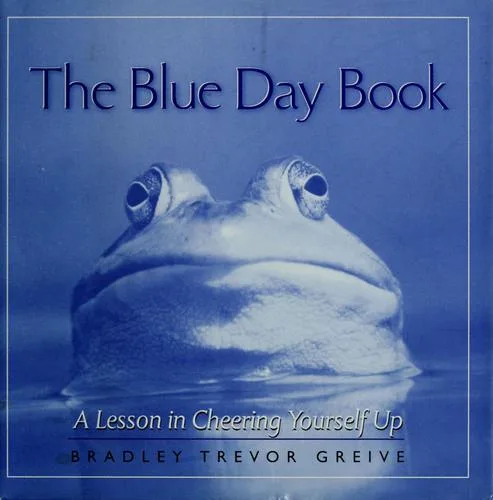
The blue day book
 74
74

The blue day book
Bradley Trevor Greive’s The Blue Day Book, from its 2000 debut, operates less as a narrative and more as a collection of contemplative vignettes. Its strength lies in its stark, unadorned presentation of difficult emotions, avoiding the platitudes that often plague similar works. The spare prose, paired with evocative imagery (though not described here), creates a potent atmosphere for self-reflection. One particular passage, which speaks to the feeling of being an "outsider looking in" on one’s own life, effectively captures a common, yet rarely articulated, existential discomfort. However, the book’s deliberate ambiguity, while artistically effective, can sometimes leave the reader searching for a more concrete anchor. Its brevity, a hallmark of its style, might also feel insufficient for those seeking a more comprehensive exploration of overcoming specific emotional hurdles. It’s a book that offers a mirror, not a map.
Alaric Kestrel, Metaphysical Studies Reviewer
📝 Description
74
### What It Is
The Blue Day Book, first published in 2000 by Bradley Trevor Greive, presents a unique approach to understanding and processing emotional states. It is not a narrative in the traditional sense, nor is it a self-help manual with prescriptive advice. Instead, it functions as a conceptual framework, using concise text and striking imagery to explore the multifaceted nature of difficult feelings. The work invites introspection by presenting relatable scenarios and abstract concepts that mirror internal struggles, aiming to foster a sense of shared experience and understanding regarding personal challenges.
### Who It's For
This book is intended for individuals who appreciate introspective literature and are comfortable engaging with abstract concepts. It appeals to those seeking a less conventional path to emotional processing, perhaps finding traditional self-help approaches too directive or simplistic. Readers who connect with minimalist aesthetics and philosophical musings will find its presentation style particularly engaging. It's for the thoughtful individual, the quiet observer, and anyone who has experienced days where the world feels overwhelmingly blue, seeking a companion in their contemplation rather than a guide.
### Historical Context
Emerging in the year 2000, The Blue Day Book arrived during a period when introspective and visually driven books were gaining traction, often bridging the gap between art, philosophy, and popular psychology. While not directly tied to a specific intellectual movement like Jungian archetypes or existentialism, it shared a cultural moment with works that explored interiority and the human condition through accessible yet profound means. Its publication predates the widespread digital saturation of self-help content, offering a tangible, curated experience that emphasized thoughtful engagement over rapid consumption. The author, Bradley Trevor Greive, became known for this style, which contrasted with more academic or overtly therapeutic texts of the era.
### Key Concepts
The core of The Blue Day Book revolves around the concept of acknowledging and accepting difficult emotions rather than suppressing them. It explores the idea that "blue days" are not necessarily aberrations but a natural part of the human experience, often stemming from a disconnect between our inner world and external circumstances. The book uses evocative language and imagery to represent feelings of isolation, sadness, and disillusionment. It suggests that by giving form and recognition to these states, one can begin to disarm their power and foster a path toward equilibrium. The work implicitly advocates for a form of emotional honesty and self-compassion.
💡 Why Read This Book?
• You will learn to recognize and validate the universality of "blue days" by engaging with the book's direct references to these emotional states, a concept Greive explores through concise textual pairings. • You will experience a unique form of emotional processing that bypasses conventional self-help through its minimalist aesthetic and abstract conceptualizations, as seen in its approach to feelings of isolation. • You will gain a new perspective on internal struggles by confronting specific, relatable scenarios presented in the book, allowing for a personal interpretation of concepts like disillusionment first published in 2000.
⭐ Reader Reviews
Honest opinions from readers who have explored this book.
❓ Frequently Asked Questions
What is the primary message of The Blue Day Book?
The primary message centers on acknowledging and accepting difficult emotions, such as sadness or disillusionment, rather than resisting them. It suggests that these "blue days" are a natural part of life and that by giving them form, their power can be lessened.
Who is the author, Bradley Trevor Greive?
Bradley Trevor Greive is the author of The Blue Day Book, first published in 2000. He is known for his introspective and visually driven works that explore emotional and philosophical themes.
Is The Blue Day Book a self-help book?
While it can aid in emotional processing, it's not a typical self-help book with prescriptive advice. It functions more as a contemplative companion, using concise text and imagery to explore feelings.
What kind of imagery is used in The Blue Day Book?
The book is known for its evocative and often stark imagery that complements the minimalist text. While specific images aren't detailed here, they are designed to mirror internal emotional states and abstract concepts.
When was The Blue Day Book first published?
The Blue Day Book was first published in the year 2000, positioning it within a wave of introspective and visually-oriented literature.
What does the term 'blue day' signify in the book?
In the context of The Blue Day Book, a 'blue day' represents a period of emotional difficulty, sadness, disillusionment, or introspection, presented as a normal human experience.
🔮 Key Themes & Symbolism
Acceptance of Sadness
The work posits that periods of sadness, often termed "blue days," are not flaws to be eradicated but natural components of the human condition. Greive encourages readers to move beyond resistance towards a form of acceptance, suggesting that acknowledging these feelings is the first step to integrating them. This perspective offers a counterpoint to societal pressures that often demand constant positivity. The book presents this idea through concise text paired with imagery that reflects the quietude and introspection associated with melancholy.
Internal vs. External Reality
A recurring theme is the dissonance between one's internal emotional landscape and the external world. The Blue Day Book explores moments where individuals feel disconnected or alienated, as if observing life from a distance. This theme touches upon existential feelings of isolation and the struggle to reconcile inner experience with societal expectations or perceived normalcy. The book uses abstract concepts to represent this gap, inviting readers to contemplate their own experiences of this internal-external divide.
The Power of Acknowledgment
Rather than offering solutions, the book emphasizes the inherent power found in simply acknowledging difficult emotions. By giving form and voice to feelings of disillusionment, loneliness, or confusion, their overwhelming nature can be diminished. This act of recognition is presented as a form of empowerment, transforming passive suffering into a more conscious engagement with one's inner life. The minimalist approach underscores the idea that sometimes, presence and observation are more potent than action.
Emotional Honesty
The Blue Day Book champions a form of emotional honesty, encouraging readers to face their feelings without judgment. It creates a space for vulnerability, suggesting that authentic engagement with one's emotional state is crucial for well-being. This theme encourages self-compassion, framing difficult emotions not as failures but as signals to be understood. The book's direct, unembellished style supports this ethos of confronting internal realities squarely.
💬 Memorable Quotes
“The world keeps turning, but sometimes it feels like you're just watching.”
— This phrase captures the feeling of detachment and alienation. It suggests a state where one feels disconnected from the flow of life, observing events passively rather than actively participating.
“There are days when the weight of existence feels immense.”
— This quote speaks to the existential burden that can accompany difficult emotional periods. It highlights the profound impact that internal states can have on one's perception of reality and personal capacity.
“Sometimes, the quietest moments hold the loudest truths.”
— This suggests that introspection and periods of stillness are crucial for self-discovery. It implies that profound insights often emerge not from external stimulation, but from internal contemplation.
“Feeling lost is not the same as being found.”
— This interpretation differentiates between the state of confusion or uncertainty and a definitive lack of direction. It implies that even in feeling lost, there is potential for eventual discovery.
“The blue days are not a destination, but a passage.”
— This frames difficult emotional periods as transient phases rather than permanent states. It encourages a perspective of forward movement and the eventual emergence from sadness or disillusionment.
🌙 Esoteric Significance
Tradition
While not explicitly tied to a singular esoteric lineage like Hermeticism or Gnosticism, The Blue Day Book can be seen as resonating with certain principles found in contemplative traditions and Western psychological esotericism. Its emphasis on internal states, the acknowledgment of shadow aspects of the psyche (difficult emotions), and the search for meaning aligns with introspective practices common in various wisdom traditions. It operates as a secularized form of spiritual inquiry, using psychological concepts to explore the 'inner landscape' without invoking specific deities or rituals.
Symbolism
The primary symbolic motif is the "blue day" itself, representing melancholy, introspection, and emotional difficulty. This color association is common across cultures for sadness. The book's minimalist presentation often employs abstract imagery, serving as Rorschach-like projections onto which readers can map their own experiences. The concept of "weight" or "burden" also functions symbolically, representing the oppressive nature of negative emotions or existential concerns, a common trope in esoteric discussions of psychic heaviness.
Modern Relevance
In contemporary discourse, particularly within mental wellness and mindfulness communities, the principles echoed in The Blue Day Book remain highly relevant. Its encouragement of emotional acceptance and validation aligns with modern therapeutic approaches like Acceptance and Commitment Therapy (ACT). Thinkers and practitioners focused on emotional intelligence, self-compassion, and the philosophical underpinnings of well-being often draw upon works that, like Greive's, prioritize introspection and authentic feeling over superficial solutions.
👥 Who Should Read This Book
• Individuals seeking a contemplative companion for moments of sadness or introspection, who appreciate minimalist expression and abstract philosophical exploration. • Readers disillusioned with conventional self-help literature, looking for a book that validates difficult emotions without offering simplistic solutions. • Students of modern introspective literature and art, interested in works that bridge psychological concepts with accessible, evocative presentation.
📜 Historical Context
Published in 2000, The Blue Day Book emerged during a period of increasing interest in introspective and visually-driven literature that often blurred the lines between art, philosophy, and accessible psychology. While not aligning with a specific academic movement, it tapped into a zeitgeist that valued personal reflection and emotional honesty, often expressed through minimalist aesthetics. This era saw the rise of authors like Alain de Botton, who also explored philosophical concepts for a general audience. Greive’s work offered a counterpoint to the often prescriptive nature of self-help books prevalent at the time, opting instead for evocative resonance. Its reception was largely positive among those seeking contemplative material, appreciating its direct yet abstract approach to universal feelings of sadness and isolation. The book did not face significant censorship or controversy, fitting comfortably within the growing market for thoughtful, aesthetically pleasing non-fiction.
📔 Journal Prompts
The feeling of being an outsider looking in: What external circumstances mirror this internal state?
Reflect on the concept of "blue days" as a passage, not a destination.
How does the "weight of existence" manifest in your daily life?
Consider moments when "quietest moments hold the loudest truths" for you.
Explore the distinction between feeling lost and being found in your personal journey.
🗂️ Glossary
Blue Day
A period characterized by feelings of sadness, melancholy, disillusionment, or introspection. The book presents these days as a natural part of the human experience, not necessarily a negative state to be immediately overcome.
Weight of Existence
A metaphorical term representing the profound and sometimes overwhelming burden of consciousness, responsibility, and the inherent challenges of life. It speaks to existential feelings of pressure or gravity.
Detachment
A state of emotional or psychological distance from one's experiences, surroundings, or self. In the context of the book, it often signifies feeling like an observer rather than a participant in life.
Passage
Used to describe difficult emotional periods (like "blue days") as transient phases rather than permanent conditions. It implies movement and the potential for progression or change.
Acknowledgment
The act of recognizing and accepting the reality of one's emotions or internal states. The book suggests this is a powerful first step in processing difficult feelings.
Internal Landscape
Refers to the inner world of thoughts, feelings, emotions, and consciousness. The book encourages exploration and understanding of this personal psychological terrain.
Disillusionment
A feeling of disappointment resulting from the discovery that something is not as good as one believed it to be. Often associated with a loss of idealism or faith.