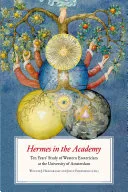
Hermes in the Academy
 76
76

Hermes in the Academy
Wouter Hanegraaff and J. Pijnenburg's Hermes in the Academy arrives as a significant marker of academic engagement with Western esotericism. The collection effectively charts the growth of the University of Amsterdam's Center for History of Hermetic Philosophy and Related Currents (GHF) over its first decade. Its strength lies in demonstrating the rigorous scholarly frameworks now applied to subjects like Hermeticism and Christian Kabbalah, moving them from occult curiosities to objects of serious historical inquiry. A passage discussing the methodological challenges in defining 'esotericism' itself, for instance, highlights the intellectual sophistication at play. However, the collection occasionally leans towards internal academic discourse, which may feel dense for readers less familiar with the specific debates within the field. A more direct engagement with the practical implications or living traditions of these subjects, beyond their historical study, would have broadened its appeal. Nevertheless, it stands as a robust account of a decade's scholarly achievement.
📝 Description
76
### What It Is Hermes in the Academy is a collection of essays published in 2025, commemorating the tenth anniversary of the Center for History of Hermetic Philosophy and Related Currents (GHF) at the University of Amsterdam. It showcases the academic exploration of Western esotericism.
### Who It's For This volume is intended for scholars, students, and enthusiasts of Western esotericism, Hermetic philosophy, Christian Kabbalah, and occultism. It is particularly relevant for those interested in the academic study of these subjects.
### Historical Context Founded in the early 21st century, the GHF emerged as a dedicated academic institution to study Western esotericism. This book reflects a decade of its research, positioning it as a leading international hub for understanding traditions previously relegated to the fringes of intellectual history. Its publication marks a significant point in the institutionalization of esoteric studies.
### Key Concepts The book delves into the academic treatment of Hermetic philosophy, Christian Kabbalah, and various forms of occultism. It examines how these traditions are approached within a university setting, focusing on research methodologies and the historical development of esoteric thought.
💡 Why Read This Book?
• Gain insight into the academic study of Western esotericism, understanding how disciplines like Hermetic philosophy are analyzed within university structures, as evidenced by the GHF's ten-year trajectory. • Explore the development of the Center for History of Hermetic Philosophy and Related Currents (GHF) at the University of Amsterdam, learning about its role in establishing esotericism as a field of academic research. • Understand the scholarly approaches to topics such as Christian Kabbalah and occultism, appreciating the methodologies used to research these complex historical currents.
⭐ Reader Reviews
Honest opinions from readers who have explored this book.
❓ Frequently Asked Questions
What is the primary focus of Hermes in the Academy?
The book's primary focus is to commemorate the tenth anniversary of the Center for History of Hermetic Philosophy and Related Currents (GHF) at the University of Amsterdam, showcasing its decade of academic research into Western esotericism.
Which specific esoteric traditions are discussed in the book?
The book discusses Hermetic philosophy, Christian Kabbalah, and various forms of occultism, examining their study within an academic context.
When was Hermes in the Academy first published?
Hermes in the Academy was first published on October 1, 2025.
Who are the editors of Hermes in the Academy?
The editors of Hermes in the Academy are Wouter Hanegraaff and J. Pijnenburg.
What is the significance of the Center for History of Hermetic Philosophy and Related Currents (GHF)?
The GHF is significant as it has developed into a leading international center for research and teaching in the domain of Western esotericism.
What kind of content can readers expect from this volume?
Readers can expect scholarly essays reflecting a decade of academic work on Western esoteric traditions, detailing research and teaching in fields like Hermeticism.
🔮 Key Themes & Symbolism
Academic Study of Esotericism
This volume centers on the institutionalization and academic methodologies applied to the study of Western esotericism. It highlights how subjects like Hermetic philosophy, previously on the periphery, are now subjects of rigorous scholarly inquiry within universities. The GHF's decade of work exemplifies this shift, demonstrating a commitment to understanding esoteric traditions through historical analysis and critical research frameworks.
Hermetic Philosophy
Hermetic philosophy forms a core subject within the book's exploration of Western esotericism. The essays likely examine its historical development, its influence on subsequent intellectual movements, and the scholarly approaches taken to interpret its complex texts and ideas. The GHF's focus on this tradition underscores its enduring significance in the study of esoteric thought.
Christian Kabbalah and Occultism
Beyond Hermeticism, the book addresses the academic study of Christian Kabbalah and occultism. It showcases how these related currents within Western esotericism are researched and taught, likely exploring their historical interconnections and unique contributions to esoteric traditions. The inclusion of these subjects reflects the GHF's broad scope in understanding the spectrum of esoteric thought.
Institutionalization of Esoteric Studies
A central theme is the establishment and growth of the Center for History of Hermetic Philosophy and Related Currents (GHF) as a leading international academic institution. The book serves as a testament to the progress made in legitimizing esoteric studies within academia over the past ten years, charting the GHF's development and its impact on the field.
💬 Memorable Quotes
“The GHF has developed into the leading international center for research and teaching in this domain.”
— This statement underscores the book's purpose: to celebrate and document the significant academic standing achieved by the Center for History of Hermetic Philosophy and Related Currents in its first decade.
“The Center devotes itself to the study of Western esotericism.”
— This concisely defines the core mission of the GHF, establishing the broad scope of academic inquiry that the collected essays will explore, covering diverse traditions within Western esotericism.
“This volume shows how, over the past ten years, the GHF has developed...”
— This phrase indicates the book's retrospective nature, focusing on the growth and achievements of the GHF since its inception, presenting a narrative of academic progress in esoteric studies.
“Topics such as Hermetic philosophy, Christian kabbalah and occultism.”
— This lists the primary areas of focus within Western esotericism that the GHF engages with, providing specific examples of the traditions studied in depth within the academic framework presented.
“Commemorates the tenth anniversary of the Center for History of Hermetic Philosophy and Related Currents (GHF).”
— This clearly states the commemorative occasion for the book's publication, setting the context for a review of the Center's academic contributions and its impact on the field of esoteric studies.
🌙 Esoteric Significance
Tradition
This work firmly situates itself within the academic study of Western Esotericism, a broad field encompassing diverse traditions. It specifically highlights Hermetic philosophy and Christian Kabbalah, lineages deeply rooted in Neoplatonism, Gnosticism, and Jewish mysticism. The book's significance lies in demonstrating how these traditions are now meticulously researched and taught within formal academic structures, moving beyond earlier esoteric interpretations.
Symbolism
While the book is primarily academic, its subject matter inherently involves esoteric symbolism. Hermetic philosophy, for example, is rich with symbols like the Caduceus, representing mediation and transformation, and alchemical imagery, symbolizing spiritual purification and the transmutation of the soul. Christian Kabbalah integrates Hebrew letters and divine names. The academic study presented likely deciphers these symbols within their historical and philosophical contexts.
Modern Relevance
The academic framework established by institutions like the GHF, as showcased in this volume, informs contemporary scholarship on Western esotericism. Thinkers and researchers engaging with modern Hermetic orders, contemporary occult movements, or comparative studies of mysticism benefit from this rigorous historical and analytical foundation. It provides essential context for understanding how esoteric ideas persist and evolve in the modern world.
👥 Who Should Read This Book
• Academic researchers and students specializing in religious studies, history of philosophy, or cultural history, seeking to understand the institutional development of esoteric studies. • Enthusiasts of Hermetic philosophy, Christian Kabbalah, and occultism interested in scholarly approaches to their respective traditions and historical contexts. • Scholars and practitioners interested in the University of Amsterdam's Center for History of Hermetic Philosophy and Related Currents (GHF) and its contributions to the academic study of Western esotericism.
📜 Historical Context
Published in 2025, Hermes in the Academy emerges from a period of increasing academic legitimacy for the study of Western esotericism. For much of the 20th century, these subjects were often relegated to fringe scholarship or popular occultism, with figures like Frances Yates beginning to bridge the gap in the mid-to-late 20th century by integrating Hermeticism into Renaissance studies. The establishment of dedicated centers like the GHF at the University of Amsterdam in the early 21st century marked a significant shift. This volume documents the GHF's first decade, positioning it as a premier institution in a field that had previously lacked consistent institutional support. Its work stands in contrast to earlier, more individualistic approaches to esoteric history and demonstrates the collaborative, research-driven methodologies now prevalent.
📔 Journal Prompts
The GHF's development into a leading international center for research.
The academic study of Hermetic philosophy and Christian Kabbalah.
Defining the scope of Western esotericism for scholarly research.
The historical trajectory of occultism within academic discourse.
The role of university centers in legitimizing esoteric studies.
🗂️ Glossary
Western Esotericism
A broad category encompassing diverse philosophical, religious, and magical traditions originating in or developed within the Western world, often characterized by an emphasis on hidden knowledge, spiritual experience, and alternative cosmological models.
Hermetic Philosophy
A philosophical and religious tradition based on writings attributed to Hermes Trismegistus, dealing with cosmology, alchemy, astrology, and the divine nature of humanity, influential in Western thought since antiquity.
Christian Kabbalah
A form of Kabbalah developed by Christian scholars in the Renaissance, who sought to find Christian meanings and allegories within Jewish mystical texts and concepts, often integrating them with Christian theology.
Occultism
A broad term referring to various belief systems, practices, and movements that emphasize hidden or secret knowledge, often involving magic, divination, spiritualism, and other supernatural phenomena.
GHF
Abbreviation for the Center for History of Hermetic Philosophy and Related Currents at the University of Amsterdam, a leading academic institution dedicated to the study of Western esotericism.
Center for History of Hermetic Philosophy and Related Currents
An academic research and teaching center at the University of Amsterdam focused on the scholarly study of Western esoteric traditions, including Hermeticism, Kabbalah, and occultism.
University of Amsterdam
A public research university in Amsterdam, Netherlands, notable for housing the Center for History of Hermetic Philosophy and Related Currents (GHF).