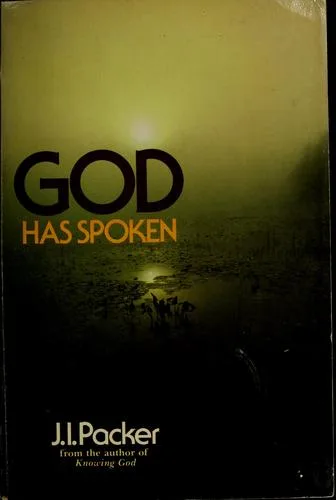
God Has Spoken,
 80
80

God Has Spoken,
J. I. Packer's 'God Has Spoken' offers a sturdy defense of scriptural authority, a cornerstone for many within evangelical theology. His clarity in defining terms like 'revelation' and 'inspiration' is commendable, providing a solid framework for understanding how divine truth is conveyed. The section detailing the limitations of human reason when confronting divine mysteries, particularly Packer's assertion that such limits do not invalidate scripture, is a strong point. However, the book can feel dense for those not already immersed in theological debate. While it meticulously lays out its arguments, it offers little engagement with alternative interpretations or more mystical approaches to divine communication, which might leave readers seeking broader spiritual perspectives wanting. It serves its intended audience effectively but remains firmly rooted in a specific theological tradition.
📝 Description
80
J. I. Packer first published 'God Has Spoken' in 1994, addressing divine communication.
Published in 1994, J. I. Packer's 'God Has Spoken' examines the nature of divine communication and its significance for human understanding. The book scrutinizes how theological frameworks interpret revelation, with a particular focus on scriptural authority and its impact on faith. Packer approaches these topics using systematic theology, aiming to clarify the sources and reliability of divine messages within specific Christian traditions. The text is directed toward those engaged in theological study, especially within evangelical Christian circles, who are interested in the epistemological underpinnings of their beliefs. It will appeal to readers seeking a thorough examination of how God's will and character are understood to be revealed through scripture and other avenues. Scholars and students of religious studies, particularly those concentrating on biblical interpretation and doctrines of revelation, will find its arguments pertinent.
'God Has Spoken' appeared during a time of active theological discussion about biblical inerrancy and scriptural authority. As a prominent evangelical theologian, Packer participated in debates that shaped current perspectives on these issues. The book's arguments support the evangelical movement's emphasis on the Bible as the primary source of religious truth. This era also saw ongoing engagement with postmodern critiques of objective truth, making Packer's defense of scriptural authority a relevant contribution to theological apologetics.
While categorized as esoteric, Packer's work operates within a specific tradition of Christian theology focused on the direct communication of God to humanity, particularly through scripture. This tradition, often termed 'classical evangelicalism,' emphasizes a revealed theology where God's self-disclosure is the primary means of knowing Him and His will. It contrasts with purely philosophical or mystical approaches to divine knowledge by grounding authority in biblical texts. The book engages with how this revelation is understood, interpreted, and applied, forming a cornerstone of faith for many adherents.
💡 Why Read This Book?
• Gain a precise understanding of J. I. Packer's specific arguments regarding biblical authority, as presented in his 1994 work, to strengthen your personal theological framework. • Explore the concept of divine revelation as delineated by Packer, differentiating it from subjective spiritual experiences and appreciating its epistemological implications. • Grasp the evangelical perspective on scripture's sufficiency, learning how it functions as a foundational element in theological reasoning and practice, as detailed in the book's core arguments.
⭐ Reader Reviews
Honest opinions from readers who have explored this book.
❓ Frequently Asked Questions
What is the primary focus of J. I. Packer's 'God Has Spoken'?
The primary focus is the doctrine of divine revelation, particularly the nature, authority, and sufficiency of the Bible as the Word of God, as understood within evangelical theology.
When was 'God Has Spoken' by J. I. Packer first published?
'God Has Spoken' by J. I. Packer was first published in 1994.
Who is J. I. Packer and what is his theological background?
J. I. Packer (1926-2020) was a prominent British-born evangelical theologian, author, and educator known for his contributions to systematic theology and apologetics, particularly within the Reformed tradition.
Does 'God Has Spoken' discuss different types of divine communication?
Yes, the work explores various facets of how God communicates, with a strong emphasis on scriptural revelation as the primary and authoritative source.
Is 'God Has Spoken' suitable for readers interested in comparative religion?
While the book focuses on a specific Christian theological perspective, it can be valuable for comparative religion studies by offering a clear exposition of evangelical views on revelation.
What is the significance of the 1994 publication date for this book?
The 1994 publication date places 'God Has Spoken' within a specific era of theological debate concerning biblical authority and interpretation, influencing and reflecting contemporary evangelical thought.
🔮 Key Themes & Symbolism
Biblical Authority
The work rigorously examines the concept of biblical authority, arguing for its supreme and final standing in matters of faith and doctrine. Packer posits that scripture is not merely a historical document but the divinely inspired Word of God, functioning as the ultimate standard against which all other claims to truth must be measured. This theme is central to understanding the evangelical commitment to the Bible's inerrancy and sufficiency for Christian life and theology.
Doctrine of Revelation
Central to the book is the exploration of how God makes Himself known to humanity. Packer distinguishes between general revelation (observable in creation) and special revelation (manifested in scripture and, to a lesser extent, in Christ). The emphasis is on special revelation through the Bible, presented as God's direct communication, essential for salvation and accurate theological understanding. This theme clarifies the epistemological basis of faith.
Sufficiency of Scripture
Packer argues that the Bible contains all that is necessary for salvation and Christian living. This principle of sufficiency means believers do not need additional or supplementary divine guidance beyond what is explicitly provided in the biblical text. The work elaborates on how this doctrine impacts the practice of theology and the formation of Christian belief systems, ensuring reliance on God's revealed will.
The Role of Reason and Experience
While prioritizing scriptural authority, 'God Has Spoken' also addresses the place of human reason and personal experience. Packer acknowledges their roles but subordinates them to the ultimate authority of scripture. Reason serves to understand revelation, and experience confirms it, but neither can supersede or alter the foundational truths found in the Bible. This position clarifies the boundaries of human understanding in relation to divine truth.
💬 Memorable Quotes
“The Bible is the Word of God.”
— This concise statement encapsulates the book's core assertion regarding the divine origin and inherent authority of scripture. It suggests that the biblical text is not merely human writing but a direct communication from God, making it the ultimate source of truth.
“God has spoken, and the Bible is His final word.”
— This interpretation highlights the book's emphasis on the definitive nature of biblical revelation. It implies that God's communicative acts have culminated in scripture, rendering it complete and sufficient for all matters of faith and practice.
“We must distinguish between what God says and what we think God says.”
— This paraphrased concept underscores the importance of careful interpretation and adherence to the text itself, rather than imposing personal opinions or subjective feelings onto scripture. It calls for humility and diligence in understanding divine communication.
“Scripture is the objective standard for truth.”
— This reflects the book's stance on the Bible as an external, unchanging measure of truth, independent of human perception or cultural trends. It establishes scripture as the bedrock for theological certainty and doctrinal formulation.
“Reason is God's gift, but it must be guided by revelation.”
— This principle articulates the relationship between human intellect and divine truth as presented by Packer. While reason is valued, its capacity is understood as limited and must be illuminated and directed by the authoritative truths found within God's revealed Word.
🌙 Esoteric Significance
Tradition
While rooted in Protestant evangelical theology, 'God Has Spoken' engages with concepts that border on esoteric interpretation by focusing intensely on the mechanics of divine communication and the authoritative nature of sacred texts. It doesn't align with typical Western esoteric lineages like Hermeticism or Kabbalah but shares an interest in direct divine knowledge, albeit through a strictly scriptural lens. Its departure lies in its rejection of mystical or Gnostic traditions that prioritize inner illumination over biblical text as the primary source of divine truth.
Symbolism
The primary 'symbol' explored is the Bible itself, treated not just as a book but as the tangible embodiment of God's Word. Within this framework, the concept of 'logos' (the Word) is paramount, representing divine reason and communication made manifest. Another motif is the 'authority' of God, symbolized by the unquestionable veracity and directive power attributed to scripture, functioning as a divine decree for believers.
Modern Relevance
Contemporary discussions on faith and reason, particularly within apologetics and theological education, continue to draw on Packer's work. Thinkers within the New Calvinist movement and those defending traditional views of biblical authority often reference his arguments. His emphasis on clear, propositional revelation remains relevant for countering relativistic trends in both secular and religious thought, influencing contemporary debates on religious epistemology and the role of scripture in society.
👥 Who Should Read This Book
• Students of theology, particularly those exploring the foundations of evangelical doctrine and biblical interpretation, seeking a definitive statement on revelation. • Lay readers interested in understanding the theological underpinnings of biblical authority and its implications for faith, who appreciate rigorous, systematic argumentation. • Comparative religion scholars examining the diversity of views on divine communication, seeking to understand the specific tenets of the evangelical Protestant position on scripture.
📜 Historical Context
First published in 1994, J. I. Packer's 'God Has Spoken' emerged within a landscape of vigorous theological debate, particularly concerning the nature and authority of the Bible. Packer, a leading figure in the evangelical movement, was a key participant in discussions about biblical inerrancy that intensified through the latter half of the 20th century. The book offered a robust defense of the Reformed understanding of scripture, emphasizing its divine inspiration and sufficiency. This period also saw continuing dialogue with theological liberalism and post-modern critiques that questioned objective truth claims. Packer's work stood in contrast to existentialist interpretations of religious experience championed by figures like Rudolf Bultmann and provided a counterpoint to more critical biblical scholarship that questioned traditional authorship and historical accuracy. The reception was largely within evangelical and conservative Protestant circles, reinforcing existing theological positions.
📔 Journal Prompts
The concept of divine revelation as presented in scripture.
Packer's distinction between general and special revelation.
The implications of biblical sufficiency for personal belief.
The role of reason in understanding God's Word.
The authority of scripture in contemporary life.
🗂️ Glossary
Revelation
The act by which God communicates His nature, will, and purposes to humanity. Packer distinguishes between general revelation (in nature) and special revelation (primarily through scripture and Christ).
Inspiration
The doctrine that the Bible is the product of divine guidance, ensuring its accuracy and authority as God's Word. Packer affirms the supernatural influence of the Holy Spirit on the biblical writers.
Authority
The right and power of God, as expressed through scripture, to command belief and obedience. Packer argues for the absolute authority of the Bible in all matters of faith and practice.
Sufficiency
The principle that the Bible contains all the necessary knowledge for salvation and Christian living, requiring no additional divine revelation.
Canon
The collection of books recognized as divinely inspired scripture. The book addresses the process and finality of the biblical canon.
Hermeneutics
The theory and methodology of interpretation, especially the interpretation of biblical texts. Packer advocates for an approach that respects the text's divine origin and authorial intent.
Epistemology
The branch of philosophy concerned with knowledge, belief, and justification. The book engages with the epistemology of faith, particularly how we know God.