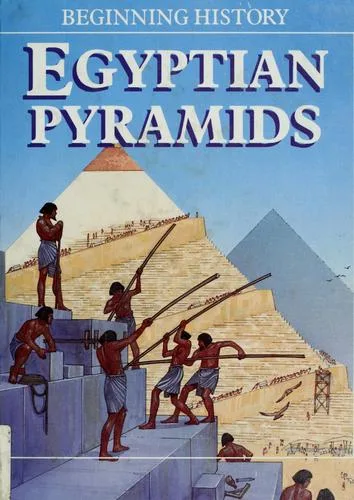
Egyptian pyramids
 79
79

Egyptian pyramids
Anne Steel’s “Egyptian Pyramids” offers a refreshingly grounded perspective on these iconic structures. Unlike many popular accounts that veer into sensationalism, Steel maintains a scholarly rigor, focusing on archaeological evidence and textual interpretation. Her analysis of the pyramid as a solar symbol, particularly its function as a 'stairway to the heavens' for the pharaoh, is lucidly presented and well-supported by the historical record. A notable strength lies in her meticulous detailing of the construction processes and the logistical feats involved, providing a tangible sense of the human effort behind these colossal projects. However, the work occasionally feels overly focused on the mechanics of construction and ritual, sometimes at the expense of exploring the broader societal impact or the philosophical underpinnings of the beliefs they represented. The discussion of the Great Pyramid’s precise dimensions and potential astronomical alignments, while factually presented, could have benefited from deeper engagement with the esoteric interpretations that have arisen around it, even if only to contextualize them. Nevertheless, for a serious student of ancient Egypt, "Egyptian Pyramids" provides an indispensable, fact-based foundation.
📝 Description
79
### What It Is Anne Steel's "Egyptian Pyramids," first published in 1990, offers a scholarly yet accessible examination of the monumental structures of ancient Egypt. The work moves beyond simplistic explanations of purpose, investigating the multifaceted roles these edifices played in Egyptian society, religion, and cosmology. It scrutinizes the architectural techniques, the labor organization, and the evolving understanding of the pharaoh's divine mandate as reflected in their construction.
### Who It's For This book is intended for readers interested in the historical and symbolic dimensions of ancient Egyptian civilization, particularly those seeking a grounded exploration of the pyramids. It appeals to students of archaeology, comparative religion, and ancient history, as well as individuals curious about the practical and spiritual underpinnings of monumental construction in the ancient world. Those who appreciate detailed analysis and historical context will find it particularly engaging.
### Historical Context "Egyptian Pyramids" emerged during a period of renewed academic and public interest in Egyptology, building upon decades of archaeological discoveries and theoretical debates. While the early 20th century saw figures like Sir Flinders Petrie meticulously excavating and documenting sites, the late 20th century allowed for more interdisciplinary approaches. Steel's work engages with the ongoing scholarly discourse concerning the precise astronomical alignments, the religious significance of the pyramid's shape, and the socio-political implications of their construction, situating it within a broader understanding of Old Kingdom Egypt.
### Key Concepts The book systematically explores concepts such as the pyramid as a solar escalator, a resurrection machine, and a representation of the primordial mound (Benben). It details the complex mortuary cult associated with the pharaohs and the associated temple complexes. Steel also addresses the evolution of pyramid design, from the Step Pyramid of Djoser at Saqqara to the smooth-sided pyramids of Giza, illustrating changes in royal ideology and architectural ambition.
💡 Why Read This Book?
• Gain a concrete understanding of the construction methods and labor organization behind the pyramids, as detailed in chapters discussing the quarrying and transport of stone during the Old Kingdom. • Explore the symbolic function of the pyramid as a solar escalator and its connection to pharaonic resurrection beliefs, as presented through the analysis of the Pyramid Texts. • Appreciate the evolution of pyramid design from Djoser's Step Pyramid at Saqqara to the Giza plateau, learning how architectural shifts reflected changes in royal ideology.
⭐ Reader Reviews
Honest opinions from readers who have explored this book.
❓ Frequently Asked Questions
When were the Egyptian pyramids primarily built?
The majority of the great Egyptian pyramids, including those at Giza, were constructed during the Old Kingdom period, primarily between 2686 and 2181 BCE. This era saw the zenith of pyramid-building as a royal undertaking.
What was the main purpose of the Egyptian pyramids?
The primary purpose of the pyramids was to serve as tombs for pharaohs and their consorts, safeguarding their bodies and possessions for the afterlife. They also functioned as monumental religious structures, facilitating the pharaoh's ascension to the divine realm.
Who were the main architects or engineers behind the pyramids?
While specific individuals are rarely named in ancient texts, figures like Imhotep, the architect of Djoser's Step Pyramid around 2667 BCE, are known. The construction was a massive state-sponsored effort involving skilled laborers and overseers.
How were the pyramids constructed without modern technology?
Construction involved immense human labor, employing ramps, levers, and sledges to move massive stone blocks. Precise surveying and alignment techniques were used, demonstrating advanced knowledge of geometry and astronomy for the period.
What is the significance of the pyramid shape itself?
The pyramid shape is often interpreted as a representation of the primordial mound (Benben) from which creation arose, or as a stairway/ramp facilitating the pharaoh's journey to the sun god Ra in the afterlife.
Does the book discuss alternative theories about pyramid construction?
Anne Steel's work focuses on established archaeological and historical interpretations. While it acknowledges the mysteries, it prioritizes evidence-based explanations over speculative or pseudoscientific theories often found in other literature.
🔮 Key Themes & Symbolism
The Pharaoh's Ascent
The book examines the pyramids not merely as tombs, but as sophisticated mechanisms designed to facilitate the pharaoh's transition into the afterlife and their subsequent deification. Steel details how the structure's form and orientation were intended to align with celestial bodies, particularly the sun god Ra, serving as a symbolic escalator. The associated funerary rituals and texts, like the Pyramid Texts found within the chambers, are explored to illuminate this crucial aspect of ancient Egyptian cosmology and the king’s divine mandate.
Architectural and Engineering Prowess
A significant portion of the work is dedicated to understanding the practicalities of pyramid construction. Steel analyzes the quarrying, transportation, and precise placement of millions of stone blocks, some weighing many tons. The evolution from early mastabas and the Step Pyramid of Djoser to the smooth-sided pyramids of the Fourth Dynasty is traced, highlighting advancements in planning, surveying, and workforce management. This section emphasizes the organizational genius required for such colossal undertakings.
The Pyramid as Cosmic Symbol
Steel delves into the symbolic meanings attributed to the pyramid shape within ancient Egyptian belief systems. It is presented as a manifestation of the primordial mound, Benben, from which life emerged, and as a representation of solidified sunlight. The book explores how this symbolism permeated religious thought and ritual, linking the pharaoh, the pyramid, and the cosmos in a unified worldview. The precise alignments and proportions are discussed in relation to their perceived cosmological importance.
Social and Economic Implications
Beyond the religious and architectural aspects, the book touches upon the societal structure that enabled pyramid construction. It discusses the mobilization of labor, the logistics of feeding and housing workers, and the economic resources channeled into these massive state projects. The pyramids served not only as monuments to the divine king but also as powerful statements of centralized authority and national identity during the Old Kingdom.
💬 Memorable Quotes
“The pyramid was conceived as a resurrection machine, an apparatus for the king's eternal journey.”
— This statement captures the book's focus on the functional and spiritual purpose of the pyramids, moving beyond their role as mere burial sites to understanding them as active agents in the pharaoh's afterlife.
“The precise alignment with cardinal points suggests a sophisticated understanding of astronomy and a desire to anchor the structure within the cosmic order.”
— This highlights the book's emphasis on the scientific and symbolic knowledge of the ancient Egyptians, indicating that the pyramids were meticulously planned to interact with celestial phenomena.
“From Djoser's step structure to the smooth-sided wonders of Giza, the evolution reflects changing royal ideology and architectural ambition.”
— This paraphrase points to the book's chronological approach, demonstrating how changes in pyramid design over time correlate with shifts in the power and beliefs surrounding the Egyptian monarchy.
“The logistics of moving and placing multi-ton blocks required immense organizational skill and a vast, coordinated labor force.”
— This interpretation underscores the book's attention to the practical challenges and human effort involved in pyramid construction, emphasizing the societal organization required.
“The pyramid complex was an integrated system, including temples and causeways, all dedicated to the cult of the deceased king.”
— This emphasizes the holistic view presented in the book, where the pyramid is understood not in isolation, but as part of a larger architectural and ritualistic landscape supporting the pharaoh's post-mortem existence.
🌙 Esoteric Significance
Tradition
While primarily a historical and archaeological text, "Egyptian Pyramids" touches upon themes resonant within esoteric traditions, particularly those concerned with ancient cosmologies and spiritual ascension. It engages with Hermetic and Theosophical interpretations that view the pyramids as repositories of ancient wisdom and keys to understanding universal laws. The work aligns with traditions that see Egyptian civilization as a source of profound spiritual knowledge, particularly concerning life, death, and rebirth.
Symbolism
The book consistently references the pyramid's symbolic representation of the primordial mound (Benben), the point of creation in Egyptian mythology. It also explores the 'stairway to heaven' concept, linking the structure to the pharaoh's journey towards the sun god Ra. The precise orientation of the pyramids towards cardinal directions and specific stars is discussed, hinting at their role in cosmic alignment and the maintenance of Ma'at (cosmic order).
Modern Relevance
Contemporary thinkers and practitioners in fields like comparative mythology, sacred geometry, and esoteric psychology often reference the architectural and symbolic achievements detailed in works like Steel's. The enduring mystery and perceived perfection of the pyramids continue to inspire explorations into ancient consciousness, the nature of genius, and the potential for monumental constructions to embody spiritual principles.
👥 Who Should Read This Book
• Students of ancient history and archaeology seeking a factual overview of pyramid construction and purpose. • Enthusiasts of Egyptian mythology and religion interested in the pharaoh's role in the afterlife and cosmology. • Readers curious about ancient engineering and the logistical challenges overcome in building monumental structures.
📜 Historical Context
Published in 1990, Anne Steel's "Egyptian Pyramids" arrived at a time when Egyptology was firmly established, yet continually evolving. The late 20th century saw a move beyond the grand discoveries of the early 1900s, like those by Howard Carter, toward more analytical and interdisciplinary approaches. Steel's work engaged with ongoing scholarly debates regarding construction techniques and the precise religious functions of the pyramids, building upon foundational research by figures like Jean-Philippe Lauer, who extensively studied pyramid architecture. While not directly engaging with fringe theories, the book implicitly addressed a public fascination often fueled by speculative literature. Its reception was likely within academic circles and among serious enthusiasts of ancient history, contributing to the broader discourse on Old Kingdom monumental architecture and ideology, a period marked by the consolidation of pharaonic power.
📔 Journal Prompts
The pyramid as a solar escalator: Reflect on its function in facilitating the pharaoh's journey to Ra.
The concept of Ma'at: How did the precise construction of pyramids contribute to maintaining cosmic order?
Imhotep's architectural innovations: Consider the leap from mastabas to the Step Pyramid.
The Benben stone symbolism: Explore its connection to creation myths and the pyramid's form.
Labor organization: Analyze the societal structure required for such monumental projects.
🗂️ Glossary
Benben
In ancient Egyptian mythology, the primordial mound that arose from the waters of chaos. It is often associated with the sun god Ra and the origin of creation, symbolized by the pyramid shape.
Old Kingdom
The period in ancient Egyptian history (roughly 2686–2181 BCE) during which the great pyramids were constructed. It is characterized by strong centralized pharaonic rule and significant architectural achievements.
Pyramid Texts
The oldest known body of religious texts from ancient Egypt, inscribed on the walls of pyramids during the Old Kingdom. They contain spells and utterances intended to help the deceased pharaoh ascend to the afterlife.
Ma'at
The ancient Egyptian concept of truth, balance, order, harmony, law, morality, and justice. It was personified as a goddess and was fundamental to the pharaoh's role in maintaining cosmic stability.
Mastaba
An early form of Egyptian tomb, characterized by a rectangular, flat-roofed structure with sloping sides built over a burial chamber. Preceded the development of the true pyramid.
Solar Escalator
An interpretation of the pyramid's function, suggesting its form and orientation facilitated the pharaoh's ascent to the sun god Ra in the afterlife, often envisioned as a ramp or stairway.
Pharaoh
The title given to the rulers of ancient Egypt, considered divine intermediaries between the gods and the people, responsible for maintaining Ma'at and ensuring the prosperity of the kingdom.