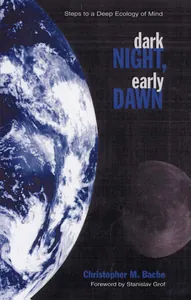
Dark night, early dawn
 77
77

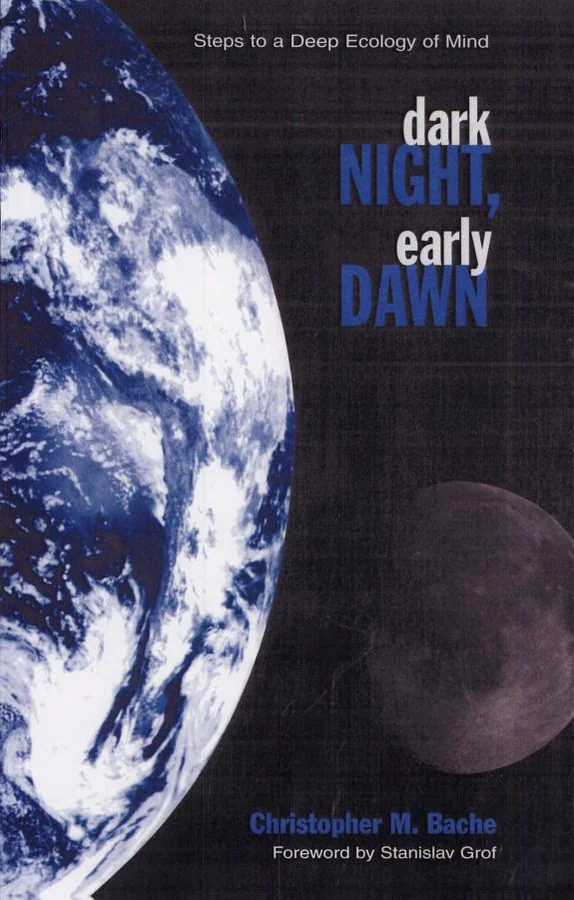
Dark night, early dawn
Bache's "Dark Night, Early Dawn" is a rare synthesis of harrowing personal experience and scholarly rigor. The account of his prolonged psychedelic journey, particularly the sections detailing the dissolution of ego and the encounter with vast, impersonal consciousness, offers a potent depiction of the spiritual crisis that often precedes genuine awakening. While the book excels in its philosophical depth and honest portrayal of psychological challenges, its dense prose can sometimes obscure the narrative flow. The exploration of the "psychedelic renaissance" is particularly compelling, grounding subjective experience within a broader cultural and historical context. Bache's work provides a valuable, if demanding, map for those traversing similar inner landscapes.
📝 Description
77
### What It Is
Christopher M. Bache's "Dark Night, Early Dawn" is a profound exploration of consciousness, psychedelics, and the spiritual journey. Published in 2000, it chronicles Bache's personal odyssey through intense psychedelic experiences, drawing parallels to classical spiritual traditions and modern psychological frameworks. The work is not merely a memoir but a philosophical inquiry into the nature of reality, the self, and the potential for transformation.
### Who It's For
This book is essential for individuals interested in the intersection of altered states of consciousness, spirituality, and personal growth. It will appeal to seasoned psychonauts, students of comparative religion, and anyone seeking to understand the profound implications of visionary experiences. Readers who appreciate rigorous intellectual engagement with subjective phenomena will find fertile ground here.
### Historical Context
Emerging at the turn of the millennium, "Dark Night, Early Dawn" arrived during a period of renewed interest in psychedelics for therapeutic and spiritual exploration, following decades of suppression. Bache's work engages with the legacy of figures like Aldous Huxley and Timothy Leary, while offering a distinct, deeply personal, and philosophically grounded perspective. It stands as a significant contribution to the literature on consciousness studies and the phenomenology of spiritual emergence.
### Key Concepts
The book delves into concepts such as the "dark night of the soul," a spiritual crisis often preceding profound awakening, and the "psychedelic renaissance," a resurgence of interest in these substances for their potential to unlock consciousness. Bache also examines the role of ego dissolution, the challenges of integrating mystical experiences into everyday life, and the archetypal patterns encountered in visionary states.
💡 Why Read This Book?
• Gain a nuanced understanding of the "dark night of the soul" concept, learning how spiritual crises can be precursors to profound self-realization, as illustrated by Bache's personal narrative. • Explore the integration of intense psychedelic experiences into daily life, a critical challenge Bache addresses through his philosophical and psychological frameworks. • Understand the historical context of the "psychedelic renaissance" and how Bache's work contributes to the ongoing discourse on consciousness and spirituality.
⭐ Reader Reviews
Honest opinions from readers who have explored this book.
❓ Frequently Asked Questions
What is the central theme of Christopher M. Bache's 'Dark Night, Early Dawn'?
The book centrally explores the profound spiritual and psychological transformation that can arise from intense psychedelic experiences, drawing parallels to classical mystical traditions and the concept of the 'dark night of the soul'.
When was 'Dark Night, Early Dawn' first published?
'Dark Night, Early Dawn' by Christopher M. Bache was first published in the year 2000.
What philosophical traditions influence 'Dark Night, Early Dawn'?
The work draws upon Western mystical traditions, particularly the concept of the 'dark night of the soul,' and integrates modern psychological and consciousness studies.
Is 'Dark Night, Early Dawn' a purely academic text?
No, it is a deeply personal account of the author's own spiritual journey through psychedelics, interwoven with philosophical inquiry and scholarly analysis.
Who would benefit most from reading this book?
Individuals interested in consciousness, spirituality, psychedelic research, and the phenomenology of profound subjective experiences, especially those familiar with mystical literature.
What does the title 'Dark Night, Early Dawn' refer to?
The title alludes to the spiritual concept of the 'dark night of the soul,' a period of intense spiritual suffering that often precedes spiritual awakening and a new beginning, or 'early dawn'.
🔮 Key Themes & Symbolism
The Dark Night of the Soul
Bache meticulously documents his descent into profound spiritual suffering, a phase he equates with the classical 'dark night of the soul.' This section details the dissolution of the ego and the existential despair that often precedes a breakthrough into higher consciousness. The work posits that this intense, often terrifying, period is a necessary crucible for genuine spiritual transformation, moving beyond superficial enlightenment to deep, integrated awakening.
Psychedelic Phenomenology
The book offers a detailed phenomenological account of intense psychedelic experiences, exploring altered states of consciousness, ego dissolution, and encounters with archetypal imagery. Bache grounds these subjective journeys within philosophical frameworks, examining how psychedelics can act as catalysts for spiritual emergence and self-discovery. He contrasts these experiences with traditional contemplative practices, highlighting both commonalities and unique aspects of chemically-induced visionary states.
Consciousness and Reality
Bache engages with fundamental questions about the nature of consciousness and reality. His personal experiences lead him to question conventional materialistic views, suggesting that consciousness may be primary and that altered states can reveal deeper layers of existence. The work explores the relationship between the individual psyche and the collective unconscious, and the possibility of accessing transpersonal realms of awareness.
Integration and Transformation
A crucial aspect of the book is the challenge of integrating profound spiritual or psychedelic experiences into ordinary life. Bache discusses the psychological and social difficulties of navigating the aftermath of ego dissolution and visionary encounters. He emphasizes the necessity of a sustained, disciplined approach to embody the insights gained, moving from peak experience to lasting personal and spiritual transformation.
💬 Memorable Quotes
“The dark night is not the absence of God, but the experience of God's absence.”
— This statement encapsulates the paradox of spiritual crisis, suggesting that even in profound despair and perceived abandonment, a divine presence or truth is still at play, albeit in a hidden or challenging form.
“Psychedelics can be keys to doors that have long been shut.”
— This highlights the potential of psychedelic substances as catalysts for unlocking deeper levels of consciousness and repressed psychological material, opening pathways to self-understanding and spiritual insight.
“Ego dissolution is not annihilation, but a radical expansion of self.”
— This reframes ego death not as a destructive end, but as a transformative process of shedding limiting identification and embracing a vaster, more inclusive sense of being.
“The map of consciousness is far more complex than we can imagine.”
— This acknowledges the vastness and mystery of the human psyche and its potential for experience, suggesting that current models are insufficient to encompass the full spectrum of consciousness.
“Integration is the bridge between the visionary and the mundane.”
— This emphasizes the critical role of bringing insights from altered states or profound spiritual experiences back into everyday life, making them practical and transformative rather than fleeting epiphanies.
🌙 Esoteric Significance
Tradition
Bache's work is deeply rooted in the Western esoteric tradition, particularly its contemplative and mystical branches. It engages with the concept of the "dark night of the soul," a core theme in Christian mysticism, and the broader Hermetic principle of "as above, so below." While not strictly adhering to any single lineage, it bridges classic contemplative paths with contemporary explorations of consciousness, offering a modern interpretation of spiritual ascent and ego transformation.
Symbolism
The book frequently employs the symbolism of light and darkness, representing states of consciousness and spiritual progression. The "dark night" itself is a potent symbol of crisis and purification, while the "early dawn" signifies awakening and illumination. Archetypal imagery encountered during psychedelic states also serves as symbolic language, mapping the unconscious and transpersonal realms, and guiding the seeker through inner landscapes.
Modern Relevance
Contemporary thinkers and practitioners in consciousness studies, psychedelic therapy, and integral spirituality frequently cite Bache's work. His detailed phenomenological descriptions and philosophical analyses provide a valuable framework for understanding the psychological and spiritual dimensions of altered states, informing current discussions on entheogenic potential and the integration of non-ordinary experiences into a holistic worldview.
👥 Who Should Read This Book
• Individuals exploring the intersection of psychedelics and spirituality: They will find a deeply honest and philosophically grounded account of profound visionary experiences and their transformative potential. • Students of Western mysticism and contemplative traditions: Readers interested in the concept of the 'dark night of the soul' will appreciate Bache's personal exploration and modern interpretation of this classic spiritual theme. • Researchers and practitioners in consciousness studies: The book offers rich phenomenological data and thoughtful analysis on ego dissolution, altered states, and the integration of non-ordinary experiences.
📜 Historical Context
Published in 2000, "Dark Night, Early Dawn" emerged during a period of resurgence for psychedelic research and discussion, following decades of prohibition and stigmatization. Christopher M. Bache's work entered a landscape shaped by the counterculture of the 1960s and figures like Aldous Huxley, whose "The Doors of Perception" (1954) had already explored similar terrain. The book offered a deeply personal, yet philosophically rigorous, counterpoint to both academic detachment and purely anecdotal accounts. It contributed to a growing body of literature that sought to understand visionary states within a spiritual and psychological framework, engaging with concepts like the "dark night of the soul"—a term popularized by mystics like St. John of the Cross—and the potential for profound personal transformation.
📔 Journal Prompts
The dissolution of the ego and its subsequent redefinition.
The symbolic landscape encountered during profound altered states.
The challenges and insights gained from the 'dark night of the soul'.
The process of integrating visionary experiences into daily life.
The relationship between spiritual crisis and personal transformation.
🗂️ Glossary
Dark Night of the Soul
A spiritual crisis characterized by feelings of spiritual emptiness, doubt, and abandonment, often preceding a deeper spiritual awakening or union with the divine.
Ego Dissolution
The temporary or profound loss of one's sense of self or personal identity, often experienced during intense meditation or psychedelic states, leading to a broader sense of connection.
Psychedelic Renaissance
A contemporary period marked by renewed scientific and cultural interest in the therapeutic, spiritual, and psychological potential of psychedelic substances.
Phenomenology
The philosophical study of the structures of experience and consciousness as experienced from the first-person perspective.
Archetype
In Jungian psychology, universal, archaic patterns and images that derive from the collective unconscious and are the psychic counterpart of the instinct.
Integration
The process of incorporating insights and experiences from altered states of consciousness or profound spiritual encounters into one's everyday life and personality.
Transpersonal
Experiences that transcend the individual self or ego, often involving a sense of unity, interconnectedness, or access to realms beyond ordinary perception.