Atlantis Found
 77
77

Atlantis Found
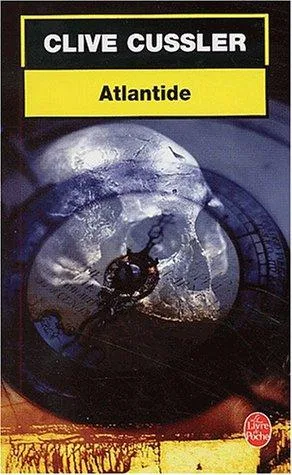
Clive Cussler’s "Atlantis Found", published in 1999, presents a familiar Cusslerian blend of historical myth and high-octane adventure. The premise, centering on the potential rediscovery of Atlantis, is undeniably alluring, tapping into a deep vein of human curiosity. Cussler’s strength lies in his ability to craft propulsive plots, and this novel is no exception, with Dirk Pitt navigating a series of perilous situations. However, the historical and esoteric elements, while present, often feel secondary to the action sequences. The exploration of Atlantean culture and technology, a potentially fascinating avenue, remains somewhat superficial, serving more as a backdrop for daring escapes and underwater pursuits than as a deep dive into lost civilizations. The work’s primary limitation is its adherence to a formula that, while popular, offers little in the way of novel thematic exploration beyond the thrill of the chase. Still, for readers seeking an entertaining escape rooted in a legendary mystery, "Atlantis Found" delivers a competent, if predictable, adventure.
Verdict: A formulaic but entertaining treasure hunt grounded in myth.
📝 Description
77
### What It Is Atlantis Found, a 1999 novel by Clive Cussler, plunges readers into a thrilling maritime adventure interwoven with historical speculation. The narrative centers on the discovery of a lost civilization and its advanced technology, setting the stage for a globe-trotting quest. It blends elements of archaeological mystery with high-stakes action, focusing on the persistent search for evidence of mythical lands and forgotten peoples.
### Who It's For This book appeals to readers who enjoy fast-paced thrillers with a historical puzzle at their core. Fans of Cussler’s signature style, which often involves resourceful protagonists, daring escapes, and the uncovering of ancient secrets, will find familiar ground here. It is suited for those intrigued by the legend of Atlantis and speculative historical fiction that poses 'what if' scenarios about humanity's past.
### Historical Context The novel taps into enduring fascination with lost continents and ancient mysteries that has captivated scholars and enthusiasts for centuries. From Ignatius Donnelly's 1882 treatise "Atlantis: The Antediluvian World" to later esoteric interpretations, the idea of Atlantis has fueled countless theories and fictional explorations. Cussler’s work engages with this rich historical discourse, imagining a tangible discovery that could rewrite our understanding of prehistory.
### Key Concepts The narrative revolves around the potential existence of Atlantis and the implications of its advanced technology. It explores themes of discovery, the preservation of ancient knowledge, and the human drive to uncover hidden truths. The quest for Atlantis serves as a central conceit, driving the plot and characters toward a monumental revelation about humanity's origins and lost capabilities.
💡 Why Read This Book?
• Gain an understanding of how modern adventure fiction engages with ancient myths, specifically the legend of Atlantis, as Cussler constructs a narrative around its potential rediscovery. • Experience the thrill of a meticulously researched (though fictionalized) quest, tracing Dirk Pitt's steps through potential underwater ruins and historical sites. • Explore the speculative concept of advanced ancient civilizations, a recurring theme in esoteric thought, through the lens of a high-stakes thriller narrative.
⭐ Reader Reviews
Honest opinions from readers who have explored this book.
❓ Frequently Asked Questions
Is 'Atlantis Found' based on any real archaeological discoveries?
While 'Atlantis Found' is a work of fiction, it draws inspiration from enduring myths and speculative theories about the lost continent of Atlantis, notably popularized by Ignatius Donnelly in the late 19th century.
What is the main plot of Clive Cussler's 'Atlantis Found'?
The novel follows Dirk Pitt as he searches for evidence of Atlantis, uncovering advanced ancient technology and facing dangerous adversaries who also seek to exploit these discoveries.
Does 'Atlantis Found' delve into the esoteric aspects of Atlantis?
The book touches upon the esoteric concept of Atlantis as a highly advanced civilization, but its primary focus remains on adventure and mystery rather than deep metaphysical exploration.
When was 'Atlantis Found' first published?
Clive Cussler's 'Atlantis Found' was first published in 1999, continuing his tradition of adventure novels featuring historical mysteries.
What kind of historical periods or locations are featured in 'Atlantis Found'?
The novel features elements of ancient history through the Atlantis myth and contemporary global locations, often involving underwater exploration and exotic settings.
Is 'Atlantis Found' part of a series?
Yes, 'Atlantis Found' features the character Dirk Pitt, who is a recurring protagonist in many of Clive Cussler's novels, though this specific story focuses on the Atlantis legend.
🔮 Key Themes & Symbolism
The Atlantis Legend
The enduring myth of Atlantis serves as the central pillar of this novel. Cussler engages with the popular concept of a technologically advanced, sunken continent, treating its potential existence as a tangible historical mystery to be solved. The narrative explores not just the discovery of physical remnants but also the implications of such a find for human history and understanding, echoing centuries of speculation that began in earnest with Plato's dialogues and was later amplified by figures like Ignatius Donnelly in the late 19th century.
Ancient Technology
A core element of the Atlantis myth, as presented in the book, is the idea of a civilization possessing scientific and technological prowess far beyond its contemporaries. Cussler imagines artifacts and knowledge that hint at this advanced state, posing questions about what humanity might have lost. This theme taps into a broader fascination with forgotten sciences and ancient engineering, often explored in esoteric literature, suggesting that past societies may have achieved levels of development we struggle to comprehend today.
Maritime Exploration
The vastness and mystery of the ocean are integral to the story. Cussler, known for his maritime adventures, uses the sea as a primary setting for discovery and peril. The search for Atlantis necessitates deep-sea exploration, highlighting the role of underwater technology and the challenges of uncovering secrets hidden beneath the waves. This theme connects to a long tradition of exploration literature and the romantic notion of the ocean as a repository of lost worlds and forgotten histories.
The Nature of Discovery
Beyond the physical search for Atlantis, the novel probes the very nature of discovery itself. It questions who has the right to uncover and possess such profound historical secrets and what the consequences of such revelations might be. The narrative implicitly contrasts the driven, often heroic, pursuit of knowledge by the protagonists with the potentially destructive or exploitative motives of antagonists, raising ethical considerations surrounding the unearthing of humanity's past.
💬 Memorable Quotes
“The ocean holds more secrets than the grave.”
— This sentiment underscores the book's reliance on maritime settings for unfolding mysteries. It suggests that the depths of the sea are a vast, largely unexplored archive of lost histories and forgotten civilizations, far exceeding the known mysteries of terrestrial history.
“Some legends are too real to be dismissed.”
— This highlights the novel's premise: that the myth of Atlantis is not mere fantasy but potentially a distorted echo of a genuine historical reality, driving the characters' relentless pursuit of evidence.
“He had seen enough to know that history was not always written by the victors, but sometimes by the survivors.”
— This thought suggests that historical records can be incomplete or biased, and that true understanding might come from piecing together fragments left by those who endured rather than those who chronicled.
“The greatest treasures are often hidden in plain sight, or buried too deep for most to find.”
— This reflects the narrative's structure, where clues to Atlantis are obscured by time and the elements, requiring specialized knowledge and persistent effort to uncover.
“Technology without wisdom is a dangerous thing.”
— This statement hints at the potential dangers of the advanced Atlantean technology discovered in the book, suggesting that such power, if wielded without ethical consideration, could lead to catastrophic outcomes.
🌙 Esoteric Significance
Tradition
This work draws upon the broad Western esoteric tradition’s fascination with lost ancient civilizations, particularly Atlantis. While not adhering strictly to any single lineage like Hermeticism or Gnosticism, it engages with the Theosophical concept of Atlantis as a highly advanced, pre-diluvian civilization possessing profound knowledge, a theme popularized by Helena Blavatsky in the late 19th century. Cussler's novel presents this concept in a more secular, adventure-oriented format, yet it resonates with the esoteric desire to uncover hidden historical truths and forgotten powers.
Symbolism
The primary symbol is Atlantis itself, representing lost knowledge, advanced technology, and a fallen golden age. The ocean serves as a symbol of the subconscious, the unknown, and the repository of hidden histories. Submersibles and underwater ruins symbolize the human quest to penetrate the veil of the past and retrieve forgotten wisdom or power, often found in esoteric symbolism as journeys into the depths of the psyche or the earth.
Modern Relevance
Modern thinkers and communities interested in ancient astronaut theories, lost technologies, and alternative histories often engage with narratives like "Atlantis Found." It fuels contemporary discussions about pre-Diluvian civilizations and the potential for rediscovered ancient wisdom, aligning with movements that seek to challenge mainstream historical narratives and explore esoteric interpretations of humanity's past.
👥 Who Should Read This Book
• Adventure fiction enthusiasts seeking a plot driven by historical mystery and high-stakes action, particularly those who enjoy Cussler’s established narrative style. • Readers intrigued by the legend of Atlantis and speculative theories about lost ancient civilizations, offering a fictionalized exploration of these enduring myths. • Fans of maritime adventures and underwater exploration, who will appreciate the detailed descriptions of oceanic settings and submersible technology.
📜 Historical Context
Published in 1999, "Atlantis Found" emerged during a period of renewed popular interest in ancient mysteries and speculative history, fueled by television documentaries and a burgeoning internet culture. The novel taps into a long tradition of Atlantis literature, stretching back to Plato's dialogues and significantly boosted by Ignatius Donnelly's "Atlantis: The Antediluvian World" in 1882, which posited Atlantis as the origin of many ancient civilizations. Cussler’s work sits within a lineage of adventure fiction that often blends archaeological puzzles with contemporary thrillers, a genre popularized by authors like H. Rider Haggard and later Michael Crichton. While Cussler’s focus is primarily on adventure, the backdrop of Atlantis echoes esoteric movements like Theosophy, which heavily incorporated Atlantean lore into their cosmology. The reception of such works typically falls into two camps: those who appreciate the imaginative storytelling and those who critique the speculative historical liberties taken, a debate common to speculative fiction engaging with historical or mythological subjects.
📔 Journal Prompts
The potential technological advancements of Atlantis, as imagined in the novel.
Dirk Pitt's motivations for seeking Atlantis.
The symbolic meaning of the ocean in the narrative.
The ethical implications of uncovering lost civilizations' secrets.
Comparing Cussler's depiction of Atlantis with other historical or esoteric accounts.
🗂️ Glossary
Atlantis
A legendary island or continent, first mentioned by the ancient Greek philosopher Plato, said to have been a powerful naval power that sank into the ocean. It has become a popular subject in speculative and esoteric literature.
Dirk Pitt
The recurring protagonist in Clive Cussler's novels, known for his resourcefulness, daring, and involvement in maritime adventures and the discovery of historical mysteries.
Pre-Diluvian
Referring to the time before a great flood, often used in mythology and esoteric traditions to describe ancient civilizations that existed prior to cataclysmic events, such as Noah's flood.
Submersible
A type of underwater vehicle capable of independent operation, often used for exploration, research, or military purposes. Essential to the plot for navigating deep-sea environments.
Esoteric
Intended for or likely to be understood by only a small number of people with a specialized knowledge or interest. In this context, referring to hidden or mystical interpretations of history and ancient civilizations.
Speculative Fiction
A broad genre of fiction that includes elements of fantasy, science fiction, horror, and the supernatural. It often explores 'what if' scenarios and alternative realities or histories.
Maritime Adventure
A genre of literature or film that focuses on seafaring voyages, naval actions, exploration, and life at sea, often involving elements of danger and discovery.