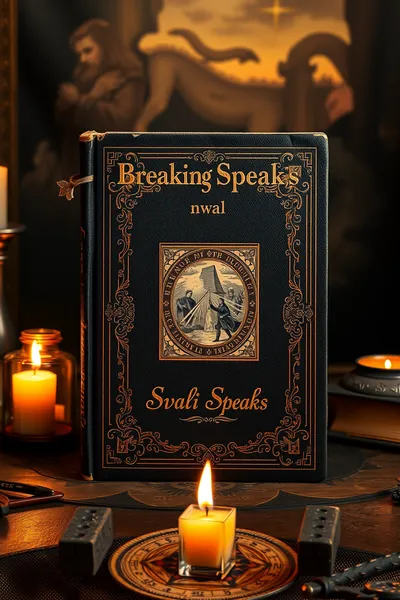
The Book of Hiram

 79
79

The Book of Hiram
Christopher Knight's *The Book of Hiram* offers a challenging reinterpretation of Masonic lore, moving beyond conventional historical accounts. Knight's strength lies in his persistent linkage of Masonic narratives to broader esoteric currents, particularly those involving ancient wisdom traditions and symbolic reconstruction. He meticulously dissects the Hiram Abiff legend, positing it as a profound allegory for spiritual awakening. A particularly compelling section analyzes the symbolic architecture of Solomon's Temple, not as mere stone, but as a representation of cosmic order and inner sanctum. However, the book's dense prose and intricate theoretical framework can sometimes feel overwhelming, requiring considerable prior knowledge of esoteric subjects. While Knight makes a robust case for his interpretations, some readers might find the leaps between Masonic ritual and ancient mythologizing to be speculative, lacking concrete textual evidence for every proposed connection. Despite these limitations, it provides a unique lens through which to view familiar Masonic symbols.
📝 Description
79
Christopher Knight's 2004 book, The Book of Hiram, reinterprets Masonic symbolism beyond standard historical accounts.
Published in 2004, Christopher Knight's *The Book of Hiram* moves beyond a simple historical record to investigate Masonic symbolism and its supposed ties to ancient esoteric thought. Knight aims to reveal deeper meanings in the symbolism that are often missed in common readings. He argues for Hiram Abiff being more than just a legendary figure. This book is suited for serious students of Freemasonry, especially those drawn to its philosophical and esoteric aspects over its ritualistic or social elements. Researchers of Western esotericism, comparative mythology, and ancient mystery traditions will also find it valuable for its connections to Masonic lore. A basic grasp of Masonic ideas is helpful for fully understanding the arguments made.
Knight centers his work on the Hiram Abiff legend as a core allegorical story. The book looks at the symbolic path of the Master Mason, the idea of hidden knowledge, and the pursuit of spiritual awakening. It often uses the Temple of Solomon as a symbolic structure, representing more than a building; it is a model for human awareness and a link to the divine. The relationships between Hiram, Solomon, and the Queen of Sheba are examined within this framework.
Knight's work entered a period in the early 21st century where interest in esoteric movements and secret societies remained strong. It follows earlier works that documented Masonic symbolism, but Knight offers a potentially more critical or reconstructive viewpoint. The book engages with the history of Freemasonry and its connections to Hermetic and Kabbalistic traditions, placing it within a broader study of Western esotericism.
💡 Why Read This Book?
• Gain a deeper understanding of the Hiram Abiff legend's symbolic weight, moving beyond its literal interpretation to grasp its allegorical significance for spiritual development, as explored in Knight's analysis. • Explore the Temple of Solomon not just as a historical structure, but as a potent esoteric blueprint for consciousness and divine connection, a concept elaborated throughout the book. • Discover potential connections between Masonic symbolism and ancient mystery traditions, offering a new perspective on the roots of Western esotericism and its enduring influence.
⭐ Reader Reviews
Honest opinions from readers who have explored this book.
❓ Frequently Asked Questions
What is the primary focus of Christopher Knight's *The Book of Hiram*?
The book primarily focuses on the esoteric and symbolic interpretations of Masonic lore, particularly the legend of Hiram Abiff, and its alleged connections to ancient mystery traditions and wisdom teachings.
When was *The Book of Hiram* first published?
Christopher Knight's *The Book of Hiram* was first published in 2004, positioning it within a period of ongoing scholarly and popular interest in esoteric subjects.
Who is Hiram Abiff in the context of this book?
In Knight's interpretation, Hiram Abiff is presented as a central allegorical figure, representing lost knowledge and the archetype of the spiritual seeker on a path to enlightenment.
Does the book require prior knowledge of Freemasonry?
While not strictly mandatory, prior familiarity with Masonic concepts and terminology will significantly enhance a reader's comprehension and appreciation of the book's complex arguments.
What esoteric traditions does *The Book of Hiram* draw upon?
The work draws upon and seeks to connect Masonic symbolism with various esoteric traditions, including Hermeticism, Kabbalah, and ancient mystery schools, suggesting a shared root of wisdom.
What is the significance of Solomon's Temple in the book?
Solomon's Temple is depicted not merely as a historical building but as a symbolic construct, representing the order of the cosmos and the inner sanctuary of human consciousness.
🔮 Key Themes & Symbolism
The Hiram Abiff Allegory
Knight positions the legend of Hiram Abiff as the central to Masonic esoteric teaching. He argues that the narrative of Hiram's death and the subsequent search for his lost work is not a historical event but a profound allegory for the human journey toward spiritual illumination and the recovery of lost divine knowledge. This theme is central to understanding the book's exploration of Masonic initiation and the symbolic quest for wisdom.
Solomon's Temple as a Cosmic Blueprint
The book interprets Solomon's Temple as more than a physical structure; it is presented as a symbolic representation of the universe and the human psyche. Knight examines its architectural elements and symbolic layout as a map for spiritual development, aligning with ancient concepts of sacred geometry and the microcosm-macrocosm relationship. This perspective links Masonic architecture to broader esoteric traditions of cosmic order.
Lost Knowledge and Spiritual Recovery
A recurring theme is the concept of 'lost knowledge'—a primal wisdom that has been obscured or forgotten over time. Knight suggests that Freemasonry, through its rituals and symbolism, serves as a vehicle for rediscovering this knowledge. The figure of Hiram Abiff is intrinsically tied to this theme, representing the repository of such wisdom that initiates strive to recover, mirroring quests found in various Gnostic and Hermetic traditions.
The Queen of Sheba's Role
The book assigns significant symbolic weight to the Queen of Sheba's interaction with King Solomon and Hiram. She is often interpreted as representing wisdom, intuition, or even a feminine divine principle that tests and complements the masculine principles embodied by Solomon and Hiram. Her arrival and influence are analyzed for their role in the unfolding of esoteric truths within the narrative.
💬 Memorable Quotes
Direct passages from the work, attributed to the author.
“Solomon's Temple is the blueprint for the perfected human consciousness.”
— This conceptual summary reflects Knight's argument that the physical architecture of the Temple is a symbolic map, illustrating the ideal structure and order of the enlightened mind, mirroring the cosmos itself.
“Hiram Abiff embodies the knowledge that is sought but not easily found.”
— This interpretation highlights the central role of Hiram as a symbol of hidden wisdom. His legend signifies that true esoteric understanding requires effort, initiation, and the recovery of something lost, a core tenet in many mystery traditions.
“Masonic symbols are keys to unlocking ancient esoteric doctrines.”
— This captures Knight's overarching thesis that the symbols and rituals of Freemasonry are not arbitrary but are deliberate carriers of ancient esoteric knowledge, intended to guide initiates towards profound spiritual insights.
💡 Key Ideas
Editorial paraphrase of the work's core concepts — not direct quotes.
The Master Mason's journey is a symbolic representation of the soul's quest for divine truth.
This paraphrase captures Knight's view that Masonic degrees and rituals are not mere social or historical enactments, but allegorical pathways designed to guide the practitioner toward spiritual enlightenment and a deeper understanding of universal principles.
The Queen of Sheba's wisdom challenges and complements Solomon's reign.
This paraphrased concept suggests Knight's interpretation of the Queen of Sheba as a figure representing a crucial aspect of wisdom or divine feminine energy that is essential for a complete understanding, even within a system dominated by masculine authority.
🌙 Esoteric Significance
Tradition
Knight's work is firmly situated within the Western esoteric tradition, specifically engaging with Hermeticism, Kabbalah, and Gnosticism as frameworks for interpreting Masonic symbolism. He posits that Freemasonry serves as a modern vessel for ancient mysteries, echoing the initiatory structures found in classical mystery schools. The book attempts to demonstrate a lineage of esoteric knowledge passed down through symbolic systems, suggesting that Masonic rituals are a continuation of these elder traditions.
Symbolism
Central to the book is the symbolism of Hiram Abiff, who represents the lost principle or divine knowledge that the initiate seeks. The Temple of Solomon is another key symbol, interpreted not just as a building but as a cosmic diagram and a representation of the perfected human consciousness. The Queen of Sheba also functions symbolically, often embodying wisdom or the divine feminine principle that tests and complements the masculine aspects of creation and authority.
Modern Relevance
Contemporary practitioners of esoteric studies, particularly those involved in Masonic research or interested in Western mystery traditions, continue to engage with Knight's theories. His work is relevant to modern discussions on comparative religion, the history of secret societies, and the enduring power of symbolic language in spiritual development. Thinkers exploring the intersection of mythology, ritual, and consciousness often reference or build upon the interpretive framework Knight provides.
👥 Who Should Read This Book
• Students of Western Esotericism: Those researching Hermeticism, Kabbalah, and ancient mystery traditions will find value in Knight's attempt to synthesize these with Masonic symbolism. • Dedicated Freemasons: Masons seeking a deeper philosophical and symbolic understanding of their craft beyond ritualistic practice will appreciate the detailed analysis. • Comparative Mythology Scholars: Researchers interested in archetypal narratives and the cross-cultural transmission of myths will benefit from the book's exploration of Hiram Abiff and related figures.
📜 Historical Context
Published in 2004, Christopher Knight's *The Book of Hiram* emerged during a period of sustained academic and popular fascination with Freemasonry and its historical roots. The early 21st century saw numerous publications attempting to unravel Masonic symbolism, often drawing connections to older esoteric traditions. Knight's work entered a field already shaped by earlier comprehensive studies, such as those by Manly P. Hall, but sought to offer a distinct, perhaps more reconstructive, interpretation. At the time, comparative mythology and the study of ancient mystery religions were also gaining traction, providing an intellectual climate conducive to Knight's approach. While specific contemporary receptions or censorship events for *The Book of Hiram* are not widely documented, it contributed to the ongoing discourse on Freemasonry's place within Western esotericism, a discourse where figures like Albert Pike had previously made significant impacts with their interpretations of Masonic ritual.
📔 Journal Prompts
The symbolic journey of Hiram Abiff: What does 'lost knowledge' represent in your personal quest?
Reflect on the Temple of Solomon as an inner blueprint for your own consciousness.
Consider the Queen of Sheba's role: How does complementary wisdom challenge established structures?
Analyze the concept of 'divine truth' as depicted through Masonic allegory.
Explore the idea of spiritual recovery mirrored in the Hiram Abiff legend.
🗂️ Glossary
Hiram Abiff
The central legendary figure in Masonic lore, renowned as the master architect of Solomon's Temple. His story, involving betrayal and death, serves as a primary allegory for the loss and recovery of sacred knowledge in Masonic teachings.
Solomon's Temple
The biblical Temple in Jerusalem built by King Solomon. In Masonic esotericism, it is viewed not merely as a historical structure but as a symbolic representation of cosmic order, divine presence, and the ideal human consciousness.
Master Mason
A member who has attained the third degree in Craft Freemasonry. The 'Master Mason's journey' refers to the symbolic path of spiritual development and enlightenment undertaken through the degrees of the lodge.
Esoteric
Relating to or accessible only by a select group of initiated individuals. In this context, it refers to the inner, hidden meanings and spiritual teachings within Masonic symbolism and ancient traditions.
Allegory
A story, poem, or picture that can be interpreted to reveal a hidden meaning, typically a moral or political one. Knight uses allegory to explain the deeper spiritual significance of Masonic narratives.
Divine Feminine
A concept referring to the creative, nurturing, and intuitive aspects of divinity, often contrasted with or complementing the 'Divine Masculine'. The Queen of Sheba is sometimes interpreted through this lens.
Sacred Geometry
The study of geometric shapes, ratios, and proportions that are considered fundamental to the structure of the universe and are found in sacred art, architecture, and nature.
🔮 Readers Also Liked
Browse all →






More by Christopher Knight
All books →
More Free Freemasonry & Secret Societies Books
View all →