Die Zauberflöte

 73
73

Die Zauberflöte
Mozart's "Die Zauberflöte" is a work that consistently reveals new layers upon each engagement, a testament to its intricate construction and symbolic density. Its primary strength lies in the seamless integration of profound philosophical and spiritual themes within an accessible, albeit fantastical, narrative framework. The opera's exploration of Masonic initiation rites, a subject often veiled in secrecy, is rendered with remarkable clarity, particularly in the trials faced by Tamino and Pamina. However, a potential limitation for some contemporary listeners might be the operatic conventions of the era and the inherent simplicity of certain plot devices, which can sometimes feel secondary to the symbolic weight. The scene where Tamino and Pamina walk through fire and water, representing purification through elemental trials, is a particularly potent example of its esoteric core. Ultimately, "Die Zauberflöte" offers a unique operatic experience that transcends mere entertainment, serving as a libretto for spiritual and intellectual contemplation.
📝 Description
73
### What It Is
Wolfgang Amadeus Mozart's "Die Zauberflöte" (The Magic Flute), first published in 1794, is far more than a mere opera. It functions as a complex allegorical drama, rich with Masonic symbolism and Enlightenment ideals. While presented as a fairy tale, its narrative unfolds a profound exploration of the human journey towards wisdom and spiritual enlightenment. The libretto, by Emanuel Schikaneder, presents a world where light battles darkness, and the protagonists undergo trials designed to purify and elevate them.
### Who It's For
This work is essential for students of esoteric traditions, particularly Freemasonry, as well as scholars of comparative mythology and Jungian psychology. Its layered symbolism speaks to those interested in alchemical processes, spiritual initiation rites, and the philosophical underpinnings of late 18th-century European thought. Anyone seeking to understand the intersection of art, spirituality, and societal ideals will find considerable depth within its structure.
### Historical Context
Premiering in 1791, "Die Zauberflöte" emerged during a period of intense intellectual ferment in Europe, marked by the Enlightenment's emphasis on reason, virtue, and human perfectibility. Mozart himself was a Freemason, and the opera is replete with symbols and themes common within Masonic lodges, such as the quest for light, the overcoming of ignorance, and the duality of wisdom and instinct. The work’s philosophical underpinnings align with Enlightenment thinkers like Voltaire and Rousseau, who championed humanism and moral education. Its reception was initially mixed, with some critics finding its blend of high philosophy and low comedy jarring, yet its popular appeal quickly grew, cementing its place in the operatic canon.
### Key Concepts
The opera delves into several core esoteric concepts. The central theme is the journey of initiation, mirroring the trials faced by candidates in ancient mystery schools and Masonic lodges. Duality is pervasive, represented by the Queen of the Night (instinct, darkness, chaos) and Sarastro (reason, light, order). The pursuit of wisdom is paramount, embodied in the characters' quest for knowledge and virtue. The opera also touches upon the alchemical concept of the Great Work, the transformation of the base into the noble, both individually and societally.
✍️ Author
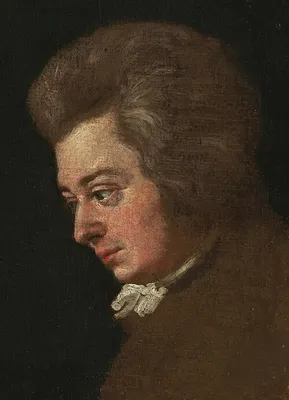
Wolfgang Amadeus Mozart
On 5 December 1791, the composer Wolfgang Amadeus Mozart died at his home in Vienna at the age of 35. The circumstances of his death have attracted much research and speculation.
💡 Why Read This Book?
• Gain insight into Masonic symbolism and Enlightenment philosophies as presented through the trials of Tamino and Pamina, offering a unique lens on spiritual progression distinct from purely textual esoteric works. • Understand the alchemical concept of transformation as depicted in the opera's narrative arc and the symbolic journey towards enlightenment, providing a dramatic interpretation of the Great Work. • Appreciate the specific historical context of 1791 Vienna, where the opera premiered, and its reflection of societal ideals and esoteric currents that shaped late 18th-century European thought.
⭐ Reader Reviews
Honest opinions from readers who have explored this book.
❓ Frequently Asked Questions
What is the primary esoteric tradition influencing "Die Zauberflöte"?
The opera is heavily influenced by Freemasonry, a prominent esoteric fraternity in the late 18th century. It incorporates Masonic themes of initiation, the pursuit of wisdom, the duality of light and darkness, and the search for moral and spiritual perfection.
Who wrote the libretto for "Die Zauberflöte"?
The libretto for "Die Zauberflöte" was written by Emanuel Schikaneder, a close friend of Mozart and a fellow Freemason. He also originated the role of Papageno in the opera's premiere.
What is the significance of the Queen of the Night and Sarastro?
The Queen of the Night represents the forces of darkness, chaos, and instinctual, untamed nature. Sarastro, conversely, embodies reason, order, wisdom, and the benevolent rule of enlightenment, acting as the guardian of spiritual knowledge.
When did "Die Zauberflöte" first premiere?
"Die Zauberflöte" premiered on September 30, 1791, at the Theater auf der Wieden in Vienna, Austria, just a few months before Mozart's death.
Are there alchemical interpretations of "Die Zauberflöte"?
Yes, many scholars and esotericists interpret "Die Zauberflöte" through an alchemical lens. The trials of Tamino and Pamina are seen as mirroring the stages of alchemical transformation, moving from a base state towards spiritual gold or enlightenment.
What role does music play in the opera's esoteric message?
Mozart's music is integral to conveying the opera's esoteric themes. The distinct musical styles for different characters and settings (e.g., the Queen of the Night's coloratura versus Sarastro's solemn music) reinforce their symbolic roles and the dramatic tension between opposing forces.
🔮 Key Themes & Symbolism
Masonic Initiation and Trials
The opera functions as a narrative representation of the Masonic initiation process. Tamino and Pamina undergo symbolic trials of silence, fire, and water, designed to test their courage, virtue, and commitment to wisdom. These trials mirror the allegorical journey of Freemasonry, aimed at purifying the candidate and leading them towards 'light' and enlightenment, reflecting the fraternity's emphasis on moral and spiritual development through structured experience.
Duality and the Quest for Balance
A core theme is the cosmic and psychological duality represented by the Queen of the Night and Sarastro. This opposition symbolizes the eternal struggle between instinctual chaos and rational order, ignorance and wisdom, darkness and light. The opera suggests that true enlightenment is achieved not by eradicating one pole, but by understanding and integrating both, finding balance through reason and virtue, as exemplified by the protagonists' journey.
Enlightenment Ideals and Reason
Premiering in 1791, "Die Zauberflöte" is deeply imbued with Enlightenment values, particularly the exaltation of reason, knowledge, and benevolent governance. Sarastro's realm is presented as a society guided by wisdom and virtue, contrasting with the superficial allure and manipulative darkness of the Queen. The opera champions the power of education and moral fortitude in overcoming superstition and ignorance, aligning with the era's philosophical optimism about human perfectibility.
The Alchemical Transformation
Beyond its Masonic and Enlightenment aspects, the opera is frequently interpreted through an alchemical lens. The journey of Tamino and Pamina can be seen as a metaphor for the alchemical process – the 'Great Work' – of transforming base elements into spiritual gold. Their trials purify them, symbolizing the stages of dissolution, purification, and reintegration, leading to a higher state of consciousness and spiritual attainment.
💬 Memorable Quotes
“The trials of silence, fire, and water.”
— This refers to the symbolic ordeals Tamino and Pamina must endure to prove their worthiness for the Temple of Wisdom. These trials are central to the opera's allegorical depiction of spiritual initiation and transformation.
“Wisdom, Reason, and Benevolence.”
— These principles define Sarastro's domain and the ideals pursued by the protagonists. They represent the enlightened path contrasting with the chaotic forces embodied by the Queen of the Night.
“The quest for the 'true knowledge'.”
— This phrase encapsulates the ultimate goal of the characters' journey. It signifies not just intellectual understanding, but a profound, transformative spiritual insight achieved through trials and virtue.
“The duality of the Queen of the Night versus Sarastro.”
— This highlights the fundamental symbolic opposition in the opera, representing instinctual chaos versus enlightened order, a core conflict explored through the narrative and musical themes.
“The triumph of light over darkness.”
— This summarizes the overarching thematic resolution. The opera suggests that through courage, wisdom, and adherence to virtue, the forces of enlightenment can overcome ignorance and chaos.
🌙 Esoteric Significance
Tradition
The primary esoteric tradition informing "Die Zauberflöte" is Freemasonry, particularly its emphasis on initiation, moral development, and the pursuit of light and wisdom. The opera also draws from Neoplatonic and Hermetic concepts concerning the soul's journey, the nature of divinity, and the symbolic representation of cosmic order. It can be viewed as a dramatic allegory for the process of spiritual awakening and the attainment of higher consciousness, aligning with broader Western esoteric traditions.
Symbolism
Key symbols include the number three (representing the Holy Trinity or Masonic pillars), the sun and moon (duality, cosmic balance), and the serpent (transformation, healing, or temptation). The trials of fire and water are potent alchemical symbols for purification and the dissolution of the ego, essential steps in the Great Work. Sarastro's priests and their temple represent the sanctuary of knowledge and the structured path toward enlightenment.
Modern Relevance
Contemporary esoteric practitioners, particularly those within Masonic study groups or those interested in comparative mythology, continue to analyze "Die Zauberflöte." Jungian psychologists often cite it as a prime example of archetypal symbolism in art, illustrating the journey of individuation. Its themes of balance, reason, and spiritual quest remain relevant for modern seekers exploring the intersection of art, psychology, and spiritual philosophy.
👥 Who Should Read This Book
• Students of Western Esotericism: Individuals interested in Freemasonry, Hermeticism, and Enlightenment philosophy will find a rich allegorical text that visually and audibly represents core esoteric concepts. • Comparative Mythology Enthusiasts: Those who study myths and initiation rites across cultures will appreciate "Die Zauberflöte" as a unique operatic exploration of the hero's journey and spiritual trials. • Musicologists and Art Historians: Scholars interested in the cultural and intellectual milieu of late 18th-century Europe will gain insight into how esoteric ideas were integrated into popular art forms.
📜 Historical Context
Premiering in 1791, "Die Zauberflöte" emerged during a pivotal moment in European history, deeply influenced by the intellectual currents of the Enlightenment and the pervasive influence of Freemasonry. Mozart, a devoted Freemason, infused the opera with symbols and themes central to the fraternity, such as the pursuit of wisdom, moral purification, and the triumph of reason over superstition. The opera's premiere occurred in a Vienna that was also engaging with the ideas of philosophers like Immanuel Kant, who sought to define the boundaries of human reason. While "Die Zauberflöte" resonated with Masonic circles and those sympathetic to Enlightenment ideals, its blend of fairy tale elements and philosophical depth was not universally embraced. For instance, Christian Friedrich Daniel Schubart, a contemporary writer and composer, offered critiques of its perceived philosophical inconsistencies. Nevertheless, the opera's popular appeal and enduring symbolic power quickly cemented its significance.
📔 Journal Prompts
The symbolic meaning of Tamino's flute.
Sarastro's pronouncements on wisdom and reason.
Papageno's pursuit of simple happiness versus Tamino's quest for enlightenment.
The Queen of the Night's motivations and symbolic role.
The significance of the trials of silence, fire, and water.
🗂️ Glossary
Freemasonry
A fraternal organization that emerged in the late 16th to early 17th century, emphasizing moral and spiritual teachings through allegorical rituals and symbols, often related to the building of King Solomon's Temple.
Enlightenment
An 18th-century intellectual and philosophical movement emphasizing reason, individualism, skepticism towards traditional authority, and the pursuit of knowledge and human progress.
Initiation
A ritual or ceremony marking a person's entry into a group or society, often involving symbolic trials or teachings designed to impart knowledge and transform the individual.
Allegory
A story, poem, or picture that can be interpreted to reveal a hidden meaning, typically a moral or political one, using symbolic figures and actions.
Alchemy
An ancient philosophical and protoscientific tradition that sought to purify, mature, and perfect certain materials. Esoterically, it represents a process of spiritual transformation and enlightenment.
Duality
The state of having two parts, often representing opposing forces or principles, such as light and darkness, good and evil, or reason and instinct, central to many esoteric worldviews.
Libretto
The text of an opera or other long musical work.