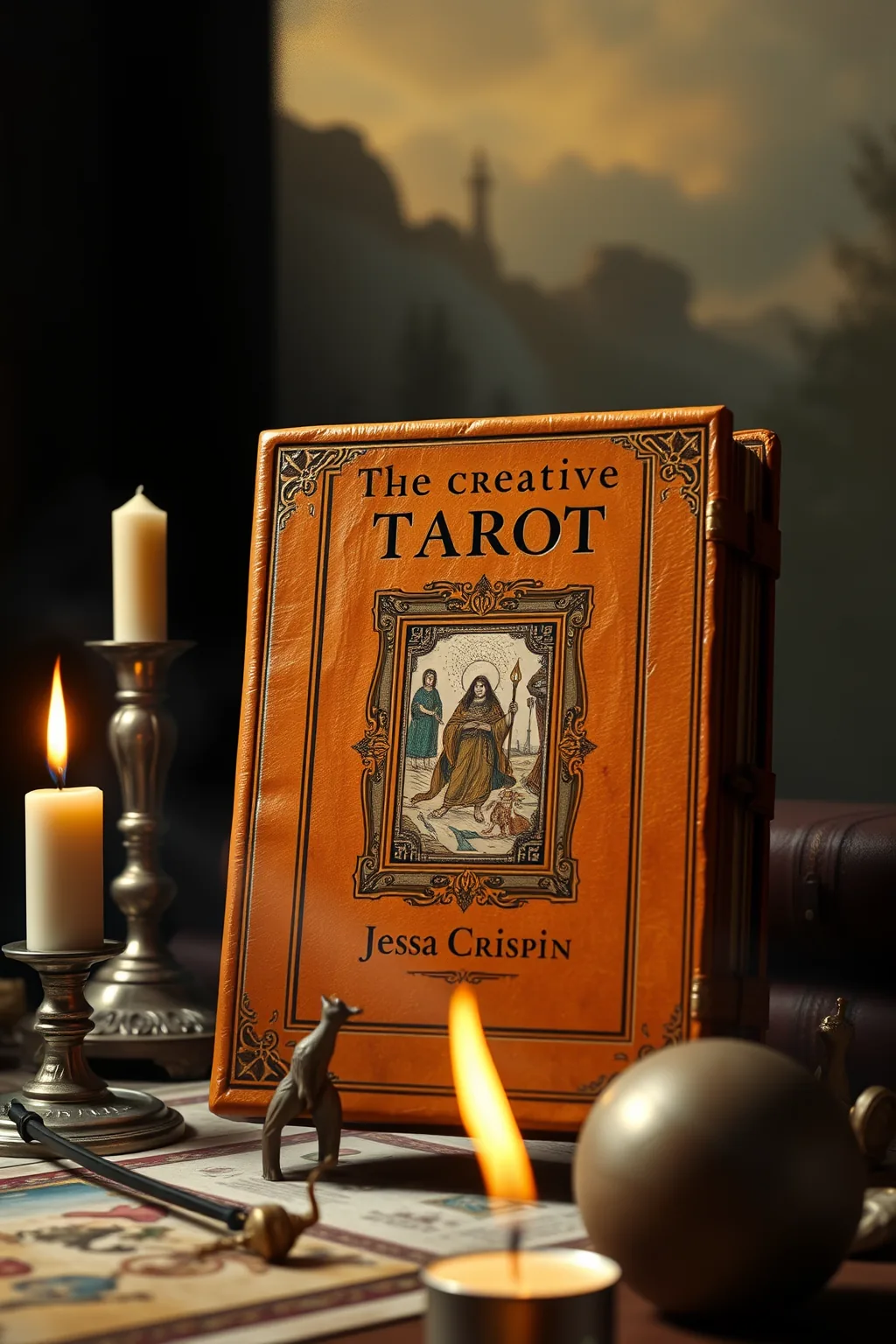
The creative tarot
 74
74

The creative tarot
Jessa Crispin's 'The Creative Tarot' presents a refreshing perspective, moving the cards away from fortune-telling and towards a psychological toolkit for creators. The strength of the book lies in its consistent, focused application of Tarot archetypes to the often-frustrating landscape of artistic production. Crispin's argument that the Major Arcana mirrors a personal creative odyssey is particularly compelling, offering a narrative arc for the artist's journey. However, the book occasionally leans heavily on interpretation without always providing concrete exercises for applying these insights, leaving some readers wanting more actionable steps. A passage discussing the suits as representing different phases of conceptualization and execution, rather than merely elements of daily life, highlights the book's unique value proposition. Despite its occasional abstractness, 'The Creative Tarot' offers a valuable reframing for anyone seeking to understand their creative flow.
Verdict: A potent psychological lens for the modern artist's toolkit.
📝 Description
74
### What It Is 'The Creative Tarot' by Jessa Crispin, first published in 2016, examines the Tarot not as a divinatory tool for predicting futures, but as a framework for understanding and cultivating personal creativity. The book reframes the 78 cards of the Major and Minor Arcana as archetypal energies and narrative stages that can be applied to the creative process. Crispin argues that the Tarot provides a symbolic language to map the journey of artistic creation, from initial inspiration to the completion of a work.
### Who It's For This work is designed for artists, writers, musicians, and anyone engaged in creative pursuits who seeks a structured yet intuitive approach to their practice. It appeals to those who feel blocked, uninspired, or simply wish to deepen their connection to their creative wellspring. Individuals familiar with Tarot archetypes but seeking a non-predictive application will find it particularly valuable. It also serves those interested in the intersection of psychology, mythology, and the arts.
### Historical Context Published in 2016, 'The Creative Tarot' emerged during a period of renewed popular interest in Tarot, often driven by online communities and a desire for self-exploration beyond traditional divination. This era saw a proliferation of Tarot decks and books, many focusing on psychological and personal growth applications. Crispin’s work situates itself within this trend, offering a specific lens on creativity, differentiating itself from purely fortune-telling guides and aligning with contemporary explorations of archetypal psychology, influenced by figures like Carl Jung, who analyzed symbols as expressions of the collective unconscious.
### Key Concepts The book introduces several core concepts: The Tarot as a 'map of consciousness' for creative endeavors, viewing each card as a stage or energy within the creative cycle. It emphasizes the 'creative journey' through the Major Arcana, likening it to the Fool's progression. Crispin also discusses the 'inner critic' as a potential obstacle, symbolized by certain challenging cards, and the importance of embracing 'unfolding potential' inherent in the Minor Arcana’s suits, relating them to different facets of the creative act.
💡 Why Read This Book?
• Understand the Major Arcana as a map of the creative process, mirroring the Fool's journey from inspiration to manifestation, as explored in Crispin's 2016 publication. • Gain a new perspective on overcoming creative blocks by identifying archetypal challenges within the Tarot spread, such as the 'inner critic' concept. • Reframe the Minor Arcana suits not for divination, but as symbolic representations of distinct phases in the act of creation, offering a structured approach to artistic execution.
⭐ Reader Reviews
Honest opinions from readers who have explored this book.
❓ Frequently Asked Questions
Is 'The Creative Tarot' suitable for beginners to Tarot?
Yes, the book is accessible to beginners. It reframes Tarot archetypes for creativity, making it understandable even without prior divinatory experience, focusing on psychological and artistic application rather than prediction.
How does Jessa Crispin's approach differ from traditional Tarot readings?
Crispin's approach eschews predictive divination. Instead, she uses the Tarot as a framework for understanding the stages and energies involved in personal creativity and artistic expression, as detailed since its 2016 publication.
What kind of creative work can benefit from this book?
Any creative endeavor can benefit, including writing, painting, music, design, and problem-solving. The book's archetypal approach is broadly applicable to the challenges and rewards of bringing new ideas into existence.
Does the book provide specific exercises for artists?
While primarily focused on conceptual reframing, the book implicitly encourages self-reflection and offers interpretations that can guide personal creative exercises. It aims to shift perspective more than provide a rigid curriculum.
What is the core message of 'The Creative Tarot'?
The central message is that the Tarot can serve as a powerful symbolic language to understand, nurture, and navigate the complexities of one's own creative journey and potential.
When was 'The Creative Tarot' first published?
'The Creative Tarot' by Jessa Crispin was first published in 2016, reflecting a contemporary wave of interest in Tarot for personal development.
🔮 Key Themes & Symbolism
Tarot as Creative Map
Crispin posits the Tarot's 78 cards as a symbolic map for the creative journey. The Major Arcana, in particular, are presented as stages of development, akin to Joseph Campbell's monomyth or the Fool's progression through life's experiences. This perspective moves beyond simple fortune-telling, framing the cards as archetypal energies that artists can engage with to understand their current creative state, identify obstacles, and recognize potential pathways forward. The Minor Arcana also gain new meaning, representing the practical execution and unfolding of creative ideas.
Archetypes of Inspiration and Blockage
The book delves into how various Tarot archetypes can represent both the generative forces of inspiration and the common pitfalls of creative blockage. Figures like The Hermit might symbolize introspection crucial for deep work, while cards representing fear or self-doubt can be interpreted as the 'inner critic' that artists frequently contend with. By identifying these archetypal patterns within a reading, creators are encouraged to acknowledge and work through these internal dynamics, transforming potential hindrances into catalysts for growth and deeper understanding of their creative process.
The Creative Cycle Framework
'The Creative Tarot' proposes a structured yet fluid model for understanding the phases of creative endeavor. This framework uses the Tarot to illustrate the entire arc, from the initial spark of an idea (perhaps represented by the Ace of Wands) through development, struggle, and eventual realization. It provides a symbolic language to articulate the intangible aspects of creation, helping individuals recognize where they are within their own cycle and what energies or actions might be most beneficial at each stage. This offers a practical application for personal creative projects.
Non-Divinatory Application
A central tenet of Crispin's work is the deliberate departure from traditional divinatory uses of the Tarot. The book champions a psychological and philosophical interpretation, viewing the cards as mirrors to the internal world of the creator. This approach makes the Tarot accessible and relevant to individuals who may be skeptical of or uninterested in fortune-telling but are keen to explore symbolic systems for self-understanding and personal growth. It aligns with a modern, secular engagement with ancient archetypal imagery since its 2016 release.
💬 Memorable Quotes
“The Tarot is not about predicting the future; it is about understanding the present.”
— This statement encapsulates Crispin's core thesis: the Tarot's value lies in its ability to illuminate current internal states and creative dynamics, rather than forecasting external events.
“Each card represents an energy or a stage in the creative process.”
— This highlights the book's central premise, reframing the 78 cards as symbolic markers for the artist's journey, from inception to completion.
“The Fool’s journey through the Major Arcana is a metaphor for the artist’s own creative evolution.”
— This interpretation connects the archetypal progression of the Major Arcana to the personal growth and developmental arc experienced by individuals engaged in creative work.
“We can use the Tarot to understand our own creative blocks.”
— This suggests a diagnostic application, where Tarot readings can help identify the specific archetypal energies or psychological patterns hindering creative flow.
“The suits of the Minor Arcana relate to different aspects of bringing an idea to life.”
— This interpretation offers a practical lens for the Minor Arcana, positioning them as symbolic guides to the execution and manifestation phases of creative projects.
🌙 Esoteric Significance
Tradition
While not strictly adhering to a single esoteric lineage, 'The Creative Tarot' draws heavily from the archetypal psychology pioneered by Carl Jung, which itself intersects with Gnostic and Hermetic thought regarding symbolic language and the human psyche. It repurposes the Tarot, a system with roots in Renaissance Italy and later codified within occult traditions like the Hermetic Order of the Golden Dawn, for a secular, psychological, and creative application. This departure from traditional magical or divinatory frameworks places it within a contemporary movement to integrate esoteric symbolism into modern self-help and artistic practices.
Symbolism
The book foregrounds the archetypal figures of the Major Arcana, such as The Fool, The Magician, and The High Priestess, interpreting them as stages or energies within the creative journey. The Fool represents the initial leap into a creative project, while The Magician signifies the activation of resources and will. The High Priestess can symbolize intuition and the subconscious wellspring of ideas. Additionally, the four suits of the Minor Arcana (Wands, Cups, Swords, Pentacles) are recontextualized to represent distinct phases or elements of creative execution and manifestation, moving beyond their traditional divinatory meanings.
Modern Relevance
Crispin's work resonates with contemporary artists, writers, and creatives who seek structured yet flexible tools for self-understanding and productivity. It finds echoes in modern psychological approaches to creativity, mindfulness-based artistic practices, and the burgeoning field of creative coaching. Thinkers and practitioners exploring Jungian psychology, symbolic studies, and the intersection of art and consciousness often find value in its accessible application of archetypal symbolism to tangible creative challenges faced in the 21st century.
👥 Who Should Read This Book
• Artists, writers, musicians, and designers seeking a symbolic framework to understand and navigate their creative process, overcoming blocks and fostering inspiration. • Individuals interested in a non-divinatory, psychological application of Tarot archetypes, looking to use the cards as a tool for self-reflection and personal growth. • Those feeling stagnant in their creative pursuits who desire a fresh perspective on bringing ideas from conception to completion, using the Tarot as a metaphorical map.
📜 Historical Context
Published in 2016, 'The Creative Tarot' emerged during a significant resurgence of interest in Tarot, particularly within online communities and circles focused on personal development and self-exploration. This period saw a proliferation of books and decks reinterpreting Tarot for psychological insight, artistic expression, and mindfulness, moving away from purely esoteric or divinatory applications. Crispin’s work arrived amidst this wave, aligning with a broader cultural shift exemplified by figures like Jung, whose theories on archetypes provided an intellectual backdrop for understanding universal symbols. It distinguished itself from older occult traditions, such as those popularized by the Hermetic Order of the Golden Dawn in the late 19th century, by focusing squarely on the creative process rather than complex magical systems or predictive methods. The book’s reception was generally positive within its target audience, appreciated for its accessible and pragmatic reframing of the cards.
📔 Journal Prompts
The initial spark of The Fool's journey: What creative impulse are you currently responding to?
Reflecting on The Magician's tools: What resources and skills are available for your current project?
Interpreting The High Priestess's wisdom: What intuitive insights are guiding your creative direction?
Navigating the 'inner critic' archetype: How can you acknowledge and integrate challenging energies?
Mapping the creative cycle: Where are you currently positioned within the archetypal stages of creation?
🗂️ Glossary
Archetype
Universal, archaic patterns and images that derive from the collective unconscious and are the psychic counterpart of instinct. In 'The Creative Tarot,' archetypes represent fundamental energies and stages in the creative process.
Major Arcana
The 22 trump cards of the Tarot deck, traditionally representing significant life lessons, spiritual paths, and major themes. Crispin reinterprets these as stages in the creative journey.
Minor Arcana
The 56 cards of the Tarot deck, divided into four suits (Wands, Cups, Swords, Pentacles). Crispin uses these to symbolize the practical aspects and phases of executing creative work.
Creative Journey
The entire process of artistic creation, from the initial inspiration and conceptualization through development, struggle, and final manifestation. The Tarot is presented as a map for this journey.
Inner Critic
The internal voice of self-doubt, judgment, and fear that can inhibit creative expression. Crispin suggests certain Tarot cards can symbolize or illuminate this critical aspect of the psyche.
Symbolic Language
A system of signs and images that represent deeper meanings or concepts. The Tarot functions as a symbolic language in Crispin's work, offering metaphors for understanding creativity.
Manifestation
The process of bringing an idea or intention into physical reality. The Minor Arcana are often interpreted in relation to the practical steps involved in manifestation.