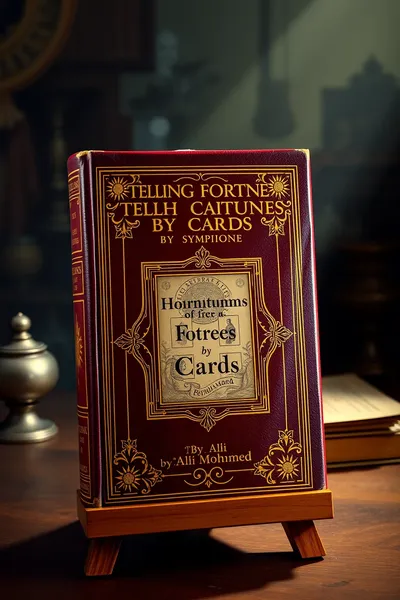
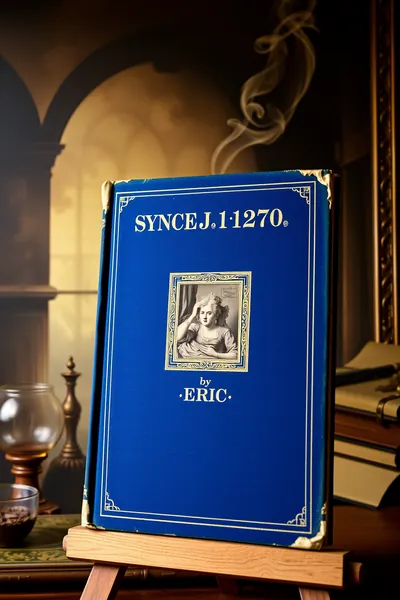
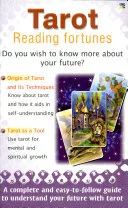
Tarot Reading Fortunes
 75
75

Tarot Reading Fortunes
The strength of Tarot Reading Fortunes lies in its accessible presentation of complex Tarot symbolism. It avoids overly academic jargon, making the cards feel approachable for beginners. A particular passage detailing the suit of Wands, connecting them to active energy and creativity, is handled with clarity and practical application. However, the book could benefit from a more nuanced exploration of the ethical dimensions of reading for others, a topic it touches on only superficially. It sometimes leans into a deterministic view of fortune-telling rather than emphasizing Tarot as a tool for insight and potential. Nevertheless, for those seeking a straightforward introduction to Tarot's divinatory art, this work offers a solid, if conventional, starting point.
📝 Description
75
### What It Is Tarot Reading Fortunes presents a foundational approach to understanding the seventy-eight cards of the Tarot. It offers guidance on interpreting the Major and Minor Arcana, focusing on the symbolic language inherent in each card. The work aims to equip readers with the knowledge to perform their own readings, moving beyond rote memorization to an intuitive grasp of the cards' messages.
### Who It's For This text is intended for those new to Tarot or seeking to deepen their existing practice. It caters to individuals interested in divination, self-exploration, and understanding symbolic systems. Readers who appreciate a direct, instructional style will find the practical advice and clear explanations beneficial for developing their own intuitive abilities with the cards.
### Historical Context The practice of Tarot divination, as understood in modern occult circles, gained significant traction in the late 19th and early 20th centuries. Works like this often drew upon earlier divinatory systems and occult philosophies. The Rider-Waite-Smith deck, published in 1909, became a standard, influencing the visual language and interpretations found in many subsequent Tarot texts, including the conceptual framework likely underpinning this book.
### Key Concepts The core of Tarot Reading Fortunes lies in understanding the duality of the deck: the Major Arcana's archetypal journey and the Minor Arcana's representation of daily life and events. It explores the concept of card spreads, from simple three-card layouts to more complex arrangements, and emphasizes the interconnectedness of cards within a reading. The book also touches upon the idea of querent-reader rapport and the ethical considerations in divination.
💡 Why Read This Book?
• Gain a foundational understanding of the Major and Minor Arcana, learning to interpret the symbolic language of the 78 cards as presented in the work's structured approach. • Develop practical skills in performing Tarot readings, moving beyond memorization to an intuitive grasp of card meanings through the book's instructional guidance. • Explore the historical currents that shaped modern Tarot practice, understanding how works like this connect to occult traditions and influential decks like the Rider-Waite-Smith (1909).
⭐ Reader Reviews
Honest opinions from readers who have explored this book.
❓ Frequently Asked Questions
What is the primary purpose of Tarot Reading Fortunes?
The book aims to teach readers how to interpret the seventy-eight Tarot cards for divination and self-exploration, offering guidance on card meanings and reading techniques.
Does Tarot Reading Fortunes explain different card spreads?
Yes, it covers various card spreads, from simple three-card layouts to more intricate arrangements, explaining their structure and interpretive possibilities.
Is this book suitable for experienced Tarot readers?
While ideal for beginners, experienced readers might find it a useful reference for foundational concepts or a refresher on accessible interpretations, though it may not offer deeply advanced techniques.
What is the significance of the Major and Minor Arcana discussed in the book?
The book explains the Major Arcana as archetypal life lessons and the Minor Arcana as representations of daily events, detailing their distinct roles in a reading.
Does the book mention specific Tarot decks?
While not always explicitly detailing a single deck, the work's conceptual framework is likely influenced by widely adopted decks such as the Rider-Waite-Smith deck, published in 1909.
What is the recommended approach to learning Tarot from this book?
The book encourages a move from memorization towards intuitive understanding, suggesting practice with various spreads and consistent engagement with the cards' symbolic language.
🔮 Key Themes & Symbolism
The Two Arcana
The work meticulously distinguishes between the Major Arcana, representing significant life events and archetypal journeys, and the Minor Arcana, which mirrors the ebb and flow of daily existence. It emphasizes how the interplay between these two sets of cards provides a comprehensive narrative within a reading. Understanding this duality is presented as crucial for discerning the broader spiritual lessons from the more immediate circumstances reflected in the cards.
Symbolic Language of Cards
Central to the book is the concept of Tarot as a symbolic language. Each card, whether a depiction of The Fool or the Two of Cups, is rich with visual cues and traditional meanings. The text guides readers to decode these symbols, moving beyond superficial imagery to grasp the deeper esoteric significance and the energetic qualities each card embodies. This symbolic literacy is key to accurate divination.
Divinatory Practice and Spreads
Tarot Reading Fortunes offers practical instruction on performing readings. It details various spread configurations, from the simple Past-Present-Future layout to more complex systems, explaining how the position of a card influences its interpretation. The emphasis is on developing a systematic yet intuitive approach to extracting meaning and guidance from the cards for oneself and others.
Intuition in Tarot
Beyond mere memorization of card meanings, the book advocates for cultivating intuition. It suggests that while knowledge of traditional symbolism is vital, the reader's inner knowing plays a crucial role in synthesizing the cards' messages. This approach encourages a dynamic dialogue between the querent, the reader, and the cards, fostering personal insight.
💬 Memorable Quotes
“The Major Arcana illustrates the soul's path, while the Minor Arcana maps the terrain of everyday experience.”
— This highlights the fundamental division within the Tarot deck, positioning the Major Arcana as representing grander, archetypal lessons and the Minor Arcana as reflecting the mundane, practical aspects of life.
“Each card is a mirror reflecting potential futures or inner truths.”
— This interpretation frames the Tarot not as a fixed prophecy, but as a tool for self-reflection and understanding possibilities, emphasizing the reader's agency and the reflective nature of the divination process.
“The suit of Wands speaks of action, spirit, and creative fire.”
— This concise statement captures the core energetic essence of the Wands suit, linking it to dynamism, inspiration, and the spark of creation, a key element for understanding the Minor Arcana.
“A well-chosen spread allows the cards to tell their story coherently.”
— This emphasizes the structural importance of Tarot spreads, suggesting that the arrangement of cards is not arbitrary but serves to organize the narrative and facilitate a clear interpretation of the divinatory message.
“Grasp the symbols, and the cards will speak to you.”
— This aphorism underscores the book's core teaching: that a deep understanding of Tarot's visual and symbolic language is the key to unlocking its divinatory and insightful potential.
🌙 Esoteric Significance
Tradition
This work aligns with the Western esoteric tradition, particularly Neo-Hermeticism and occultism that flourished in the late 19th and early 20th centuries. It draws upon the symbolic language developed by occult orders and theorists of that period, presenting Tarot as a key tool for divination and self-knowledge. While not strictly Kabbalistic or Gnostic, it incorporates elements of archetypal psychology and symbolic interpretation common to these intertwined esoteric streams.
Symbolism
Key symbols include the archetypal figures of the Major Arcana, such as The Magician and The High Priestess, representing spiritual powers and esoteric knowledge. The four suits of the Minor Arcana—Wands, Cups, Swords, and Pentacles—symbolize elements (Fire, Water, Air, Earth) and associated human activities and states of being. The number symbolism inherent in the pip cards and court cards also plays a crucial role in interpretation.
Modern Relevance
Contemporary practitioners of Tarot, particularly those interested in psychological approaches to divination and self-help, find value in foundational texts like this. Modern Tarot communities often reference the symbolic systems established during the period this book likely originates from. Thinkers and artists exploring archetypal imagery and the subconscious continue to engage with the foundational principles of Tarot interpretation presented herein.
👥 Who Should Read This Book
• Aspiring Tarot readers seeking a clear, structured introduction to the 78 cards and basic reading techniques. • Individuals interested in Western esoteric traditions and symbolic systems who wish to explore Tarot as a tool for self-awareness. • Those looking for practical guidance on performing divination and interpreting card meanings beyond rote memorization.
📜 Historical Context
The popularization of Tarot for divination surged in the late 19th and early 20th centuries, a period marked by a fascination with esotericism and occultism in Europe and America. This era saw figures like Eliphas Lévi and the Hermetic Order of the Golden Dawn contribute significantly to the symbolic interpretation of Tarot. The publication of the Rider-Waite-Smith deck in 1909, with its richly illustrated cards, became a pivotal moment, standardizing many visual elements and interpretations that influenced subsequent texts. This work likely emerged in the shadow of such influential publications, aiming to distill these complex ideas for a wider audience. It competed with other divinatory systems, such as astrology and palmistry, which also saw renewed interest during this occult revival.
📔 Journal Prompts
The journey of The Fool: trace its symbolic path through the Major Arcana.
Reflect on the elemental associations of the suit of Cups in your own emotional landscape.
How might the reversed meaning of The Tower inform a current challenge?
Consider the interplay between the Swords suit and your thought processes.
Map the cyclical nature of the Pentacles suit onto your material pursuits.
🗂️ Glossary
Major Arcana
The set of 22 trump cards in a Tarot deck, representing significant life lessons, spiritual journeys, and archetypal experiences.
Minor Arcana
The set of 56 cards in a Tarot deck, divided into four suits, which typically represent everyday events, challenges, and circumstances.
Spread
A specific arrangement of Tarot cards laid out in a pattern to answer a question or explore a situation. Different spreads are designed for different purposes.
Querent
The person for whom a Tarot reading is being performed; the individual seeking guidance or insight from the cards.
Suit
One of the four divisions of the Minor Arcana (Wands, Cups, Swords, Pentacles), each associated with an element and a range of life experiences.
Divination
The practice of seeking knowledge of the future or the unknown by supernatural means, often through tools like Tarot cards, astrology, or runes.
Archetype
A universal, symbolic pattern of behavior or personality found in the collective unconscious, often represented by figures in the Major Arcana.