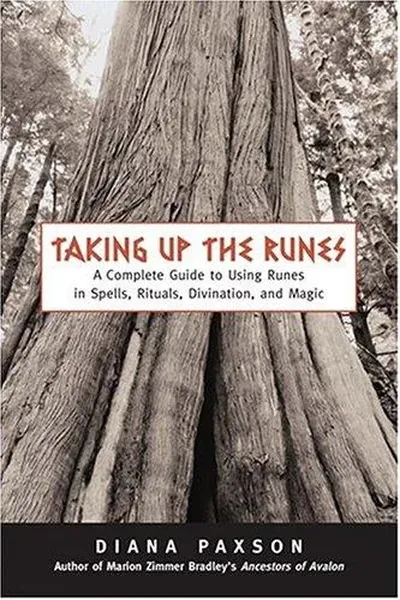
Taking Up The Runes
 79
79

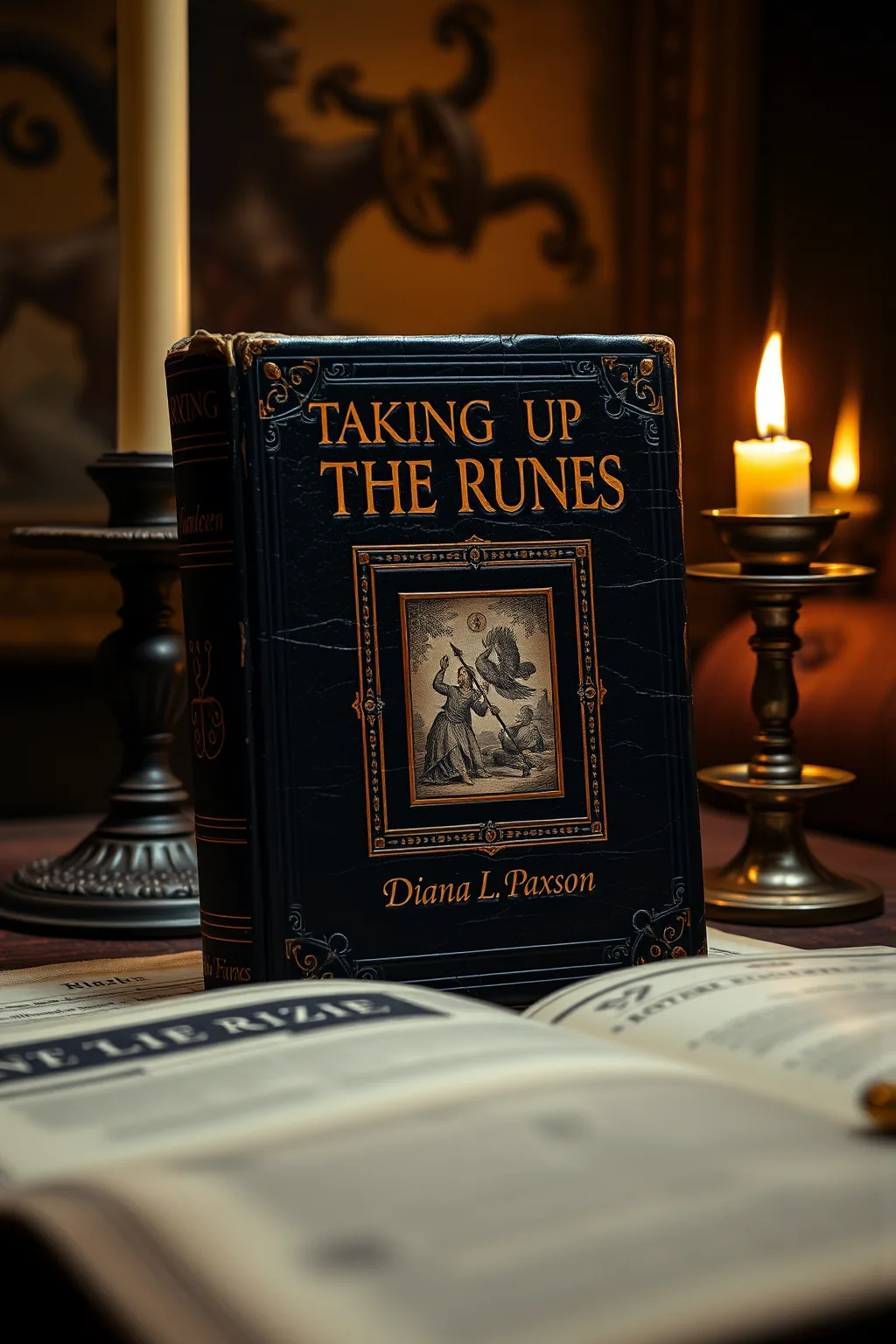
Taking Up The Runes
Paxson’s "Taking Up The Runes" distinguishes itself by treating the runes not as mere predictive tools but as potent symbols of cosmic forces and spiritual disciplines. The author’s extensive background in Germanic traditions is evident throughout, particularly in her nuanced discussion of the rune *Ansuz* and its connection to Odin, the Allfather. While the depth of historical research is commendable, the practical exercises, especially those concerning bindrunes, could benefit from more explicit step-by-step guidance for absolute beginners. The section on the concept of *wyrd* provides a particularly insightful framework for understanding destiny within a Heathen context. Ultimately, Paxson delivers a solid, tradition-rooted guide for those seeking a serious, sustained engagement with the runic system.
📝 Description
79
### What It Is Diana L. Paxson's "Taking Up The Runes" offers a comprehensive exploration of the Elder Futhark, the oldest Germanic runic alphabet. Published in 2020, this work is not merely an introduction but a deep dive into the practical application and spiritual significance of each rune. Paxson, a renowned practitioner and scholar in the field of Germanic paganism and Asatru, grounds her teachings in historical context while emphasizing personal experience and intuitive understanding.
### Who It's For This book is meticulously crafted for individuals serious about engaging with the runes beyond superficial divination. It appeals to practitioners of Heathenry, Asatru, and Germanic Reconstructionism, as well as those interested in historical linguistics, ancient European spiritual traditions, and the application of runic systems in modern magical practice. It serves both those new to the runes and those with existing knowledge seeking to deepen their connection.
### Historical Context The study of runes has a long and varied history, from their initial use in the early centuries CE by Germanic tribes to their resurgence in occult and spiritual circles throughout the 20th century. Paxson's work emerges within a contemporary revival of interest in pre-Christian European spirituality, building upon the foundations laid by earlier scholars and practitioners like Guido von List and Freya Aswynn. The book acknowledges the evolution of runic interpretation, situating its own approach within this lineage.
### Key Concepts Central to "Taking Up The Runes" is the understanding that each rune is a complex symbol representing not just a sound but also a divine concept, a natural force, and a potential pathway for personal growth. The book details the mythological associations, divinatory meanings, and magical applications for all 24 runes of the Elder Futhark, including the concept of the 'ørlög'—the foundational, unchangeable fate that shapes existence, and 'skuld'—the future that can be influenced. Paxson emphasizes the interconnectedness of the runes and their role in understanding the cosmic order and one's place within it.
💡 Why Read This Book?
• Gain a practical understanding of each of the 24 Elder Futhark runes, moving beyond simple divination to explore their deeper mythological and magical significance, as detailed in the extensive rune-by-rune analysis. • Learn to interpret the concept of *wyrd* and *skuld* within a Germanic spiritual framework, enabling a more profound comprehension of fate and personal agency, as explored in the text's philosophical sections. • Develop skills for creating bindrunes and other runic workings, informed by historical context and personal experience, which can be applied to modern magical practices for specific intentions.
⭐ Reader Reviews
Honest opinions from readers who have explored this book.
❓ Frequently Asked Questions
What is the Elder Futhark and how does "Taking Up The Runes" approach it?
The Elder Futhark is the oldest known runic alphabet, used by Germanic peoples from roughly the 2nd to 8th centuries CE. Paxson's book provides a thorough examination of all 24 runes, focusing on their symbolic meanings, historical context, and practical applications in divination and magic.
Is this book suitable for someone new to runes?
Yes, while it offers depth for experienced practitioners, "Taking Up The Runes" is structured to guide newcomers. It begins with foundational concepts and progresses through detailed explanations of each rune, making it accessible for those just starting their runic studies.
What is the historical basis for Paxson's interpretation of the runes?
Paxson draws upon a wide range of historical and archaeological evidence, including runic inscriptions and the mythological poetry of the Poetic Edda. She situates her interpretations within the broader context of Germanic paganism and Asatru revival movements, referencing scholarly work and traditional lore.
Does the book discuss modern magical uses of runes?
Absolutely. Beyond divination, "Taking Up The Runes" explores the magical applications of runes, including the creation of bindrunes and their use in talismans and spells. It encourages a personal, intuitive connection to the runes for spiritual development and practical workings.
What is the significance of concepts like 'wyrd' and 'skuld' in the book?
The book explains 'wyrd' as the interconnected web of fate and cause-and-effect, and 'skuld' as the future that is shaped by present actions. These concepts are presented as fundamental to understanding the Germanic worldview and the runes' role within it.
Who is Diana L. Paxson and what is her authority on the subject?
Diana L. Paxson is a respected author, priestess, and scholar in the field of Germanic paganism and Asatru. She has been a prominent voice in the Heathen community for decades, with extensive experience in runic lore, mythology, and ritual practice.
🔮 Key Themes & Symbolism
Rune Divination and Interpretation
The book presents a detailed system for divining with the Elder Futhark. Paxson emphasizes that runes are not passive oracles but active forces. Each rune is explored through its mythological associations, historical context, and potential for guiding personal insight and decision-making. The work stresses the importance of casting runes with intention and understanding the interplay between them, moving beyond single-rune readings to grasp the narrative a spread can reveal. This approach grounds divination in a framework of cosmic interconnectedness and personal responsibility.
Runic Magic and Wyrd
Paxson thoroughly covers the magical applications of runes, including the construction of bindrunes and their use in talismans. A core concept is *wyrd*, the intricate web of fate and destiny. The book explains how runes can be used not only to understand the currents of *wyrd* but also to influence them through focused magical intent. This practical aspect is deeply tied to the Germanic worldview, where fate is seen as a dynamic force that can be navigated and, to some extent, shaped by one's actions and will.
Mythological and Spiritual Roots
The author anchors the runes in their rich mythological and spiritual heritage, particularly the lore of Odin and the Norse pantheon. Each rune is linked to specific myths, deities, or natural phenomena, providing a profound context for their symbolic meaning. This connection to the divine and the natural world is presented as essential for anyone seeking to truly understand and work with the runes on a spiritual level, fostering a deeper connection to the ancient ways.
The Concept of Ørlög
A crucial element explored is *ørlög*, often translated as 'primordial law' or 'foundation fate'. This represents the unchangeable, fundamental layer of existence and destiny. Paxson differentiates it from *wyrd*, which is the unfolding of events. Understanding *ørlög* is presented as key to recognizing the underlying patterns and truths that govern reality, offering a perspective on acceptance and the inherent structure of the cosmos. This concept provides a philosophical bedrock for interpreting the runes.
💬 Memorable Quotes
“The runes are not a language of the gods, but a language about the gods and the forces that shape the world.”
— This statement highlights Paxson's view that runes are more than mere symbols; they are conceptual keys to understanding divine power and universal principles. They offer a framework for comprehending the mechanics of existence as understood by ancient Germanic cultures.
“Each rune has a sound, a name, a meaning, a story, and a magic.”
— This encapsulates the multi-layered nature of each rune as presented in the book. It signifies that a holistic understanding requires engaging with all these facets, from the phonetic to the deeply spiritual and practical magical applications.
“To cast the runes is to look into the mirror of the self and the world.”
— This interpretation emphasizes the introspective and reflective aspect of runic divination. It suggests that the runes serve as a tool for self-examination, revealing hidden truths about one's inner state and external circumstances.
“Wyrd is the sum of all the deeds of gods and men.”
— This paraphrase points to the interconnectedness of all actions and consequences within the Germanic concept of fate. It frames *wyrd* not as a rigid destiny but as a dynamic web woven from every choice and event.
“Bindrunes are powerful because they focus the energy of multiple runes into a single intent.”
— This quote explains the efficacy of bindrunes as a magical technique. By combining the energies and meanings of different runes, a unified and amplified magical force is created for a specific purpose.
🌙 Esoteric Significance
Tradition
This work is firmly situated within the tradition of modern Heathenry and Asatru, specifically focusing on the Germanic pagan revival. It draws heavily on Norse mythology, cosmology, and the historical understanding of runic inscriptions. While acknowledging earlier esoteric interpretations, Paxson’s approach is more grounded in a reconstructionist framework, emphasizing the runes as tools for spiritual development, divination, and magic within a polytheistic, animistic worldview, rather than purely within syncretic magical systems like Theosophy or Golden Dawn Hermeticism.
Symbolism
Key symbols include the runes themselves, each representing a complex nexus of meaning, divine forces, and natural phenomena. Odin, the Allfather, is a central figure, often seen as the discoverer of the runes, linking them to wisdom, sacrifice, and magic. Concepts such as *wyrd* (fate, destiny) and *ørlög* (primordial law) are crucial symbolic frameworks, representing the underlying structure and unfolding of existence. The Norns, weavers of fate, are also implicitly present in the understanding of these concepts.
Modern Relevance
Contemporary practitioners of Asatru, Germanic Reconstructionism, and various forms of modern paganism utilize Paxson’s work extensively. Her approach to bindrunes, runic divination, and the ethical application of runic magic informs many modern ritual practices. Thinkers and groups focused on reviving ancient Germanic spiritual practices and those exploring animistic philosophies often cite Paxson as a foundational resource for understanding the practical and spiritual dimensions of the runes in the 21st century.
👥 Who Should Read This Book
• Aspiring practitioners of Asatru and Germanic paganism seeking a reliable guide to the Elder Futhark's spiritual and magical dimensions. • Students of comparative mythology and ancient European religions interested in the historical and cultural context of runic systems. • Individuals drawn to divination and personal development who wish to explore a system deeply connected to nature, myth, and fate.
📜 Historical Context
Diana L. Paxson’s "Taking Up The Runes" arrives in a landscape revitalized by the late 20th-century resurgence of interest in Germanic paganism and Asatru. This revival, gaining momentum from the 1970s onward, sought to reconstruct and practice pre-Christian European spiritual traditions. Paxson’s work stands in dialogue with earlier occultists like Guido von List, who in the early 1900s began to explore runes for esoteric purposes, though often with racialist undertones Paxson consciously distances herself from. Unlike the more academic, philological approaches to runes prevalent in the mid-20th century, Paxson’s method is deeply rooted in lived spiritual practice and animistic cosmology. The book’s publication in 2020 places it within a contemporary wave of Heathen scholarship that emphasizes historical accuracy alongside personal spiritual experience, differentiating it from earlier, more speculative occult interpretations and contributing to a more grounded understanding of runic traditions.
📔 Journal Prompts
Reflect on the concept of *wyrd* as it relates to the rune *Hagalaz*.
Consider the implications of Odin's sacrifice on the World Tree for understanding the rune *Thurisaz*.
How does the symbolism of the rune *Sowilo* connect with your personal goals for the coming season?
Explore the relationship between the rune *Laguz* and the concept of fluid, intuitive knowledge.
Document your personal interpretation of the rune *Dagaz* based on its connection to dawn and new beginnings.
🗂️ Glossary
Elder Futhark
The oldest known runic alphabet, comprising 24 runes used by Germanic peoples from approximately the 2nd to 8th centuries CE. It serves as the primary focus of runic study in this book.
Bindrune
A magical symbol created by combining two or more runes into a single glyph. Bindrunes are used to focus and amplify magical intent for specific purposes.
Wyrd
A Germanic concept of fate, destiny, or the interconnected web of cause and effect. It represents the unfolding of events influenced by past actions and divine powers.
Ørlög
Primordial law or foundational fate; the unchangeable, underlying structure of existence and destiny. It is the bedrock upon which *wyrd* unfolds.
Asatru
A modern religious movement that seeks to reconstruct and practice the pre-Christian religion of the North Germanic peoples, often focusing on the worship of the Æsir and Vanir pantheon.
Heathenry
An umbrella term for modern pagan religions based on the historical indigenous religions of Europe, particularly Germanic, Norse, and Baltic traditions. Asatru is a prominent form of Heathenry.
Poetic Edda
An anonymous compilation of Old Norse epic poems, considered a primary source for Norse mythology and heroic legends, heavily referenced in runic lore.