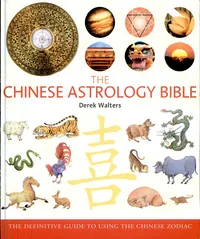
Zhonghua zhan xing shu

 77
77

Zhonghua zhan xing shu
Shaojun Liu’s Zhonghua zhan xing shu offers a meticulous, if somewhat dry, exposition of specific Chinese astrological methods. Its strength lies in its detailed breakdown of the Gan Zhi system's application in charting, presenting a systematic framework that moves beyond generalized astrological lore. The text assumes considerable prior knowledge, which can be both a blessing and a curse; it avoids simplistic explanations but may alienate newcomers. A particular point of interest is its detailed examination of how the interactions between specific Stems and Branches can indicate subtle energetic shifts within a natal chart, a concept less frequently explored in Western astrological literature. However, the lack of illustrative case studies or practical examples throughout makes the theoretical constructs challenging to fully grasp without supplementary material. The book serves as a valuable technical manual for the initiated, though its accessibility is limited.
Verdict: A technically rigorous text for dedicated students of Chinese astrological systems.
📝 Description
77
Shao jun Liu's 1995 work, Zhonghua zhan xing shu, details specific Chinese astrological techniques.
Published in 1995, Zhonghua zhan xing shu by Shaojun Liu offers a focused examination of Chinese astrological interpretation, distinct from general introductions. The book details specific techniques and theoretical frameworks within the context of Chinese cosmology. Its aim is to provide a structured method for analyzing celestial influences on human affairs and the natural world, moving beyond simplistic horoscopes to a more analytical approach.
The intended audience includes serious students and practitioners of Chinese metaphysics and astrology who already understand concepts like the Five Elements (Wu Xing) and the Heavenly Stems and Earthly Branches (Gan Zhi). It is suited for individuals looking to sharpen their skills in natal chart interpretation, temporal astrology, and certain divination methods based on celestial observation. Researchers in comparative cosmology and historical esoteric traditions will also find this text valuable.
This book engages with a tradition of Chinese cosmology and astrological practice that stretches back millennia. Emerging in the late 20th century, a period of renewed interest in traditional Chinese culture, its subject matter reflects ancient astronomical and philosophical thought. The text contributes to a broader movement of reclaiming and re-evaluating indigenous intellectual heritage within classical Chinese sciences.
💡 Why Read This Book?
• Gain insight into the specific application of the Heavenly Stems and Earthly Branches (Gan Zhi) for detailed astrological analysis, a core component of Chinese calendrical systems. • Understand the dynamic interplay of the Five Elements (Wu Xing) as applied to individual charts, offering a nuanced perspective on energetic influences beyond generic zodiac signs. • Explore systematic methods for interpreting celestial configurations, providing a structured approach to understanding temporal patterns and their astrological significance as presented by Shaojun Liu.
⭐ Reader Reviews
Honest opinions from readers who have explored this book.
❓ Frequently Asked Questions
What is the primary focus of Zhonghua zhan xing shu?
Zhonghua zhan xing shu primarily focuses on the specialized techniques and theoretical frameworks of Chinese astrology, particularly the application of the Heavenly Stems and Earthly Branches (Gan Zhi) for detailed interpretation.
Who is the intended audience for this book?
The book is intended for serious students and practitioners of Chinese metaphysics and astrology who already possess a foundational understanding of concepts like the Five Elements and the Gan Zhi system.
When was Zhonghua zhan xing shu first published?
Zhonghua zhan xing shu was first published in 1995 by its author, Shaojun Liu.
Does the book offer a general overview of Chinese astrology?
No, Zhonghua zhan xing shu is not a general introduction. It delves into specific methods and theoretical frameworks, assuming prior knowledge from the reader.
What are some key concepts discussed in the book?
Key concepts include the cyclical interactions of the Heavenly Stems and Earthly Branches, the Five Elements (Wu Xing), and their dynamic relationships as applied to chart analysis and energetic qualities.
What historical period does the book's subject matter draw from?
The book's subject matter is rooted in ancient Chinese astronomical and philosophical traditions that date back millennia, reflecting a re-evaluation of indigenous heritage in the late 20th century.
🔮 Key Themes & Symbolism
Heavenly Stems & Earthly Branches
The core of the text revolves around the intricate system of the Ten Heavenly Stems (Gan) and Twelve Earthly Branches (Zhi). These are not merely calendrical units but fundamental energetic components that, when combined, form the sixty-year cycle and are applied to individual birth charts. The book likely details the complex interactions, relationships (combinations, clashes, harms), and energetic qualities of these stems and branches as they manifest in a person's destiny and life events. Understanding their interplay is crucial for accurate interpretation within this specific astrological framework.
Five Element Theory (Wu Xing)
Integral to the Gan Zhi system is the theory of the Five Elements: Wood, Fire, Earth, Metal, and Water. Zhonghua zhan xing shu would explore how these elements are represented within the Stems and Branches and how their cycles of generation (Sheng) and overcoming (Ke) influence astrological readings. The balance or imbalance of these elements in a chart, as dictated by the specific Stems and Branches present, is a primary focus for understanding personality traits, potential challenges, and areas of fortune or misfortune.
Astrological Chart Construction
The work likely provides specific methodologies for constructing and interpreting astrological charts based on the Chinese calendar system. This includes calculating the elemental composition of a given birth date and time using the Gan Zhi. The book's focus is on the analytical application of these charts, potentially covering natal readings, prognostication, and the identification of auspicious or inauspicious periods based on the energetic configurations derived from the celestial and terrestrial components.
Energetic Dynamics and Manifestation
Beyond mere classification, the book aims to explain the dynamic forces at play. It explores how the energies represented by the Stems and Branches interact to create specific patterns that manifest in the physical and psychological realms. This involves understanding the subtle qualities of each component and how their combinations produce unique energetic signatures, influencing everything from health and relationships to career and spiritual development according to this cosmological model.
💬 Memorable Quotes
Direct passages from the work, attributed to the author.
“Five Phases in cyclical motion reveal destiny's unfolding.”
— This interpretation emphasizes how the generative and destructive cycles of the Five Elements (Wu Xing), as expressed through the Stems and Branches, provide a framework for understanding the unfolding narrative of an individual's life path and predetermined potentials.
“The chart is a map of energetic potentials.”
— This phrase suggests that an astrological chart constructed using the Chinese system serves as a detailed representation of an individual's inherent energetic makeup and the range of possibilities available to them throughout their life.
“Timing derived from celestial patterns informs action.”
— This concept points to the practical application of Chinese astrology, where understanding the energetic qualities and cycles associated with specific times, as indicated by celestial configurations, can guide opportune moments for undertaking important actions.
“Balance of Yin and Yang is key to harmony.”
— This interpretation underscores a foundational principle in Chinese thought, applied here to astrology, suggesting that achieving equilibrium between the complementary forces of Yin and Yang, as reflected in the astrological chart, is essential for overall well-being and auspicious outcomes.
💡 Key Ideas
Editorial paraphrase of the work's core concepts — not direct quotes.
The interaction of Stem and Branch dictates the flow of Qi.
This paraphrased concept highlights the fundamental principle that the relationship between the Heavenly Stems and Earthly Branches is not static but dynamic, governing the movement and transformation of vital energy (Qi) within a given context, such as a birth chart.
🌙 Esoteric Significance
Tradition
The work is firmly rooted in the tradition of Chinese Metaphysics (Xuanxue), specifically within the domain of Chinese astrology (Bazi or Four Pillars of Destiny). It departs from Western astrological lineages and instead elaborates on a system developed over millennia within Chinese cosmology, emphasizing cyclical time, elemental interactions, and the correlation between celestial phenomena and terrestrial events.
Symbolism
Key symbols include the Ten Heavenly Stems (e.g., Jia, Yi, Bing, Ding) and Twelve Earthly Branches (e.g., Zi, Chou, Yin, Mao), which are not merely abstract concepts but represent specific energetic qualities and associations. The Five Elements (Wu Xing – Wood, Fire, Earth, Metal, Water) are also paramount, symbolizing fundamental forces whose interactions (generation, overcoming) are crucial for interpreting the dynamics within an astrological chart.
Modern Relevance
Contemporary practitioners of Chinese Metaphysics, particularly Bazi consultants and Feng Shui masters, continue to utilize and build upon the systematic approaches detailed in works like Zhonghua zhan xing shu. The principles discussed remain foundational for understanding personal destiny, auspicious timing, and energetic compatibility in modern applications of this ancient art.
👥 Who Should Read This Book
• Aspiring practitioners of Chinese astrology seeking to move beyond introductory concepts and learn systematic methods for chart analysis. • Students of comparative cosmology interested in the specific methodologies and theoretical underpinnings of Chinese calendrical and divinatory systems. • Researchers in the history of esoteric sciences who wish to understand the technical details of traditional Chinese astrological practices as preserved and presented in the late 20th century.
📜 Historical Context
Published in 1995, Shaojun Liu's Zhonghua zhan xing shu arrived during a resurgence of interest in traditional Chinese esoteric sciences and philosophies. Following decades of suppression during the Maoist era, the late 20th century saw a cultural reclamation, with scholars and practitioners re-examining ancient texts and practices. Liu's work contributes to this trend by focusing on a specific, technical aspect of Chinese astrology: the application of the Gan Zhi (Heavenly Stems and Earthly Branches) system. This approach contrasts with the more widespread, often simplified, interpretations of Chinese astrology found in popular media. While figures like Joseph Needham had extensively documented Chinese science and technology, scholarly and practical engagement with specialized fields like advanced astrological interpretation gained momentum in the post-Mao period, seeking to preserve and disseminate this knowledge for future generations.
📔 Journal Prompts
The energetic relationship between a specific Heavenly Stem and Earthly Branch in your natal chart.
How the cycle of the Five Elements (Wu Xing) manifests in your life's challenges.
Interpreting the significance of the Zi (Rat) Branch within your astrological framework.
The principle of energetic balance as reflected in your personal timeline.
Applying the concept of Sheng (generation) to understand a current life phase.
🗂️ Glossary
Gan Zhi
The system of Ten Heavenly Stems (Gan) and Twelve Earthly Branches (Zhi), forming the basis of the traditional Chinese calendar and used extensively in Chinese astrology and metaphysics.
Wu Xing
The Five Phases or Elements: Wood, Fire, Earth, Metal, and Water. They represent fundamental forces and qualities in Chinese cosmology, with cyclical relationships of generation and overcoming.
Bazi
Literally 'Eight Characters,' also known as the Four Pillars of Destiny. It refers to the astrological chart derived from a person's birth year, month, day, and hour, represented by four pairs of Gan Zhi.
Qi
The vital life force or energy that permeates all things in Chinese philosophy and cosmology. Its flow and balance are central to understanding health, destiny, and environmental harmony.
Sheng
The generative cycle within the Five Element theory, where one element produces or gives birth to another (e.g., Wood feeds Fire). It represents a harmonious flow of energy.
Ke
The overcoming or destructive cycle within the Five Element theory, where one element controls or overcomes another (e.g., Water extinguishes Fire). It represents checks and balances in energetic interactions.
Natal Chart
An astrological chart representing the positions of celestial bodies at the time of an individual's birth, used in various traditions to interpret personality and life path.
🔮 Readers Also Liked
Browse all →






More by Shaojun Liu
All books →


More Free Astrology & Cosmology Books
View all →