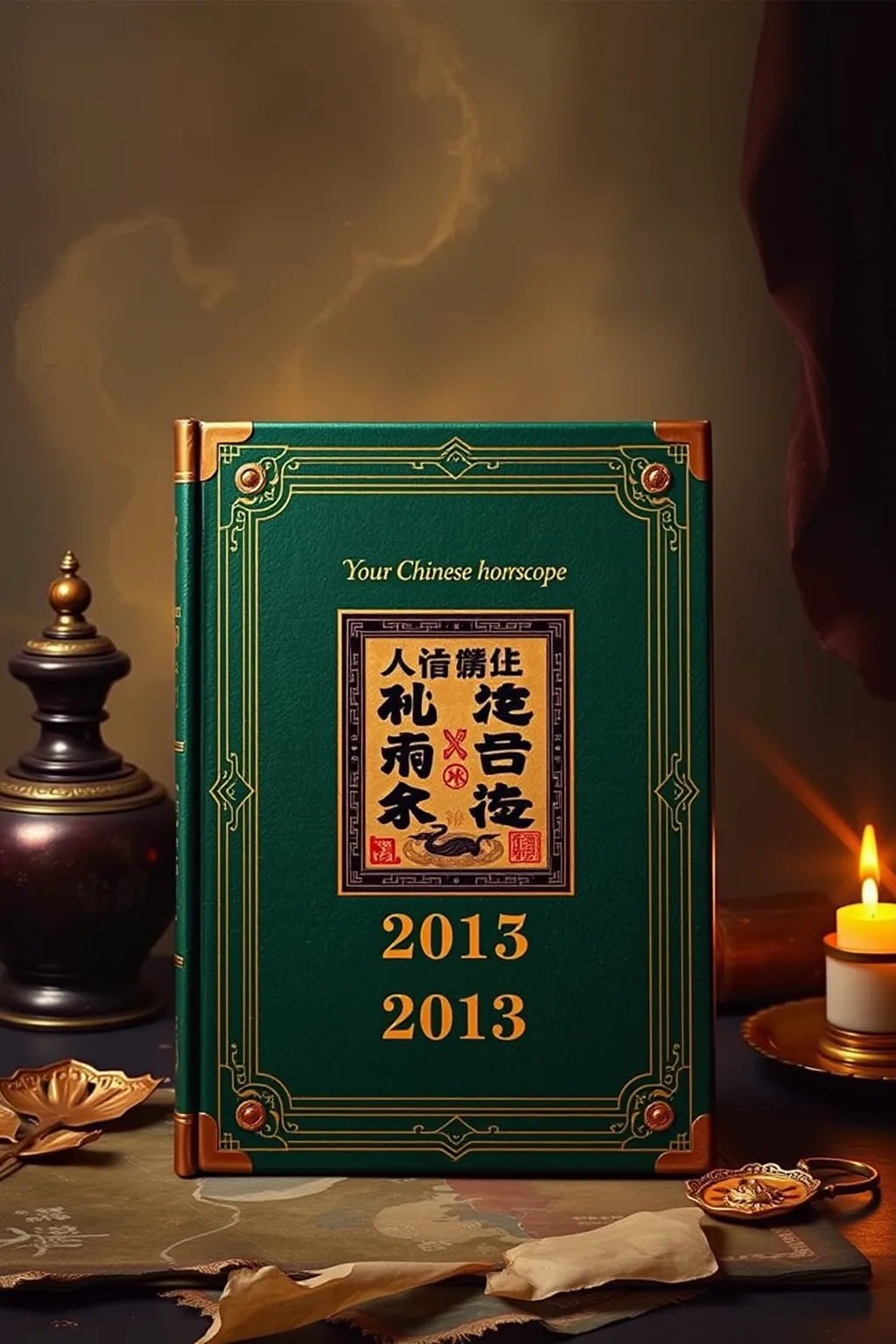
Your Chinese horoscope 2013
 83
83

Your Chinese horoscope 2013
Neil Somerville’s "Your Chinese Horoscope 2013" presents a straightforward, accessible entry into the Chinese zodiac for the specified year. Its strength lies in its clarity; Somerville avoids overly esoteric jargon, making the descriptions of each animal sign and their yearly outlook understandable for newcomers. The book successfully provides a broad overview, touching on general predictions for career, relationships, and health. However, its primary limitation is its specificity to a single year, 2013. While functional for its intended purpose at the time of publication, its long-term value as a reference is diminished. A particular passage detailing the predicted interactions between the Snake (the 2013 animal) and other signs offers a glimpse into the combinatorial nature of this astrology, but feels somewhat generalized. For those seeking a deep dive into the philosophical underpinnings of Chinese cosmology, this book may feel superficial. Ultimately, it functions as a competent, if ephemeral, astrological almanac.
📝 Description
83
Neil Somerville's 2013 Chinese Horoscope offers a yearly astrological reading for 2013.
Published in 2012, Your Chinese Horoscope 2013 by Neil Somerville provides an annual astrological forecast. The book connects celestial movements with the twelve zodiac animals to predict the energies and influences for the upcoming year. It aims to help readers understand potential opportunities, challenges, and avenues for personal growth through the lens of Chinese cosmology.
Somerville's work details the characteristics associated with each of the twelve zodiac animals and their corresponding years. It is intended for enthusiasts of Chinese astrology and those interested in comparative divination methods. Individuals born under the Rat, Ox, Tiger, Rabbit, Dragon, Snake, Horse, Goat, Monkey, Rooster, Dog, or Pig signs will find readings specific to their birth year. The book also appeals to readers who appreciate cyclical timekeeping and seek perspectives on personal destiny and annual trends outside of Western astrological frameworks.
Chinese astrology has a history of over two thousand years, integral to Chinese culture, philosophy, and calendars. Its roots lie in ancient astronomical observations and the sexagenary cycle, a sixty-year system combining the twelve Earthly Branches (zodiac animals) and ten Heavenly Stems. This tradition has historically guided decisions in governance, relationships, and fortune-telling. Somerville's book offers a contemporary interpretation within this long-standing esoteric tradition.
💡 Why Read This Book?
• Gain specific insights into the energetic influences of the Year of the Water Snake (2013), understanding how it was predicted to interact with your birth animal sign and the five elements. • Learn to identify the core characteristics and perceived strengths associated with your own Chinese zodiac animal, as detailed by Neil Somerville’s classifications. • Explore the foundational principles of the Chinese zodiac system, including the twelve animal signs and their cyclical recurrence, as presented in the book's introductory sections.
⭐ Reader Reviews
Honest opinions from readers who have explored this book.
❓ Frequently Asked Questions
What is the Chinese zodiac system based on?
The Chinese zodiac is based on a twelve-year cycle, with each year represented by an animal sign: Rat, Ox, Tiger, Rabbit, Dragon, Snake, Horse, Goat, Monkey, Rooster, Dog, and Pig. It is deeply integrated with Chinese philosophy and astronomical observations.
Who is Neil Somerville?
Neil Somerville is an author known for his work on astrology, particularly Chinese horoscopes. 'Your Chinese Horoscope 2013' is one of his many publications offering yearly astrological forecasts.
When was 'Your Chinese Horoscope 2013' first published?
The book 'Your Chinese Horoscope 2013' was first published in 2012, providing forecasts for the subsequent Chinese New Year.
How does the Chinese zodiac differ from Western astrology?
Unlike Western astrology, which is based on the sun's position relative to constellations, the Chinese zodiac is based on a twelve-year cycle of animal signs tied to lunar years. It also incorporates the five elements and Yin/Yang.
What are the five elements in Chinese astrology?
The five elements are Wood, Fire, Earth, Metal, and Water. They are believed to interact with the animal signs, influencing personality and fortune, and are a key component in more detailed Chinese astrological readings.
Does the book only cover 2013?
Yes, 'Your Chinese Horoscope 2013' specifically focuses on the astrological predictions and influences for the year 2013, which was the Year of the Water Snake.
🔮 Key Themes & Symbolism
The Twelve Animal Signs
The foundational concept of the book is the twelve-year cycle of animal signs: Rat, Ox, Tiger, Rabbit, Dragon, Snake, Horse, Goat, Monkey, Rooster, Dog, and Pig. Each animal is associated with specific personality traits, strengths, weaknesses, and compatibility patterns. Somerville details these characteristics, explaining how an individual's birth year animal shapes their general disposition and life experiences. The book provides specific readings for each sign within the context of the 2013 Year of the Snake, exploring how the year's overarching energies might affect those born under different signs.
The Five Elements
Beyond the animal signs, Chinese astrology incorporates the five elements: Wood, Fire, Earth, Metal, and Water. These elements are not static but follow a cyclical pattern of creation and destruction, influencing the nature of each year and the individuals within it. 'Your Chinese Horoscope 2013' likely discusses how the element associated with the Year of the Snake (Water) interacts with the elements of the birth animals, adding nuance to the predictions. This elemental interplay is crucial for a deeper understanding of astrological compatibility and fortune.
Annual Astrological Forecasts
The primary function of the book is to provide a forecast for the year 2013. This involves analyzing the dominant energies of the Year of the Water Snake and projecting their potential impact on various aspects of life, such as career, relationships, health, and wealth, for each of the twelve zodiac animals. The book offers guidance on how to harmonize with the year's energies, capitalize on opportunities, and mitigate potential challenges, serving as a practical almanac for its readers.
Yin and Yang Principles
Underlying the entire system are the principles of Yin and Yang, representing complementary opposites. While not always explicitly detailed in simpler horoscope guides, these forces are inherent in the balance of the cosmos and influence the characteristics of the animal signs and elements. The book implicitly touches upon this by describing the dualistic nature of the year's energies and how different signs might experience its effects, reflecting the constant interplay of these fundamental forces.
💬 Memorable Quotes
Direct passages from the work, attributed to the author.
“The Year of the Water Snake brings a time of introspection and strategic planning.”
— This interpretation suggests that 2013 was characterized by a need for thoughtful consideration and the development of long-term strategies, rather than impulsive action, aligning with the perceived qualities of the Snake.
“Compatibility between signs is influenced by the elements of their respective years.”
— This concept emphasizes that beyond the animal sign itself, the associated element (e.g., Wood, Fire, Water) plays a critical role in determining how well different zodiac signs interact.
“Dragon-born individuals should be mindful of their powerful energies and channel them constructively.”
— This interpretation points to the book's likely advice for Dragon natives to manage their inherent dynamism and direct their potent influence towards productive outcomes during the Year of the Snake.
💡 Key Ideas
Editorial paraphrase of the work's core concepts — not direct quotes.
Individuals born in the Year of the Rat may find their innate cleverness particularly useful in reading through the year's challenges.
This paraphrase highlights how the book likely advised Rat-born individuals to leverage their natural intelligence and adaptability to overcome obstacles predicted for 2013.
The Ox sign benefits from a year that encourages steady progress and a focus on foundational stability.
This paraphrased concept suggests that for those born under the Ox sign, the energies of 2013 were seen as supportive of consistent effort and reinforcing existing structures.
🌙 Esoteric Significance
Tradition
This work belongs to the broad tradition of Chinese Metaphysics, specifically the branch concerned with divination and cosmology through the cyclical movement of celestial bodies and earthly energies. It draws directly from the Taoist philosophical underpinnings that inform the concepts of Yin and Yang and the Five Elements (Wu Xing). While many esoteric traditions exist globally, Somerville's book is firmly rooted in a specific East Asian lineage that has been practiced and refined for over two millennia, offering a distinct cosmological framework compared to Hermetic or Vedic systems.
Symbolism
The most prominent symbols are the twelve animal archetypes: the cunning Rat, the steadfast Ox, the dynamic Tiger, the gentle Rabbit, the powerful Dragon, the wise Snake, the energetic Horse, the graceful Goat, the clever Monkey, the observant Rooster, the loyal Dog, and the intuitive Pig. Each carries symbolic weight related to their perceived nature. Additionally, the Five Elements (Wood, Fire, Earth, Metal, Water) are symbolic representations of fundamental cosmic forces and transformations, influencing the character of each year and sign. The Year of the Water Snake itself symbolizes transformation, intuition, and potential hidden dangers.
Modern Relevance
Contemporary interest in Chinese Metaphysics remains robust, with practitioners and enthusiasts engaging with these ancient systems for personal guidance and understanding. Schools and online platforms dedicated to Feng Shui, Bazi (Four Pillars of Destiny), and other Chinese astrological arts continue to draw upon the foundational principles found in works like Somerville's. Modern thinkers and lifestyle gurus often integrate zodiacal insights into broader discussions on personal development, career strategy, and relationship dynamics, demonstrating the enduring appeal and adaptability of this ancient tradition in the 21st century.
👥 Who Should Read This Book
• Individuals born under the Chinese zodiac signs seeking a specific astrological outlook for 2013, particularly those interested in how the Year of the Water Snake might influence their personal destiny. • Students of comparative divination systems interested in understanding the unique framework of Chinese astrology, its animal cycles, and elemental interactions as presented by Neil Somerville. • Readers looking for a concise, accessible annual forecast based on traditional Chinese cosmology, offering practical guidance on reading through the predicted energies of a specific past year.
📜 Historical Context
Published in 2012 for the year 2013, Neil Somerville's work enters a long tradition of astrological almanacs and yearbooks that have been a staple in Chinese culture for centuries. This practice predates the Common Era, with early forms of the Chinese zodiac linked to the Han Dynasty (206 BCE – 220 CE). The system’s development was intertwined with agricultural cycles, imperial administration, and philosophical concepts like Yin and Yang and the Five Elements. By the 20th century, Chinese astrology had gained international interest, partly through the work of figures like L. Dow Balliett and later, contemporary astrologers who adapted these ancient systems for Western audiences. Somerville's book exists within this globalized esoteric landscape, competing with numerous other annual horoscope publications, both traditional and modern. Its reception was likely within the established market for New Year astrological guides, offering a familiar format for enthusiasts.
📔 Journal Prompts
The Year of the Water Snake's influence on your birth animal sign.
Personal characteristics attributed to your Chinese zodiac animal.
The role of the Five Elements in shaping yearly astrological predictions.
How the concept of Yin and Yang might manifest in the year's events.
Strategies for harmonizing with the predicted energies of the Year of the Water Snake.
🗂️ Glossary
Chinese Zodiac
A cyclical system of twelve animal signs (Rat, Ox, Tiger, Rabbit, Dragon, Snake, Horse, Goat, Monkey, Rooster, Dog, Pig) that represent years in a twelve-year cycle, each believed to impart specific characteristics to those born in that year.
Year of the Water Snake
The specific Chinese zodiac year covered by the book (2013). The Snake is the sixth animal in the cycle, and 'Water' refers to the element associated with that particular year, influencing its overall energy.
Five Elements (Wu Xing)
The five fundamental elements in Chinese philosophy: Wood, Fire, Earth, Metal, and Water. They are believed to interact cyclically, influencing the characteristics of zodiac years and individuals.
Yin and Yang
The ancient Chinese philosophical concept of dualistic, complementary forces that interact to form all phenomena. Yin is typically associated with feminine, passive, dark, and cold aspects, while Yang represents masculine, active, light, and hot aspects.
Animal Sign
Refers to one of the twelve animals representing a year in the Chinese zodiac. Your animal sign is determined by your birth year according to the Chinese lunisolar calendar.
Elemental Interaction
The concept within Chinese astrology that the five elements (Wood, Fire, Earth, Metal, Water) influence each other, affecting the predictions for a specific year and the compatibility between individuals of different signs and elements.
Lunisonar Calendar
A calendar system that tracks both the phases of the moon (lunar) and the position of the sun (solar). The Chinese calendar is lunisolar, which is why Chinese New Year falls on a different date each Gregorian year.
🔮 Readers Also Liked
Browse all →









More by Neil Somerville
All books →





More Free Astrology & Cosmology Books
View all →