Vedic astrology

 73
73

Vedic astrology
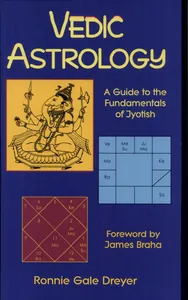
Ronnie Gale Dreyer's Vedic Astrology presents Jyotish with a clarity that often eludes introductory texts on this complex system. The strength of the book lies in its methodical breakdown of concepts, moving logically from the basic components of the birth chart to more intricate predictive techniques. Dreyer avoids the pitfall of oversimplification, respecting the depth of the tradition while rendering it comprehensible. A particularly effective section details the Nakshatras, offering a nuanced perspective on lunar influence that is central to Vedic interpretation. However, the book's focus on technical accuracy, while commendable, occasionally results in a dry presentation that may challenge readers seeking a more spiritually evocative experience. A potential limitation for some is the lack of extensive case studies demonstrating the application of the principles discussed. Nevertheless, for a serious student aiming for technical proficiency, Vedic Astrology serves as a sound and reliable guide.
📝 Description
73
Ronnie Gale Dreyer's 2005 book introduces Jyotish, the traditional Hindu system of astrology.
This volume details the core principles of Jyotish, the traditional Hindu system of astrology, first published in 2005. It covers the foundational elements including planetary influences, zodiacal signs, and house systems. The book moves beyond simple interpretations to structure an understanding of planetary dignities, aspects, and yogas, which are specific planetary combinations that signal life events and potentials. It acts as a practical guide for readers wanting to decipher the celestial map as understood in the Vedic tradition. The work is suitable for those with a serious interest in astrology who seek to learn a system separate from its Western counterpart. It is also useful for practitioners of Western astrology looking to expand their knowledge and compare approaches. Students of comparative religion, Eastern philosophy, and cultural studies will find it a helpful resource for grasping a significant part of India's spiritual and intellectual history. It may also appeal to individuals interested in personal development and self-awareness through the lens of older wisdom traditions. The system's roots are ancient, intertwined with Indian cosmology and philosophical writings. Its development over centuries, shaped by important commentaries and texts, led to its current form. The continuing relevance and adaptation of Jyotish in modern times, especially in the West since the late 20th century, show its lasting appeal. Dreyer's book appeared during a time of growing global interest in Eastern spiritual practices, making Jyotish more accessible to a wider audience outside of India.
Jyotish, or Vedic astrology, has origins stretching back thousands of years in India. It is closely connected to Vedic cosmology and philosophical texts. This system developed systematically over centuries, with key commentaries and treatises shaping its structure. Its continued relevance and adaptation in modern times, particularly in the West since the late 20th century, demonstrate its enduring appeal. Dreyer's work was released during a period of increasing global attention to Eastern spiritual practices and esoteric knowledge, helping to make Jyotish accessible to a broader audience.
💡 Why Read This Book?
• Gain a foundational understanding of Jyotish, the Hindu system of astrology, and its unique approach to planetary periods known as Dashas, offering insights into life timing distinct from Western methods. • Learn about the Nakshatras, the 27 lunar mansions central to Vedic astrology, providing a more detailed lunar analysis than typically found in Western astrological texts. • Explore the concept of planetary yogas, specific astrological combinations discussed in the book that reveal potentials and tendencies within a birth chart, aiding self-awareness.
⭐ Reader Reviews
Honest opinions from readers who have explored this book.
❓ Frequently Asked Questions
What is the primary difference between Vedic astrology and Western astrology as presented in this book?
Vedic astrology, or Jyotish, as detailed in Ronnie Gale Dreyer's work, primarily uses a sidereal zodiac, aligning celestial bodies with their actual positions in space. This contrasts with the tropical zodiac used in Western astrology, which is based on the seasons.
What are Nakshatras and why are they important in Vedic astrology?
Nakshatras are lunar mansions, dividing the ecliptic into 27 segments, each with unique characteristics and deities. Dreyer's book explains how these are crucial for a deeper, more nuanced understanding of a person's lunar nature and potential life events.
Does Ronnie Gale Dreyer's book explain planetary periods (Dashas)?
Yes, the book provides a thorough explanation of Dashas, the system of planetary periods that govern an individual's life according to Vedic astrology. This allows for precise timing of life events and trends.
What is a Rashi in the context of Vedic astrology as described by Dreyer?
Rashi refers to the zodiacal signs in Vedic astrology. The book details how these signs, when combined with planets (Graha), form the basis for astrological interpretation, influencing personality and life circumstances.
Is Vedic Astrology suitable for beginners or experienced astrologers?
The book is structured to be accessible to beginners interested in Jyotish, while also offering depth and technical detail that can benefit experienced Western astrologers looking to expand their knowledge.
When was Vedic Astrology by Ronnie Gale Dreyer first published?
Vedic Astrology by Ronnie Gale Dreyer was first published in 2005, making it a relatively modern yet comprehensive guide to the ancient system of Jyotish.
🔮 Key Themes & Symbolism
Jyotish Principles
The core of Vedic Astrology lies in its systematic presentation of Jyotish, the ancient Indian science of celestial influence. Dreyer meticulously outlines the fundamental elements: the sidereal zodiac, the nine planets (Graha), the twelve houses, and the twelve Rashi (signs). The work emphasizes how these components interact to form a unique celestial map for individuals. It explores the concept of planetary dignities and debilities, crucial for understanding the strength and expression of each planet within a chart, offering a structured framework for astrological analysis.
Nakshatras and Lunar Influence
A significant departure from Western astrology, Vedic astrology places great importance on the Nakshatras, the 27 lunar mansions. Ronnie Gale Dreyer explains how each Nakshatra possesses its own ruling deity, symbolism, and characteristics, providing a more nuanced understanding of the Moon's influence on an individual's psyche and destiny. This section highlights how the Moon's position within a specific Nakshatra at birth offers useful insights into emotional patterns, subconscious drives, and karmic predispositions.
Planetary Periods (Dashas)
The predictive power of Vedic astrology is largely attributed to its sophisticated system of planetary periods, known as Dashas. Dreyer's book elaborates on the Vimshottari Dasha system, a widely used method that assigns specific time frames during which planetary influences are considered most potent. Understanding Dashas allows practitioners to anticipate life cycles, periods of fortune or challenge, and the unfolding of karmic patterns throughout a lifetime.
Yogas and Combinations
Beyond the basic placement of planets in signs and houses, Vedic astrology identifies specific planetary combinations, or Yogas, that indicate particular potentials, strengths, or challenges. The book introduces the concept of these yogas, which are formed by planets influencing each other in precise ways. Recognizing these formations is key to understanding the unique destiny and life path encoded within a birth chart, offering insights into auspicious and inauspicious timings.
💬 Memorable Quotes
Direct passages from the work, attributed to the author.
“The Nakshatras are considered the foundation of the lunar influence.”
— This statement underscores the critical role of the Nakshatras in Vedic astrology, positioning them as a more fundamental layer of understanding lunar energies than the broader zodiacal signs.
“Planetary periods, or Dashas, indicate the timing of events.”
— This highlights the predictive function of Dashas in Jyotish, emphasizing their capacity to delineate when specific planetary influences will manifest in an individual's life.
“The Sidereal zodiac is based on the actual position of stars.”
— This defines the core difference in zodiacal calculation between Vedic and Western astrology, pointing to the astronomical basis of the former.
“Yogas are specific planetary combinations that signal potentials.”
— This explains the significance of yogas as formations within a birth chart that reveal inherent talents, predispositions, or life circumstances.
“Graha represent the planets and their energies.”
— This introduces the fundamental Vedic term for planets, emphasizing their active role as carriers of cosmic influence and energy.
🌙 Esoteric Significance
Tradition
Jyotish is intrinsically linked to the Vedic tradition, one of the oldest continuous spiritual and philosophical lineages in the world. It is considered a Vedanga, a limb of the Vedas, aiming to illuminate the celestial influences that guide human life and karma. Unlike purely predictive systems, Jyotish is often viewed as a tool for understanding one's dharma and karmic path, guiding individuals towards spiritual evolution rather than merely foretelling mundane events. Dreyer's work, while technical, remains rooted in this philosophical understanding.
Symbolism
Key symbols in Vedic astrology include the Graha (planets), each representing distinct archetypal energies and divine forces, such as Surya (Sun) for vitality and the soul, or Chandra (Moon) for emotions and the mind. The Rashi (zodiac signs) further symbolize different modes of expression and qualities, like Mesha (Aries) representing initiative or Vrishabha (Taurus) representing groundedness. The Nakshatras, the 27 lunar mansions, offer even finer symbolic layers, each with its own presiding deity and imagery, providing a rich symbolic language for interpreting the cosmos.
Modern Relevance
In contemporary esoteric circles, Vedic astrology is increasingly recognized for its sophisticated predictive techniques and philosophical depth. Thinkers and practitioners in fields like Vedic psychology, Ayurveda, and comparative spirituality often integrate Jyotish principles into their work. Schools and online platforms dedicated to Jyotish continue to flourish, attracting students seeking an alternative or complementary astrological system to Western methods, drawn by its emphasis on karma, dharma, and a cyclical view of time.
👥 Who Should Read This Book
• Aspiring Jyotish practitioners seeking a structured introduction to the fundamental principles of Vedic astrology, including the sidereal zodiac, planets, signs, and houses. • Western astrologers interested in comparative analysis and expanding their understanding of different astrological systems, particularly concerning lunar mansions (Nakshatras) and planetary timing (Dashas). • Students of Eastern philosophy and comparative religion looking to grasp the astrological component of Vedic culture and its role in understanding destiny and karma.
📜 Historical Context
Vedic astrology, or Jyotish, represents a vast corpus of knowledge developed over millennia within the Indian subcontinent, deeply integrated with Vedic cosmology and philosophy. Its systematic formulation can be traced to ancient texts like the Brihat Samhita (c. 6th century CE) and the works of Varahamihira. By the time Ronnie Gale Dreyer's 'Vedic Astrology' was published in 2005, Jyotish had gained considerable traction in the West, often presented alongside or in contrast to the more established Western astrological tradition. This period saw a surge in interest in Eastern esoteric systems, fueled by figures like Helena Blavatsky and the subsequent Theosophical movement, which helped popularize ancient Indian thought. While not directly engaging with Western scholars in the book itself, Dreyer's work contributes to a broader academic and popular discourse on comparative astrology and ancient predictive sciences.
📔 Journal Prompts
The concept of Graha and their influence on the Rashi.
Personal interpretation of your natal Nakshatra.
The function of Dashas in timing life events.
How planetary dignities affect planetary expression.
The role of Yogas in shaping individual potentials.
🗂️ Glossary
Jyotish
The traditional Hindu system of astrology, also known as Vedic astrology. It is considered a Vedanga, or 'limb' of the Vedas, and is used for astrological interpretations and predictions.
Graha
The Sanskrit term for planets in Vedic astrology, encompassing the Sun, Moon, Mars, Mercury, Jupiter, Venus, Saturn, Rahu, and Ketu. Each Graha represents a distinct energetic principle.
Rashi
The Sanskrit term for the zodiacal signs in Vedic astrology. There are twelve Rashis, each spanning 30 degrees of the ecliptic, similar to Western astrological signs but calculated using the sidereal zodiac.
Nakshatra
Lunar mansions; the ecliptic is divided into 27 Nakshatras, each approximately 13 degrees and 20 minutes. They provide a more detailed analysis of lunar influence and karma.
Dasha
Planetary periods or time cycles that govern an individual's life according to Vedic astrology. The Vimshottari Dasha system is commonly used.
Yoga
Specific combinations of planets or planetary influences within a birth chart that indicate particular strengths, weaknesses, or life events. There are hundreds of yogas.
Sidereal Zodiac
A zodiac based on the fixed stars, which aligns with the actual astronomical positions of celestial bodies. This is used in Vedic astrology, differing from the tropical zodiac.
🔮 Readers Also Liked
Browse all →









More by Ronnie Gale Dreyer
All books →
More Free Astrology & Cosmology Books
View all →