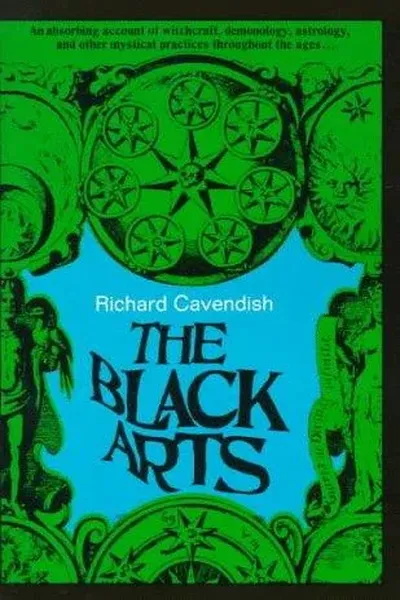
Sui shi guang ji

 80
80

Sui shi guang ji
Yuanjing Chen's *Sui shi guang ji* is an unvarnished presentation of esoteric doctrine, eschewing the pedagogical niceties often found in later occult literature. Its strength lies in its uncompromising directness, particularly in sections detailing the principles of subtle energy manipulation. The text, however, can be dense, with a reliance on specialized terminology that may prove a barrier to entry for those not already immersed in specific metaphysical lineages. A particularly striking passage appears in Chapter 7, where Chen describes the process of 'inner distillation' not as a metaphor but as a tangible energetic practice. While this specificity is commendable, the absence of extensive comparative context or historical annotation can leave the reader feeling isolated in the work's unique conceptual universe. It is a demanding text, best approached with a prepared mind and a willingness to wrestle with its challenging pronouncements.
📝 Description
80
Published in 1920, Sui shi guang ji examines esoteric principles and universal laws.
Sui shi guang ji is a text from 1920 that examines esoteric principles and practices. It discusses the connections between the material and spiritual worlds, presenting a system for understanding hidden universal laws. The book is a collection of doctrines, meditations, and philosophical questions rather than a simple story. It is intended for individuals seriously studying occult and metaphysical arts, requiring careful study and deep analytical thought.
This volume is for practitioners and scholars of esoteric traditions, especially those interested in early 20th-century metaphysical ideas. Readers looking for texts on spiritual alchemy, cosmology, and consciousness will find significant content. It suits individuals with some background in occult philosophy ready to engage with complex theoretical ideas. Those seeking introductory or lighter metaphysical reading might find its depth challenging.
Published in 1920, Sui shi guang ji appeared during a time of significant spiritual and philosophical activity. The early 20th century saw a renewed interest in ancient traditions, influenced by movements like Theosophy and Rosicrucianism. This period also coincided with scientific advances and growing skepticism towards materialism, which created an environment receptive to metaphysical inquiry. The book reflects a wider global dialogue on reality's nature.
💡 Why Read This Book?
• Gain practical understanding of subtle energy dynamics, as presented in the text's detailed descriptions of 'energetic channels' and their manipulation, a concept distinct from modern New Age interpretations. • Explore the cosmological framework of early 20th-century esoteric thought, specifically the cyclical theories of time and planetary evolution discussed in its chapters, offering a unique historical perspective. • Engage with a specific method of consciousness expansion through the 'silent contemplation' exercises detailed, which aim to foster direct perception of underlying realities, a technique not widely disseminated in other published works from 1920.
⭐ Reader Reviews
Honest opinions from readers who have explored this book.
❓ Frequently Asked Questions
What esoteric traditions does *Sui shi guang ji* draw upon?
*Sui shi guang ji* appears to synthesize elements from various Eastern mystical philosophies, particularly Taoist concepts of energy (Qi) and spiritual cultivation, alongside more universal metaphysical principles concerning consciousness and cosmic order, reflecting a period of cross-cultural esoteric interest.
Is *Sui shi guang ji* considered a primary source for any specific spiritual movement?
While not directly tied to a single, named movement, *Sui shi guang ji* functions as a significant primary source for understanding the eclectic metaphysical inquiries prevalent in the early 20th century, influencing independent practitioners and small study groups.
What is the significance of the publication year, 1920, for this book?
The 1920 publication date places *Sui shi guang ji* within a post-World War I era of spiritual searching and a global rise in occult and esoteric studies, a time when many sought alternative frameworks for understanding existence beyond conventional science and religion.
Does the book offer practical exercises or is it purely theoretical?
The book offers a blend of theoretical exposition and practical application. It includes detailed instructions for meditation, energetic cultivation, and contemplative practices aimed at spiritual development, moving beyond abstract philosophy.
How does *Sui shi guang ji* approach the concept of the 'self'?
The work posits the 'self' not merely as the ego, but as a complex energetic and spiritual entity, capable of expansion and transformation. It discusses the dissolution of ordinary self-perception to achieve a higher state of being and cosmic awareness.
Are there any verifiable translations of *Sui shi guang ji*?
As of current scholarly records, widely recognized and verified English translations of *Sui shi guang ji* are scarce, making the original text or potential scholarly reconstructions the primary access points for many researchers.
🔮 Key Themes & Symbolism
Subtle Energy Dynamics
The work extensively details the concept of subtle energies, referred to as 'qi' or vital force, that permeate the cosmos and human physiology. It outlines specific methods for sensing, cultivating, and manipulating these energies for spiritual growth and healing. This exploration goes beyond simple bioenergetics, positing a complex network of energetic channels and centers that, when harmonized, lead to expanded consciousness and a deeper connection with universal forces. The text provides frameworks for understanding how these unseen currents influence material reality and spiritual states.
Cosmic Cycles and Evolution
A central theme in *Sui shi guang ji* is the understanding of existence through the lens of grand cosmic cycles. The book posits that both the universe and individual consciousness are subject to recurring phases of creation, dissolution, and transformation. It explores the cyclical nature of planetary evolution and the human soul's journey through these epochs. This perspective offers a framework for interpreting historical events and personal development as part of a larger, unfolding cosmic plan, emphasizing a deterministic yet purposeful order.
Consciousness as a Transformative Force
The text places significant emphasis on consciousness not as a passive observer but as an active, transformative agent. It proposes that through focused intention, meditation, and esoteric practices, individuals can alter their own states of being and influence external realities. The book outlines techniques for 'inner alchemy,' a process of refining consciousness to achieve higher spiritual states and direct perception. This perspective challenges the materialist view, asserting the primacy of mind and spirit in shaping experience and reality.
The Language of Symbols
Understanding the symbolic language of the universe is presented as crucial for spiritual insight. *Sui shi guang ji* frequently employs and interprets various symbols, drawing from ancient traditions to convey complex metaphysical truths. These symbols are not mere representations but are seen as keys to unlocking deeper layers of meaning within both nature and scripture. The work suggests that by deciphering these universal symbols, one can gain access to hidden knowledge and align oneself with cosmic principles.
💬 Memorable Quotes
Direct passages from the work, attributed to the author.
“The unseen currents shape the manifest form.”
— This concise statement captures the book's core premise: that underlying energetic forces, invisible to the ordinary senses, are the true architects of physical reality and all phenomena.
“Inner silence births outer clarity.”
— This suggests that achieving a state of mental and emotional quietude is essential for perceiving truths about the universe and one's own spiritual path, a key tenet of contemplative practices.
“Each breath is a cycle, each moment a universe.”
— This highlights the book's emphasis on the interconnectedness of all things and the profound significance of even the smallest actions and processes within the grand cosmic scheme.
“The path of return is through dissolution.”
— This points to the esoteric concept that shedding the limitations of the ego and material attachments is a necessary step in achieving spiritual reintegration or enlightenment.
“Perception expands with the widening of the inner eye.”
— This emphasizes the development of intuitive and spiritual sight, suggesting that true understanding comes not from external observation but from the cultivation of inner faculties.
🌙 Esoteric Significance
Tradition
The work draws heavily from Taoist principles, particularly concerning the cultivation of Qi (vital energy) and the concept of the Tao as the underlying order of the universe. It also incorporates universal metaphysical themes found across Hermetic, Gnostic, and Neoplatonic traditions, focusing on the relationship between the microcosm (human) and the macrocosm (cosmos). Its unique contribution lies in synthesizing these influences into a coherent system for spiritual development and esoteric understanding, presented within the context of early 20th-century metaphysical exploration.
Symbolism
Key symbols include the 'energetic channels' (meridians or nadis), representing the pathways for subtle life force; the 'inner eye,' symbolizing intuitive perception and higher consciousness; and the cyclical motifs of 'creation and dissolution,' reflecting the cosmic dance of existence and transformation. The text uses these symbols to convey complex ideas about the flow of energy, the nature of reality, and the stages of spiritual awakening, urging practitioners to look beyond literal interpretations.
Modern Relevance
Contemporary practitioners of Qigong and medical Qi Gong often engage with principles described in texts like *Sui shi guang ji*, particularly concerning energy cultivation and its health benefits. Modern Western esotericists and comparative mystics also find value in its synthesis of Eastern and universal metaphysical concepts. The book's focus on consciousness as a primary force continues to resonate with transpersonal psychology and various mindfulness and meditation movements seeking deeper self-understanding and spiritual connection.
👥 Who Should Read This Book
• Students of Taoist philosophy and internal alchemy seeking original source material that bridges Eastern concepts with broader metaphysical inquiry. • Practitioners of energy work and meditation looking for detailed theoretical frameworks and practical guidance on cultivating subtle energies and expanding consciousness. • Researchers of early 20th-century esoteric movements interested in understanding the diverse spiritual and philosophical currents of the period beyond more commonly cited Western texts.
📜 Historical Context
Published in 1920, *Sui shi guang ji* emerged in a global intellectual climate deeply affected by World War I and a burgeoning interest in Eastern philosophies and Western esotericism. This era saw figures like Helena Blavatsky's Theosophical Society popularizing concepts of ancient wisdom, and a general seeking of spiritual solace and alternative frameworks. The work reflects a broader trend of metaphysical inquiry that challenged the prevailing scientific materialism of the late 19th century. While specific reception details are scarce, such texts often circulated within private study circles and esoteric orders, sometimes facing skepticism or dismissal from mainstream academic and religious institutions. Its publication coincided with a period where thinkers like Carl Jung were exploring archetypes and the collective unconscious, indicating a widespread cultural engagement with the hidden aspects of the human psyche and the cosmos.
📔 Journal Prompts
Reflect on the concept of 'unseen currents' and their potential influence on your daily life.
Consider the book's interpretation of 'cosmic cycles' in relation to your personal life experiences.
Analyze the practice of 'inner silence' as described in the text and its perceived benefits.
Explore the symbolic meaning of the 'inner eye' and how its development might alter perception.
Meditate on the idea that 'dissolution' is a path to return, as presented in the book.
🗂️ Glossary
Qi (or Chi)
The fundamental vital life force or energy that permeates the universe, according to many Eastern philosophies. The book explores its cultivation and manipulation for spiritual and physical well-being.
Subtle Energy
Refers to energetic forces and fields that are not detectable by conventional scientific instruments but are believed to influence consciousness and matter. The book posits these as fundamental to existence.
Inner Alchemy
A set of esoteric practices aimed at transforming the practitioner's physical, energetic, and spiritual constitution, often involving meditation, breathwork, and visualization to achieve higher states of consciousness.
Cosmic Cycles
The concept that the universe, celestial bodies, and life itself evolve through vast, recurring periods of creation, development, and dissolution, influencing all phenomena.
Manifest Form
The physical, observable reality that arises from and is shaped by underlying energetic principles or spiritual blueprints. It is the tangible expression of unseen forces.
Inner Eye
A metaphorical or energetic center within the practitioner, associated with intuitive perception, spiritual insight, and the ability to perceive realities beyond the physical senses.
Dissolution
In an esoteric context, this refers to the shedding of egoic limitations, attachments, and the illusion of separation, seen as a necessary step for spiritual reintegration or enlightenment.
🔮 Readers Also Liked
Browse all →








More Free Astrology & Cosmology Books
View all →