Ming Shu
 74
74

Ming Shu
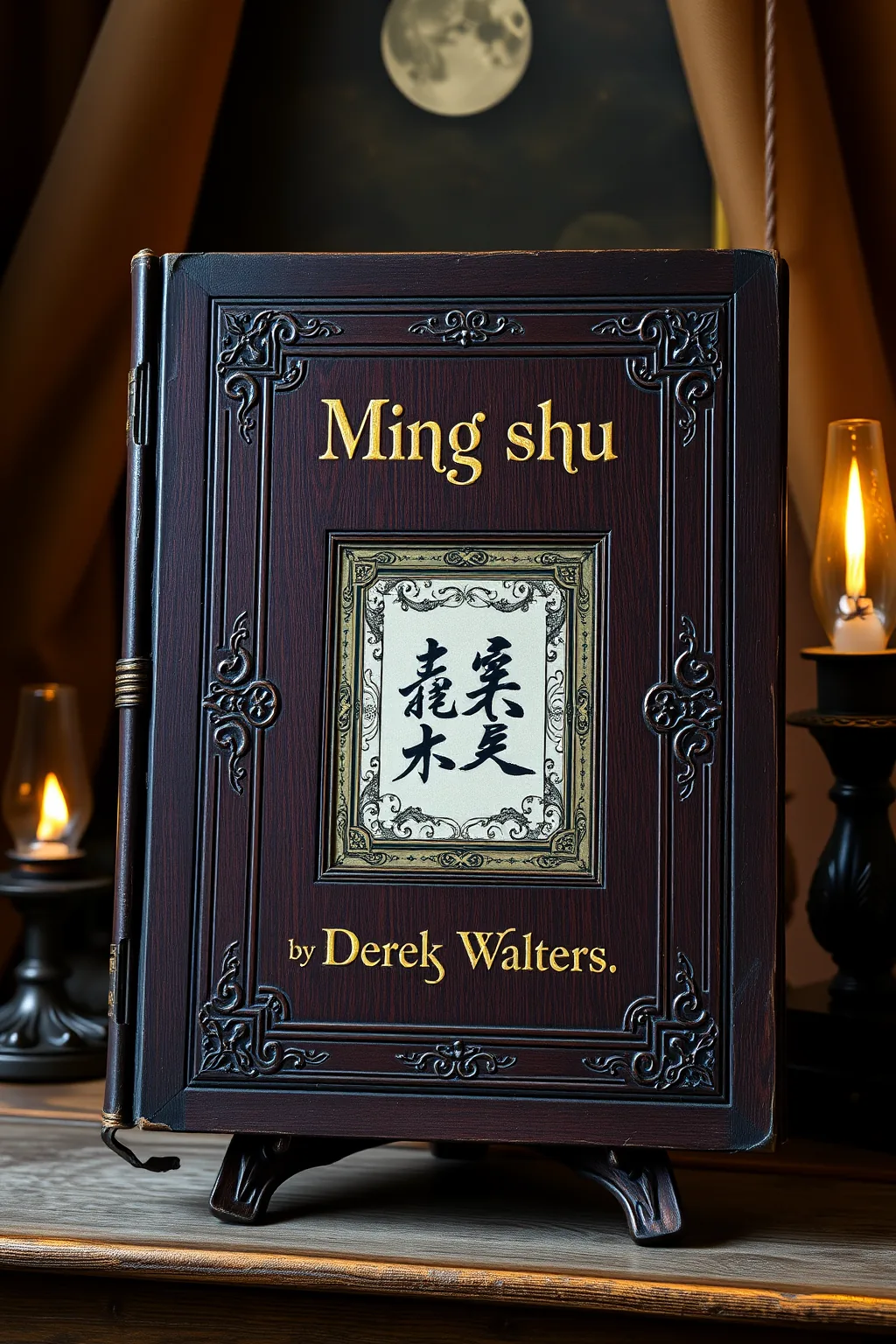
Derek Walters' Ming Shu provides a clear, if somewhat dry, exposition of the Chinese zodiac. Its strength lies in its systematic approach, laying out the twelve animals and their associated traits with commendable thoroughness for its 1987 publication date. The detail on how to prepare a horoscope, while basic by today's standards, was a valuable offering for Western readers at the time. However, the text lacks a certain spark; it's more of a reference manual than an engaging exploration. For instance, the section on the Dragon, while informative, doesn't quite capture the mythical gravitas typically associated with this powerful symbol in Chinese culture. The book's limitation is its somewhat detached presentation, which can make the subject feel more academic than intuitive. Ultimately, Ming Shu serves as a solid, foundational resource for understanding the mechanics of the Chinese zodiac.
📝 Description
74
Derek Walters' Ming Shu, published in 1987, offers a structured introduction to Chinese animal astrology.
Ming Shu systematically details the twelve animals of the Chinese zodiac and their astrological applications. The book explains the core characteristics associated with individuals born under each sign, providing a framework for understanding personality and life paths. It is intended for readers interested in comparative astrology, particularly those new to the Chinese system or looking to build a personal horoscope. The work also touches upon concepts from Chinese cosmology, such as Yin and Yang and the Five Elements, showing how these influence individual horoscopes.
This volume emerged during a time of growing Western interest in Eastern traditions. Walters presented a clear approach to Chinese animal astrology, making it accessible to a Western audience when such information was less common. Its publication contributed to the integration of these astrological ideas into Western esoteric discussions.
Published in 1987, Ming Shu arrived as Western esoteric traditions were actively incorporating non-Western systems. Derek Walters' work provided a systematic and accessible entry point into Chinese animal astrology, a practice with roots stretching back millennia. It addressed a growing Western curiosity for alternative cosmological frameworks beyond the established Western zodiac. The book's structured presentation helped to demystify Chinese astrological principles for a new audience, contributing to their wider recognition and study.
💡 Why Read This Book?
• Learn the foundational principles of the Chinese zodiac, understanding the distinct characteristics of each of the twelve animals like the Rat and the Tiger, as detailed in the book's core animal descriptions. • Discover how to construct a basic personal horoscope using the Chinese system, a practical skill introduced through the methods outlined for natal chart interpretation. • Gain insight into the historical context of Chinese astrology's introduction to the West, appreciating its role in broadening esoteric studies since its 1987 publication.
⭐ Reader Reviews
Honest opinions from readers who have explored this book.
❓ Frequently Asked Questions
What is the main purpose of Derek Walters' Ming Shu?
Ming Shu's primary purpose is to introduce readers to the twelve animals of the Chinese zodiac, explain their associated personality traits, and guide them in preparing a personal horoscope based on their birth year.
When was Ming Shu first published and by whom?
Ming Shu was first published in 1987 by Derek Walters (also credited as Dereck Walters).
Does the book discuss compatibility between zodiac signs?
Yes, the book explores the compatibility between individuals born under different animal signs, offering insights into harmonious and challenging relationships.
Is Ming Shu suitable for complete beginners to astrology?
Absolutely. The book is structured to be accessible to beginners, systematically explaining the core concepts of the Chinese zodiac without assuming prior astrological knowledge.
What are the 'Five Elements' mentioned in relation to the Chinese zodiac?
While Ming Shu focuses on the twelve animals, it touches upon the Five Elements (Wood, Fire, Earth, Metal, Water) which are integral to Chinese cosmology and modify the characteristics of each animal year.
Can I use Ming Shu to predict future events?
Ming Shu primarily focuses on personality analysis and understanding inherent traits and potentials associated with birth years. It's more for self-understanding and relational insights than specific event prediction.
🔮 Key Themes & Symbolism
The Twelve Animal Archetypes
The core of Ming Shu lies in its detailed examination of the twelve animals of the Chinese zodiac: Rat, Ox, Tiger, Rabbit, Dragon, Snake, Horse, Goat, Monkey, Rooster, Dog, and Pig. Each animal is presented not merely as a symbol for a birth year, but as an archetypal force embodying a distinct set of personality traits, behavioral tendencies, strengths, and weaknesses. The book elaborates on how these animal energies manifest in individuals, offering a framework for understanding self and others through the lens of this ancient system.
Personal Horoscope Construction
Beyond simply listing animal characteristics, Ming Shu provides practical instructions on how to prepare a personal horoscope. This involves understanding how one's birth year animal influences their fundamental nature. The work outlines the methodology for calculating these placements, allowing readers to move from general knowledge of the zodiac to a personalized astrological reading, thereby making the system directly applicable to their own lives.
Chinese Cosmology Integration
While the primary focus is on the twelve animals, Ming Shu implicitly or explicitly connects these to broader principles of Chinese cosmology. Concepts such as the cyclical nature of time, the interplay of Yin and Yang, and potentially the Five Elements (Wu Xing) are foundational to the system. Understanding these underlying philosophical currents is essential for a deeper appreciation of how the animal signs derive their specific meanings and interactions.
East-West Astrological Dialogue
Published in 1987, Ming Shu represents a significant contribution to the cross-cultural exchange of astrological knowledge. It served as an accessible gateway for Western esoteric practitioners and enthusiasts to engage with a sophisticated system distinct from the Hellenistic traditions prevalent in the West. The book facilitated a broader understanding and integration of Eastern astrological thought into the global esoteric landscape.
💬 Memorable Quotes
Direct passages from the work, attributed to the author.
“The book describes the characteristics of individuals born under each sign of the Chinese zodiac.”
— This statement highlights the fundamental purpose of Ming Shu: to provide a detailed breakdown of the personality traits, strengths, and potential challenges associated with each of the twelve animal years in the Chinese calendar.
“Readers are shown how to prepare a horoscope.”
— This signifies the practical, instructional aspect of the book, emphasizing that it equips the reader with the methodology to apply the knowledge of the zodiac to create a personalized astrological chart.
“The twelve animals represent recurring cycles of influence.”
— This interpretation points to the cyclical nature inherent in the Chinese zodiac, where each animal governs a specific year in a repeating pattern, influencing the collective and individual energies of that period.
“Understanding one's birth animal offers insight into innate tendencies.”
— This emphasizes the diagnostic value of the Chinese zodiac as presented in the book, suggesting that knowledge of one's birth sign can reveal fundamental aspects of one's character and predispositions.
“The work details the attributes of the Rat, Ox, Tiger, and other zodiac creatures.”
— This directly references the content of the book, confirming its systematic coverage of all twelve animals and their unique qualities, forming the basis of its astrological analysis.
🌙 Esoteric Significance
Tradition
Ming Shu primarily interfaces with the esoteric tradition of Chinese metaphysics and astrology, which is deeply intertwined with Taoism and traditional Chinese medicine. While not strictly Hermetic, Gnostic, or Kabbalistic, it shares with these traditions a focus on understanding cosmic correspondences and applying celestial patterns to human life. It departs from Western systems by utilizing a lunisolar calendar and a different set of archetypal symbols (animals instead of planets/zodiac signs).
Symbolism
The central symbols are the twelve animals of the Chinese zodiac (Rat, Ox, Tiger, etc.), each representing specific archetypal energies and personality traits. These animals are often linked to the five elements (Wood, Fire, Earth, Metal, Water) and the principles of Yin and Yang, adding layers of meaning. For example, the Dragon is a potent symbol of power, good fortune, and yang energy, while the Rabbit might represent gentleness, artistic inclination, and yin qualities.
Modern Relevance
Contemporary practitioners of comparative astrology and cultural esotericists continue to draw on works like Ming Shu. Modern mindfulness and self-help movements sometimes incorporate Eastern philosophical concepts, including elements of the zodiac for personal growth. Thinkers exploring archetypal psychology or comparative mythology also find value in the rich symbolic system presented, seeing the Chinese animals as universal character archetypes expressed through a specific cultural lens.
👥 Who Should Read This Book
• Aspiring astrologers interested in expanding their knowledge beyond Western systems, seeking to understand the unique framework of the Chinese zodiac and its application. • Students of comparative religion and mythology who wish to explore the symbolic language and cosmological underpinnings of Eastern spiritual traditions. • Individuals curious about their own birth chart within the Chinese system, looking for a clear guide to the characteristics and potential life path associated with their birth year animal.
📜 Historical Context
Derek Walters' Ming Shu entered the esoteric landscape in 1987, a period marked by a burgeoning Western interest in Eastern philosophies and spiritual practices. This era saw figures like Fritjof Capra popularizing connections between modern physics and Eastern mysticism, and the Theosophical Society's influence continuing to foster cross-cultural spiritual inquiry. Ming Shu arrived as a structured, accessible guide to Chinese animal astrology, a system less familiar in the West than its Hellenistic counterpart. While contemporary authors like Martin Shough were also exploring Eastern systems, Walters' work offered a particularly systematic primer. Its publication coincided with a growing demand for comparative esoteric studies, positioning it as a key text for those seeking to expand their astrological understanding beyond traditional Western frameworks. The book mattered by providing a clear, methodical introduction to a complex system, clarifying it for a Western audience.
📔 Journal Prompts
The Rat's characteristics as described in Ming Shu.
Personal horoscope construction using the birth year animal.
The symbolic meaning of the Dragon in Chinese astrology.
Reflecting on the compatibility principles between zodiac animals.
The influence of the Five Elements on the twelve animals.
🗂️ Glossary
Chinese Zodiac
A repeating cycle of twelve years, with each year represented by an animal and its associated characteristics. Used in Chinese astrology to determine personality traits and forecast fortune.
Horoscope
A diagram or chart representing the positions of celestial bodies at the time of a person's birth, used in astrology to interpret personality and predict future events.
Rat
The first animal in the Chinese zodiac cycle, typically associated with intelligence, resourcefulness, charm, and adaptability.
Dragon
A powerful symbol in the Chinese zodiac, representing charisma, ambition, courage, and good fortune. Often associated with yang energy.
Yin and Yang
Fundamental concepts in Chinese philosophy representing complementary, interconnected forces. Yin is typically associated with passive, dark, and feminine qualities, while Yang is active, light, and masculine.
Five Elements (Wu Xing)
In Chinese cosmology, these are Wood, Fire, Earth, Metal, and Water. They represent fundamental forces and processes that influence the characteristics and interactions of the zodiac animals.
Natal Chart
A map of the sky at the exact moment and location of a person's birth, used in astrology to understand personality and life patterns. In Ming Shu, this primarily refers to the birth year animal.