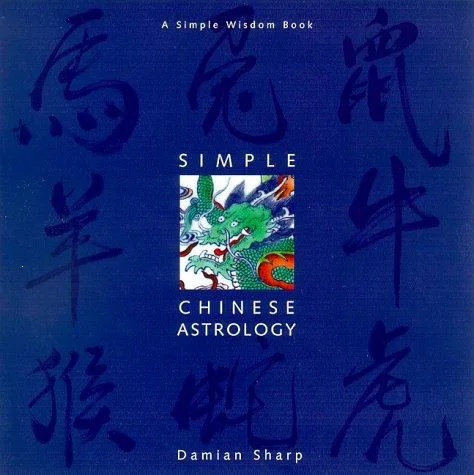
Li yong xing zuo yu sheng xiao gai bian ming yun

 80
80

Li yong xing zuo yu sheng xiao gai bian ming yun
Xiuxian Ye's 'Li yong xing zuo yu sheng xiao gai bian ming yun' attempts a sophisticated synthesis of Western and Chinese astrological principles, a feat not often undertaken with genuine depth. The work's strength lies in its detailed exploration of how the archetypal energies of, for instance, a Western Aries might interact with the characteristics of a Chinese Dragon year. However, the author's assertion that this synthesis can actively 'alter destiny' feels somewhat underdeveloped, lacking concrete mechanisms for such profound change. The section discussing the potential influence of Mercury retrograde periods on those born under the Year of the Rabbit, while intriguing, remains largely speculative. This book offers a fascinating comparative study but falls short of providing actionable pathways for altering one's fate.
📝 Description
80
Published in 2000, 'Li yong xing zuo yu sheng xiao gai bian ming yun' examines the interaction between Western zodiac signs and Chinese Sheng Xiao.
Xiuxian Ye's 2000 work, 'Li yong xing zuo yu sheng xiao gai bian ming yun', investigates the connections between Western astrological signs and the Chinese zodiac animals. The book moves past simple comparisons to consider how these different symbolic systems may shape an individual's perceived destiny. It is written for those interested in comparative esoteric studies and cross-cultural divination, especially practitioners of Western astrology and Chinese horoscopes. Readers will find value in its attempt to synthesize knowledge from these distinct traditions. The author probes how the archetypes of the 'xing zuo' and 'sheng xiao' might interact to create a more detailed understanding of personality and life paths. The text also considers the potential for 'gai bian', or transformation, of one's destiny through this combined perspective.
The book's core concepts revolve around the interplay of 'xing zuo' (Western zodiac) and 'sheng xiao' (Chinese zodiac animals). It analyzes how the distinct influences of each system might combine, offering a richer view of individual characteristics and life trajectories. Ye explores the idea that understanding these intersections can lead to a reevaluation of 'ming yun' (destiny). The work is positioned within a period of growing interest in global esoteric traditions at the turn of the millennium, a time when authors often sought to bridge Eastern and Western metaphysical practices. Its publication in 2000 reflects this trend, contributing to discussions about universal patterns in astrological and fate interpretations across cultures.
This book emerged from a trend in the early 21st century focused on integrating diverse esoteric practices. Authors during this time frequently sought to identify common threads in systems of divination and fate interpretation from different cultures. 'Li yong xing zuo yu sheng xiao gai bian ming yun' contributes to this discourse by specifically addressing the perceived differences and potential harmonies between Western astrology and Chinese horoscopes. It reflects a broader intellectual current that viewed such cross-cultural dialogues as a means to a more complete understanding of human experience and destiny.
💡 Why Read This Book?
• Gain a synthesized understanding of how Western zodiacal archetypes (e.g., Leo, Libra) might interact with the twelve Sheng Xiao animals, offering a more complex portrait of personality than either system alone, as explored in the book's comparative analysis. • Discover the concept of 'ming yun' (destiny) through the lens of early 21st-century Chinese esoteric thought, examining how distinct cultural frameworks approach the idea of fate and its potential malleability. • Learn about specific astrological conjunctions between Western and Chinese systems, as discussed within the book's examination of how planetary influences might intersect with animal year characteristics.
⭐ Reader Reviews
Honest opinions from readers who have explored this book.
❓ Frequently Asked Questions
What is the primary focus of 'Li yong xing zuo yu sheng xiao gai bian ming yun'?
The book focuses on the intersection of Western zodiac signs ('xing zuo') and Chinese zodiac animals ('sheng xiao'), exploring their combined influence on destiny ('ming yun') and the possibility of altering one's life path.
When was 'Li yong xing zuo yu sheng xiao gai bian ming yun' first published?
The book was first published in the year 2000, reflecting early 21st-century trends in comparative esoteric studies.
Does the book offer practical astrological advice?
While it delves into the theoretical interplay of astrological systems, its primary aim is comparative analysis and exploring the concept of fate ('ming yun'), rather than providing day-to-day horoscopes.
Who is Xiuxian Ye, the author?
Xiuxian Ye is the author of 'Li yong xing zuo yu sheng xiao gai bian ming yun', a work published in 2000 that examines cross-cultural astrological systems.
What does 'gai bian ming yun' mean in the context of the book?
'Gai bian ming yun' translates to 'changing destiny' or 'altering fate,' a central theme explored in the book as a potential outcome of understanding the combined influences of Western and Chinese astrology.
Is this book suitable for beginners in astrology?
It is best suited for those with some existing knowledge of either Western or Chinese astrology, as it builds upon these foundations to explore their synthesis and potential impact on 'ming yun'.
🔮 Key Themes & Symbolism
Cross-Cultural Astrological Synthesis
The work meticulously examines the convergence of two distinct astrological traditions: the Western zodiac ('xing zuo') and the Chinese Sheng Xiao (zodiac animals). It posits that understanding the interplay between these systems—for example, how the archetypal energies of a Scorpio might manifest differently in a person born in the Year of the Ox versus the Year of the Tiger—can lead to a more nuanced self-perception and a richer interpretation of one's life trajectory.
The Nature of Destiny ('Ming Yun')
A central theme is the exploration of 'ming yun,' the Chinese concept of destiny or fate. The book challenges deterministic views by suggesting that a deeper comprehension of astrological influences, particularly when synthesized across cultural boundaries, might offer insights into potential modifications or 'gai bian' (alterations) of one's predetermined path. It probes the agency an individual might possess.
Archetypal Interactions
The book examines the symbolic and archetypal resonances between the twelve Western zodiac signs and the twelve animals of the Chinese zodiac. It explores how the inherent qualities associated with each—such as the leadership of Aries or the nurturing aspect of Cancer, and their counterparts like the Rat or the Pig—can create unique personality dynamics and influence life events.
Transformative Potential of Knowledge
Beyond mere correlation, the author investigates the transformative potential ('gai bian') inherent in acquiring integrated astrological knowledge. The premise is that by understanding the complex web of influences from both Eastern and Western systems, individuals can gain a unique perspective that may empower them to consciously shape their future, moving beyond passive acceptance of fate.
💬 Memorable Quotes
Direct passages from the work, attributed to the author.
“The celestial bodies and the animal year, two great currents, shape the river of life.”
— This metaphorical statement expresses the book's core argument: that both Western zodiacal influences and Chinese animal year characteristics are significant forces guiding an individual's existence.
“Understanding the tie of xing zuo and sheng xiao allows one to perceive the potential for gai bian.”
— This highlights the book's central thesis that knowledge of the combined astrological systems (xing zuo and sheng xiao) can reveal opportunities for altering or transforming one's destiny (gai bian ming yun).
“Each birth chart is a unique confluence, a dialogue between epochs.”
— This suggests that every individual's astrological configuration, viewed through the lens of multiple traditions, represents a singular and complex interplay of cosmic and temporal influences.
“Fate is not a stone tablet, but a flowing script.”
— This interpretation emphasizes the dynamic and potentially mutable nature of destiny ('ming yun') as presented in the work, contrasting it with a rigid, unchangeable predetermination.
“The Dragon's fire and the Ram's ambition: together, a path forged anew.”
— This illustrates the book's method of combining specific traits from different astrological systems (Dragon from Chinese, Ram from Western) to conceptualize how their unique interaction can create novel life trajectories.
🌙 Esoteric Significance
Tradition
This work engages with traditions rooted in Hellenistic astrology and traditional Chinese cosmology. It attempts a syncretic approach, applying principles of Western esoteric astrology (often associated with Hermeticism and Neoplatonism in its philosophical underpinnings) to the framework of the Chinese zodiac. It departs from purely traditional interpretations by actively seeking points of intersection and potential synthesis, moving beyond mere comparative description.
Symbolism
Key symbols include the twelve Western zodiacal archetypes (e.g., The Bull, The Archer) and the twelve Chinese Sheng Xiao animals (e.g., Dragon, Monkey). The book explores how the inherent symbolism of these figures—the earthly stability of Taurus versus the dynamic power of the Dragon—interact to create unique energetic profiles and influence 'ming yun' (destiny). The concept of 'gai bian' (transformation) itself acts as a symbolic representation of agency within astrological frameworks.
Modern Relevance
Contemporary practitioners and scholars interested in comparative divination, global esoteric studies, and the integration of Eastern and Western philosophical systems continue to find value in such works. It informs discussions on psychological astrology that seek broader archetypal understandings beyond a single cultural origin, and appeals to those exploring how ancient wisdom traditions can be adapted for modern self-understanding and personal development.
👥 Who Should Read This Book
• Students of comparative esotericism seeking to understand how different cultural systems interpret human destiny and personality, particularly those interested in the intersection of Western and Chinese astrological frameworks. • Astrologers of either tradition (Western or Chinese) who wish to broaden their perspective by exploring potential correlations and synergistic influences between the two systems. • Individuals curious about the concept of 'ming yun' (fate) and seeking insights into how ancient wisdom traditions offer perspectives on personal agency and potential life path modifications.
📜 Historical Context
The publication of 'Li yong xing zuo yu sheng xiao gai bian ming yun' in 2000 occurred during a period of intense cross-cultural pollination in esoteric studies. The internet was rapidly facilitating the exchange of ideas between practitioners and scholars of diverse traditions. Authors like Fritjof Capra, though focusing on physics, were popularizing the idea of integrating seemingly disparate fields of knowledge. Within astrology, while many books focused on either Western or Chinese systems, there was a growing niche for comparative works. This book emerged within that trend, aiming to bridge the gap between these influential, yet often compartmentalized, systems. It faced a landscape where traditional Western astrology, influenced by figures like Dane Rudhyar, coexisted with a resurgent interest in Eastern philosophies and divinatory arts.
📔 Journal Prompts
The interplay of your 'xing zuo' and 'sheng xiao': map their contrasting energies.
Reflect on a perceived instance of 'gai bian' in your life trajectory.
How might the archetypes of your Western Sun sign and Chinese animal year inform your current challenges?
Consider the symbolism of the Dragon and the Ram in your own life narrative.
Visualize the 'river of life' shaped by both celestial currents and animal year influences.
🗂️ Glossary
Xing Zuo (星座)
The Chinese term for the Western astrological zodiac, referring to the twelve constellations that the Sun appears to pass through over the course of a year.
Sheng Xiao (生肖)
The Chinese zodiac, a cycle of twelve animals (Rat, Ox, Tiger, Rabbit, Dragon, Snake, Horse, Goat, Monkey, Rooster, Dog, Pig) associated with years in the Chinese calendar.
Ming Yun (命运)
A Chinese concept encompassing destiny, fate, or one's predetermined life path and fortune. It is often seen as influenced by various cosmic and karmic factors.
Gai Bian (改变)
Literally 'to change' or 'to alter.' In the context of the book, it refers to the potential for modifying or transforming one's destiny ('ming yun') through understanding and conscious action.
Esoteric
Relating to or accessible by only a small number of people with a specialized knowledge or interest; often pertaining to mystical, occult, or hidden spiritual teachings.
Archetype
A recurring symbol, pattern of behavior, or primordial image in the collective unconscious, used in psychology and mythology to represent universal human experiences.
Syncretism
The amalgamation or attempted amalgamation of different religions, cultures, or schools of thought. In this context, it refers to blending Western and Chinese astrological systems.
🔮 Readers Also Liked
Browse all →









More Free Astrology & Cosmology Books
View all →