Earth: Astrology's Missing Planet
 74
74

Earth: Astrology's Missing Planet
Chrissie Blaze's "Earth: Astrology's Missing Planet" is an intriguing, if somewhat underdeveloped, attempt to reframe astrological interpretation by including our home world. The premise itself is compelling: how can we fully understand a chart when the very ground we stand on is excluded? Blaze articulates this gap persuasively, particularly in her discussions on the material plane and our embodiment. The work's strength lies in its direct challenge to established astrological dogma, encouraging readers to question fundamental assumptions. However, the book sometimes struggles to move beyond assertion into truly actionable astrological technique. While Blaze outlines the concept of Earth's influence, the practical application for generating specific predictive or diagnostic insights feels less robust than the foundational argument. The passage discussing Earth's rulership in relation to the Ascendant offers a glimpse into the potential, but more detailed examples would have strengthened the overall thesis. It’s a valuable thought experiment that opens avenues for further exploration, even if it doesn't fully map them out.
📝 Description
74
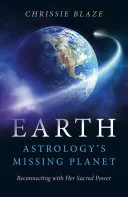
Chrissie Blaze's 2018 book, Earth: Astrology's Missing Planet, argues for Earth's own astrological significance.
This book introduces the idea of Earth as a celestial body with its own astrological meaning. Blaze suggests that Earth's energetic influence is often overlooked but plays a key role in natal charts and our understanding of the cosmos. The author aims to correct this omission by explaining Earth's potential impact on individual lives and collective consciousness.
The work is intended for both experienced astrologers and newcomers to metaphysical ideas. Practicing astrologers and those involved in New Age spirituality can add a new layer of interpretation to their work. Simultaneously, the book offers a clear introduction for individuals unfamiliar with astrology or esoteric concepts, guiding them to consider Earth's place in a horoscope. It is also for anyone interested in the less obvious dimensions of human experience and the cosmic forces that shape it.
While astrology has long cataloged planets, the explicit recognition of Earth as an astrological entity is a recent development. Blaze's work appears during a resurgence of interest in Earth-based spirituality and ecological awareness. It seeks to connect these contemporary concerns with older systems of interpretation. The book addresses a perceived gap in traditional Western astrology, which typically focuses on celestial bodies beyond our own planet.
💡 Why Read This Book?
• Gain a novel perspective on your personal birth chart by exploring the astrological significance of Earth itself, a concept unique to Blaze's 2018 work, moving beyond traditional planetary considerations. • Understand the metaphysical implications of our terrestrial existence as presented in "Earth: Astrology's Missing Planet," offering a deeper connection to embodiment and place. • Challenge established astrological frameworks by examining the omitted role of Earth, potentially enriching your practice or spiritual understanding with this specific esoteric inquiry.
⭐ Reader Reviews
Honest opinions from readers who have explored this book.
❓ Frequently Asked Questions
What is the main argument of Earth: Astrology's Missing Planet?
The book argues that Earth, our home planet, possesses significant astrological meaning that has been overlooked in traditional Western astrology and New Age thought, proposing its inclusion in horoscope interpretation.
Who is the author, Chrissie Blaze?
Chrissie Blaze is the author of Earth: Astrology's Missing Planet, a work that first appeared in 2018, aiming to introduce a new dimension to astrological studies.
Is this book only for professional astrologers?
No, the book is written for both seasoned astrologers and newcomers to the field or New Age concepts, making its ideas accessible to a broad audience interested in planetary influences.
What does the book suggest Earth represents astrologically?
It suggests Earth represents our connection to the material world, our sense of place, embodiment, and the fundamental energies of existence upon which other astrological influences play out.
When was Earth: Astrology's Missing Planet first published?
The book was first published on February 23, 2018, introducing its unique perspective to contemporary esoteric literature.
Does the book offer practical astrological techniques for using Earth?
While it lays the groundwork and introduces the concept, the primary focus is on the philosophical and interpretive significance of Earth, encouraging further development of practical techniques by readers.
🔮 Key Themes & Symbolism
Earth as an Astrological Factor
The central theme is the elevation of Earth from a passive backdrop to an active astrological planet. Blaze argues that our physical home influences our fundamental nature, our connection to the material plane, and our grounding in reality. By assigning meaning to Earth's 'position' or inherent energetic signature within a horoscope, the book proposes a more holistic interpretation of celestial influences, suggesting that understanding our relationship with our planet is key to understanding ourselves.
Embodiment and Materiality
This theme explores how Earth's astrological presence relates to the concept of embodiment – being physically present and anchored in one's body and the material world. The work posits that traditional astrology, by omitting Earth, may have inadvertently de-emphasized the importance of physical existence and material reality. Blaze suggests that Earth's influence governs our connection to nature, our sense of belonging, and our experience of the tangible aspects of life.
New Age Consciousness Shift
The book positions itself within the broader context of New Age thought, advocating for a rethinking that acknowledges Earth's vital role. It aligns with a growing contemporary focus on ecological awareness and planetary consciousness, suggesting that a deeper understanding of Earth's astrological significance can foster greater respect for our environment and a more integrated spiritual outlook. This theme connects personal astrological interpretation with collective planetary well-being.
Revisiting Astrological Canons
A significant theme is the critical re-examination of established astrological canons. Blaze challenges the centuries-old practice of focusing solely on celestial bodies external to Earth. The work invites astrologers and spiritual seekers to question the foundations of their practice and consider what might have been missed by excluding our own planet from the interpretive framework. This encourages a more comprehensive and potentially revolutionary approach to horoscopes.
💬 Memorable Quotes
Direct passages from the work, attributed to the author.
“The one forgotten planet in our horoscopes – the Earth upon which we live.”
— This concise statement expresses the book's core premise, highlighting the paradoxical omission of our home planet from traditional astrological systems and setting the stage for its reintroduction.
“Earth introduces a new dimension to astrology and to New Age thought.”
— This assertion frames the book's contribution as revolutionary, suggesting it offers a significant expansion of existing esoteric frameworks, impacting both the science of astrology and broader spiritual philosophies.
“Based on decades of research.”
— This phrase lends authority to the author's claims, implying that the concept of Earth's astrological significance is not a casual observation but a conclusion drawn from extensive study and investigation.
“Written for non-astrologers as well as for the astrological and New Age community.”
— This indicates the book's intended accessibility, aiming to bridge the gap between technical astrological language and general metaphysical curiosity, making its unique ideas understandable to a wide readership.
“The first book to address this topic.”
— This claim positions the work as pioneering, emphasizing its originality and its role in opening up a new field of inquiry within esoteric studies and astrological interpretation.
🌙 Esoteric Significance
Tradition
This work engages with the Western Esoteric tradition, specifically branching from traditional astrology and New Age thought. While established astrological systems are rooted in Hermetic and Ptolemaic frameworks, Blaze departs by centering the overlooked significance of Earth itself. It aligns with a modern esoteric current that seeks to re-integrate the physical and spiritual, emphasizing immanence and embodiment, often drawing parallels with concepts found in contemporary ecopsychology and Earth-based spiritualities.
Symbolism
The primary symbol is Earth itself, representing not just a physical location but the totality of material existence, embodiment, and our fundamental connection to the tangible realm. Other implicit symbols include grounding, roots, and the cycle of growth and decay inherent to terrestrial life. The book's symbolism aims to elevate these terrestrial experiences to the same level of interpretive importance as the archetypes associated with the Sun, Moon, and planets.
Modern Relevance
Blaze's work finds resonance with contemporary movements such as ecospirituality, Gaia theory advocacy, and the growing field of somatic psychology. Thinkers and practitioners interested in the intersection of consciousness, environment, and personal well-being can utilize its framework. It informs modern astrological approaches that seek greater integration with ecological awareness and a more grounded, embodied understanding of spiritual principles, moving beyond purely celestial interpretations.
👥 Who Should Read This Book
• Astrologers seeking to expand their interpretive toolkit and challenge conventional astrological paradigms by incorporating Earth's influence. • New Age practitioners interested in deepening their connection to the material world and understanding embodiment as a spiritual principle. • Individuals curious about holistic philosophies and Earth-centered spirituality who want to explore how these concepts intersect with esoteric systems.
📜 Historical Context
Chrissie Blaze's "Earth: Astrology's Missing Planet" emerged in 2018, a period marked by a resurgence of interest in Earth-based spirituality, ecological concerns, and holistic wellness movements. While Western astrology has a long lineage tracing back to Hellenistic and Babylonian traditions, its primary focus has historically been on the Sun, Moon, and the planets visible from Earth. Blaze's work challenges this established canon, which, by extension, has been influenced by figures like Ptolemy and later formalized by astrologers throughout the Renaissance and Enlightenment. The book's conceptualization of Earth as an active astrological body can be seen as a response to contemporary New Age philosophies that increasingly emphasize connection to Gaia and planetary consciousness, often drawing from indigenous wisdom traditions. While not directly engaging with a specific contemporary author in its core premise, it implicitly critiques the limitations of traditional astrological systems that have prioritized external celestial mechanics over the immediate terrestrial experience, a perspective gaining traction in broader esoteric discourse.
📔 Journal Prompts
Earth's role in your natal chart, considering its significance as your home planet.
The concept of embodiment as explored through Earth's astrological meaning.
Reflections on your personal connection to the material world, influenced by Earth's presence.
How the omission of Earth from traditional astrology might affect interpretations of materiality.
Future possibilities for integrating Earth into New Age spiritual practices.
🗂️ Glossary
Astrological Earth
The concept of Earth as an active celestial body with its own unique astrological significance, influencing personal charts and collective consciousness, as proposed by Chrissie Blaze.
New Age thought
A broad spectrum of spiritual or philosophical beliefs, including concepts of holistic health, consciousness expansion, and the interconnectedness of all things, often drawing from various religious and mystical traditions.
Natal Chart
A map of the celestial bodies at the exact moment and location of a person's birth, used in astrology to interpret personality, potential, and life path.
Embodiment
The state of having or giving a body; the representation of a spirit in bodily form. In spiritual and psychological contexts, it refers to the conscious experience of being in one's body and the material world.
Material Plane
In esoteric and metaphysical contexts, this refers to the physical, tangible reality of existence, as opposed to spiritual or ethereal realms.
Planetary Consciousness
The idea that a planet, particularly Earth, possesses a form of collective consciousness or energetic field that influences its inhabitants and the planet itself.
Esoteric Literature
Writings concerned with the inner, hidden, or secret knowledge, often pertaining to spiritual, mystical, or occult traditions, typically intended for initiates or those with specialized understanding.