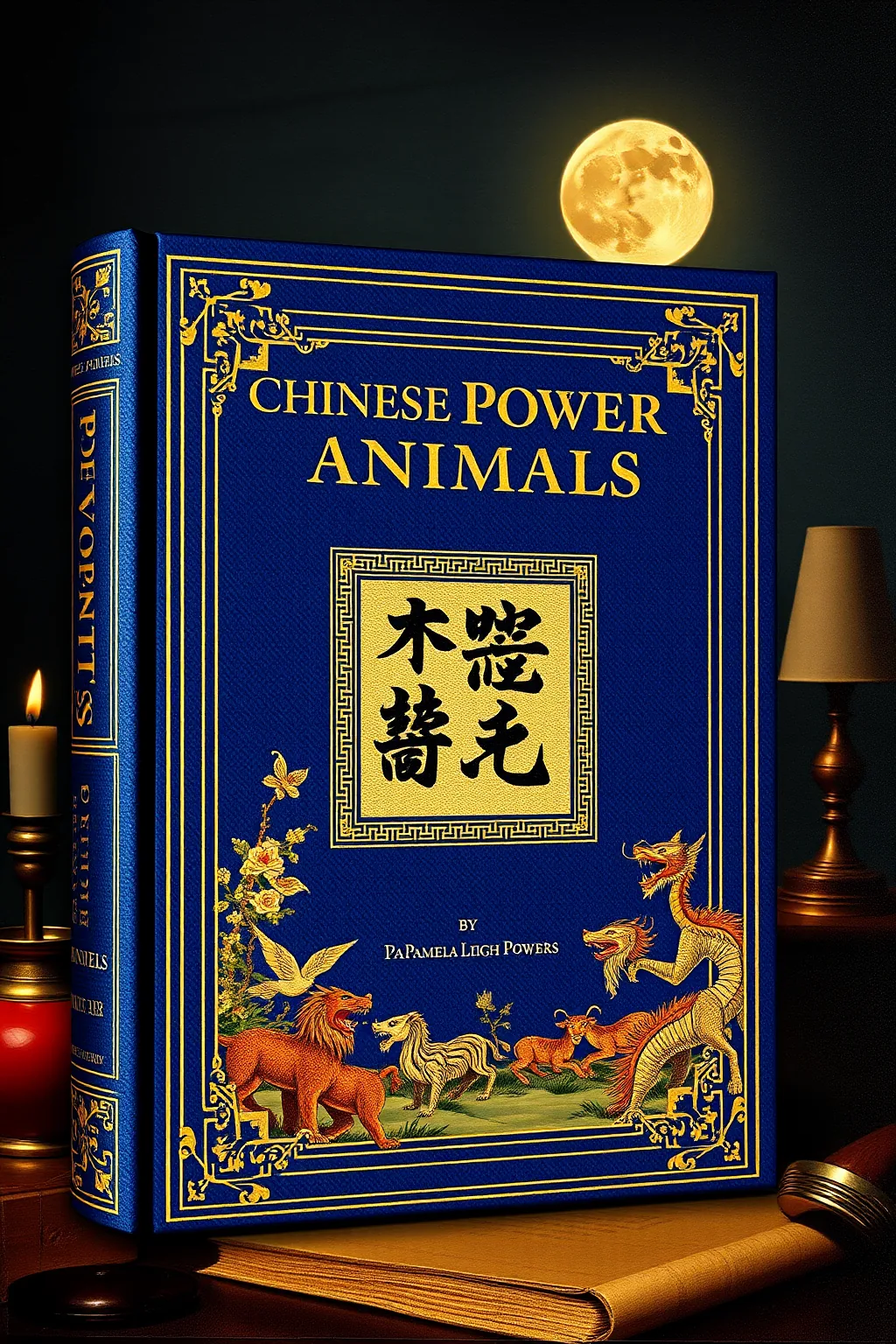
Chinese Power Animals
 81
81

Chinese Power Animals
Powers' "Chinese Power Animals" offers a structured entry into a complex symbolic system. The clarity with which she delineates the attributes of each animal, connecting them to elemental forces and directional symbolism, is a significant strength. For instance, her explanation of the Tiger's association with metal and the West provides a concrete anchor for understanding its protective and authoritative roles. A notable limitation, however, is the book's occasional reliance on generalized interpretations, which, while accessible, sometimes lack the depth found in specialized sinological texts. The section on the Dragon, detailing its manifold meanings from imperial authority to cosmic energy, serves as a prime example of the book's ability to synthesize diverse concepts. Despite this, the work provides a valuable overview for those new to the subject. It serves as a useful primer on a rich subject matter.
📝 Description
81
Pamela Leigh Powers' 2000 book, Chinese Power Animals, examines animal symbolism in Chinese traditions.
Published in 2000, Pamela Leigh Powers' Chinese Power Animals goes beyond a simple catalog of creatures to investigate their spiritual and symbolic weight within Chinese culture. The book details how animals are seen as vessels of potent energies, guiding forces, and archetypes. Powers links specific animals like the Dragon, Phoenix, Tiger, and Tortoise to particular elements, directions, and philosophical ideas such as Yin and Yang. The text explains how these "power animals" are used in rituals, divination, and personal practice to access their qualities for protection, wisdom, and change.
This work is for those interested in comparative mythology, Taoist philosophy, and animal symbolism. It is also useful for energy workers, Feng Shui practitioners, and anyone wishing to grasp the connections between the natural world and spiritual growth in East Asia. Scholars of religion and folklore will find value here as well. The book also touches on the impact of these symbols in martial arts and traditional Chinese medicine.
This book fits within a broader interest in Eastern spirituality that grew in the late 20th century. Following thinkers who explored animal archetypes in the collective unconscious, Powers' text places Chinese animal symbolism within a spiritual and psychological framework. It connects to traditions that view animal totems as active channels of power, not just cultural markers.
💡 Why Read This Book?
• Gain a grounded understanding of the Dragon's multifaceted symbolism, moving beyond Western dragon lore to its specific representation in Chinese cosmology and imperial power. • Learn about the Phoenix's connection to the element of fire and its role in cycles of renewal, a concept crucial for understanding Taoist principles of transformation. • Discover the practical application of the Tortoise's symbolism for longevity and stability, offering insights into its use in Feng Shui and personal well-being practices.
⭐ Reader Reviews
Honest opinions from readers who have explored this book.
❓ Frequently Asked Questions
What year was Chinese Power Animals first published?
Pamela Leigh Powers' "Chinese Power Animals" was first published in the year 2000, marking its emergence during a period of increasing global interest in Eastern spiritual traditions and their symbolic systems.
Which specific Chinese animals are discussed in the book?
The book covers a range of significant Chinese power animals, including the Dragon, Phoenix, Tiger, Tortoise, and others, detailing their individual attributes and symbolic meanings within Chinese culture.
How does the book connect animals to Chinese philosophy?
Powers links animals to core philosophical concepts like Yin and Yang, the Five Elements (Wu Xing), and directional symbolism, explaining their roles as embodiments of these forces and principles.
Is this book suitable for beginners in esoteric studies?
Yes, the work is structured to be accessible to beginners, offering clear explanations of complex symbolism and providing a solid foundation for further study in Chinese esoteric traditions.
Can the concepts from Chinese Power Animals be applied in Feng Shui?
Absolutely. The book explores how the symbolic energies of these animals are traditionally integrated into practices like Feng Shui for enhancing harmony, protection, and prosperity in living spaces.
Does the book discuss animal symbolism in Chinese martial arts?
Indeed, "Chinese Power Animals" touches upon the influence of these animal archetypes in various Chinese martial arts, where their characteristics are often emulated for strategic and energetic purposes.
🔮 Key Themes & Symbolism
Dragon as Cosmic Force
The book elaborates on the Dragon's preeminence in Chinese symbolism, not merely as a mythical beast but as a manifestation of celestial power, rain, and imperial authority. Powers details its association with the East and the Wood element, presenting it as a potent symbol of auspicious beginnings and dynamic energy, crucial for understanding the foundational iconography of Chinese cosmology.
Phoenix and Cycles of Renewal
Powers examines the Fenghuang (often translated as Phoenix) as a symbol of virtue, grace, and the union of Yin and Yang. Its connection to the South and the element of Fire is explored, highlighting its role in representing rebirth and transformation. This theme is vital for grasping concepts of spiritual regeneration and the cyclical nature of existence within Taoist thought.
Tiger's Protective Authority
The White Tiger, associated with the West and the Metal element, is presented as a powerful guardian and symbol of military prowess. The text explains its function in warding off malevolent forces and its representation of strength and courage. This understanding is key for practitioners interested in protective energies and the martial aspects of spiritual practice.
Tortoise: Longevity and Stability
The Tortoise, linked to the North and the element of Water, embodies longevity, wisdom, and steadfastness. Powers discusses its symbolic role in grounding energies and promoting a long, stable existence. This concept is fundamental for those exploring practices aimed at cultivating resilience, patience, and enduring spiritual development.
💬 Memorable Quotes
Direct passages from the work, attributed to the author.
“The Dragon embodies celestial power, governing rain and imperial fortune.”
— This statement captures the many-sided role of the Dragon in Chinese culture, highlighting its connection to natural forces essential for life and its symbolic representation of supreme earthly authority.
“The Phoenix signifies the harmonious union of Yin and Yang, heralding auspicious times.”
— This interpretation emphasizes the Phoenix's role as a symbol of balance and positive change, linking its appearance to periods of peace and prosperity, a key concept in understanding Chinese auspicious symbolism.
“The Tiger stands as a guardian, repelling negativity with its potent energy.”
— This highlights the protective aspect of the Tiger, portraying it as a formidable force against adverse influences, which is relevant for understanding its use in talismans and defensive spiritual practices.
“Each power animal offers a unique energetic signature for personal cultivation.”
— This suggests that the book presents these animals not just as symbols but as accessible sources of distinct spiritual energies that can be consciously integrated into one's personal development path.
💡 Key Ideas
Editorial paraphrase of the work's core concepts — not direct quotes.
Through the Tortoise, one finds the wisdom of enduring patience and stability.
This paraphrased concept points to the Tortoise's association with deep wisdom gained through a slow, steady approach to life, emphasizing its value for cultivating inner strength and resilience.
🌙 Esoteric Significance
Tradition
This work situates itself within the broad stream of Chinese esoteric traditions, particularly Taoism and folk religious practices, while also resonating with universal animistic and totemic principles explored in comparative religion. It bridges the gap between cultural folklore and practical spiritual application, viewing animal symbolism as a living language of cosmic forces rather than a static historical artifact.
Symbolism
Key symbols include the Dragon, representing celestial power, yang energy, and imperial authority, often linked to the East and the element of Wood. The Phoenix (Fenghuang) symbolizes auspiciousness, virtue, and the union of Yin and Yang, associated with the South and Fire. The Tiger embodies protective strength and military power, connected to the West and Metal, while the Tortoise signifies longevity, wisdom, and stability, tied to the North and Water.
Modern Relevance
Contemporary practitioners of Feng Shui, Qigong, and various forms of Chinese divination continue to draw upon the symbolic language detailed in this book. Its accessible presentation makes it a valuable resource for modern spiritual seekers looking to integrate the potent archetypes of Chinese culture into their personal practices for grounding, protection, and energetic alignment.
👥 Who Should Read This Book
• Aspiring practitioners of Taoist-influenced energy work seeking to understand the foundational animal archetypes that inform their practice. • Students of comparative mythology and symbolism interested in the unique roles animals play in East Asian cosmologies and spiritual traditions. • Individuals exploring Feng Shui or personal development who wish to incorporate the protective and auspicious energies of Chinese power animals into their lives.
📜 Historical Context
Pamela Leigh Powers' "Chinese Power Animals" emerged in 2000, a period marked by a significant global surge in interest towards Eastern spiritualities, influenced by earlier pioneers like Lin Yutang and the broader New Age movement. This era saw a growing academic and popular engagement with Taoism and Chinese folk religion, moving beyond purely anthropological studies. The work arrived as a counterpoint to more Western-centric explorations of animal symbolism, such as those found in Jungian psychology, offering a distinct cultural lens. While not directly engaging with specific controversies, the book contributed to a wave of accessible texts explaining esoteric traditions for Western audiences, positioning Chinese animal archetypes as vital forces for spiritual understanding and practice, rather than mere cultural motifs.
📔 Journal Prompts
The Dragon's association with rain and imperial fortune: how does this duality manifest in contemporary power structures?
Reflect on the Phoenix's symbolism of rebirth; identify a personal cycle of transformation that mirrors its qualities.
Consider the Tiger's role as a guardian; what energetic boundaries do you need to establish for protection?
The Tortoise embodies longevity and stability; what practices can foster these qualities in your daily life?
Analyze the elemental associations of the power animals: how do Wood, Fire, Metal, and Water energies influence your environment?
🗂️ Glossary
Yin and Yang
The fundamental Taoist concept of complementary, interconnected, and interdependent forces that shape the natural world and human experience. Yin is typically associated with passive, dark, and feminine qualities, while Yang represents active, light, and masculine qualities.
Wu Xing (Five Elements)
The traditional Chinese philosophical concept of five phases or elements: Wood, Fire, Earth, Metal, and Water. These elements are believed to be in constant states of interaction and transformation, influencing all phenomena.
Fenghuang
Often translated as the Chinese Phoenix, it is a mythical bird symbolizing virtue, grace, and good fortune. It is considered a representation of the union of Yin and Yang and is often associated with the Empress.
Taoism
A philosophical and religious tradition originating in China, emphasizing living in harmony with the Tao (the Way), the natural order of the universe. It values simplicity, spontaneity, and non-interference (wu wei).
Archetype
In esoteric and psychological contexts, a universal, inherited pattern of thought or imagery derived from the collective unconscious, often represented by mythical figures or symbols like power animals.
Directional Symbolism
The practice of associating specific cardinal directions (North, South, East, West, Center) with particular elements, colors, animals, and energies within Chinese cosmology and Feng Shui.
Wu Wei
A central concept in Taoism, meaning 'non-action' or 'effortless action.' It refers to acting in accordance with the natural flow of things, without forcing or striving.
🔮 Readers Also Liked
Browse all →







More by Pamela Leigh Powers
All books →
More Free Astrology & Cosmology Books
View all →