Chinese astrology

 81
81

Chinese astrology
Derek Walters’ Chinese Astrology offers a remarkably clear and systematic introduction to a system often perceived as arcane. Its strength lies in its methodical approach, breaking down the intricate interplay of animals, elements, and stems with a clarity that aids comprehension. Walters avoids the sensationalism that sometimes plagues popular astrology books, presenting the material with an academic rigor that lends it credibility. A particularly effective section details the compatibility between different animal signs, illustrating the nuanced dynamics of relationships as understood through this ancient framework. However, the book's comprehensive nature can also be a slight limitation; for readers seeking only a superficial overview, the depth might feel overwhelming. Despite this, the work remains a foundational text for understanding Chinese astrological principles.
📝 Description
81
Derek Walters' Chinese Astrology, published in 1987, explains the Eastern zodiac system.
Derek Walters' 1987 book details the Chinese system of celestial interpretation. It breaks down the twelve zodiac animals, their associated elements, and their characteristics. The work goes beyond simple personality descriptions to examine compatibility, fortune, and influence within traditional Chinese cosmology.
This book is for readers interested in comparative divination and astrology. It also suits those seeking structured self-understanding and insight into interpersonal dynamics. Students of esoteric traditions, cultural historians, and individuals curious about East Asian philosophies will find it valuable. No prior astrological knowledge is necessary, making it accessible to beginners.
Walters' work addresses a gap in Western understanding of Chinese astrology during a time of renewed interest in esoteric studies. While Western astrology was common, Chinese astrology was less known. This book offers a clear entry into a complex system that predates many Western astrological frameworks. It is a scholarly yet approachable introduction.
This book emerged during the late 20th century's revival of esoteric studies. At a time when Western astrology was widely popular, Derek Walters' work provided a clear introduction to the Chinese astrological system. It connects with traditions that are millennia old, predating many Western astrological frameworks. The book bridges Eastern and Western mystical thought, offering a structured approach to a complex cosmology.
💡 Why Read This Book?
• Learn the foundational principles of the Chinese zodiac, including the 12 animal signs and the 5 elemental cycles, to understand your own birth year's influences and those of people you know. • Discover the intricate relationships and compatibility dynamics between different signs, as explained through the Earthly Branches, allowing for deeper insights into interpersonal connections. • Gain an appreciation for the historical context of Chinese astrology, understanding its origins and its place within traditional Chinese cosmology and philosophy dating back centuries.
⭐ Reader Reviews
Honest opinions from readers who have explored this book.
❓ Frequently Asked Questions
When was Derek Walters' Chinese Astrology first published?
Derek Walters' influential work on Chinese Astrology was first published in 1987, marking a significant contribution to the popularization of this complex system in the Western world.
What are the 12 animals in Chinese astrology?
The 12 animals in Chinese astrology, corresponding to the Earthly Branches, are the Rat, Ox, Tiger, Rabbit, Dragon, Snake, Horse, Goat, Monkey, Rooster, Dog, and Pig.
Does the book explain elemental interactions?
Yes, Chinese Astrology by Derek Walters thoroughly explains the interactions of the Five Elements (Wood, Fire, Earth, Metal, Water) and how they influence the characteristics of each zodiac animal.
Is this book suitable for beginners?
Absolutely. The book is structured to guide readers from basic concepts to more complex interactions, making it accessible for those new to Chinese astrology.
What is the significance of the Heavenly Stems?
The Heavenly Stems, alongside the Earthly Branches (animals), form a sixty-year cycle in Chinese astrology, adding another layer of influence and detail to an individual's astrological profile.
Does the book cover compatibility between signs?
Yes, a key feature of Walters' Chinese Astrology is its detailed exploration of compatibility between the various animal signs, offering insights into relationships and social dynamics.
🔮 Key Themes & Symbolism
The Twelve Animal Signs
The core of Chinese astrology revolves around the twelve-year cycle, each year represented by an animal: Rat, Ox, Tiger, Rabbit, Dragon, Snake, Horse, Goat, Monkey, Rooster, Dog, and Pig. Walters meticulously details the personality traits, strengths, weaknesses, and life paths associated with individuals born under each sign. This section explains how the animal influences one's fundamental nature, motivations, and how they interact with the world and others based on their birth year.
The Five Elemental Cycles
Beyond the animals, the system incorporates the Five Elements: Wood, Fire, Earth, Metal, and Water. Each year is also associated with one of these elements, creating a sixty-year cycle when combined with the Heavenly Stems. Walters explains how these elements interact, creating strengths and weaknesses, and how an individual's element modifies the inherent traits of their animal sign, adding layers of complexity to astrological interpretation.
Compatibility and Relationships
A significant focus of Chinese astrology is understanding compatibility between different signs. The book explores the harmonious and conflicting relationships between the twelve animals, offering guidance on forming alliances, partnerships, and managing potential conflicts. This aspect provides practical application for personal relationships, business dealings, and social interactions, rooted in ancient observational principles.
Yin and Yang Dynamics
The fundamental principle of Yin and Yang is woven throughout the interpretation of Chinese astrology. Walters illustrates how these complementary forces manifest within each animal sign and elemental combination. Understanding the balance or imbalance of Yin and Yang in one's chart, as presented in the book, is key to grasping the nuanced energetic interplay that shapes destiny and character.
💬 Memorable Quotes
Direct passages from the work, attributed to the author.
“Elemental interactions create unique combinations of fortune and challenge.”
— This interpretation emphasizes how the interplay between the Five Elements (Wood, Fire, Earth, Metal, Water) and the zodiac animals introduces specific strengths, weaknesses, and potential life obstacles for individuals.
“Compatibility between signs is governed by inherent affinities and clashes.”
— This reflects the book's discussion on relationship dynamics, suggesting that certain animal signs naturally harmonize or conflict due to their elemental makeup and traditional associations.
“The sixty-year cycle combines Heavenly Stems and Earthly Branches.”
— This statement points to the sophisticated structure of the Chinese calendrical system used in astrology, where the twelve animals (Earthly Branches) are paired with the ten Heavenly Stems to create a more detailed astrological framework.
“Understanding one's chart offers insight into personal destiny.”
— This expresses the practical application of the astrological system presented, suggesting that by analyzing the specific animal, element, and stem combinations of one's birth, individuals can gain a deeper understanding of their life's trajectory.
💡 Key Ideas
Editorial paraphrase of the work's core concepts — not direct quotes.
The character of a person is influenced by the animal of their birth year.
This paraphrased concept highlights the foundational premise of Chinese astrology: that the celestial animal ruling the year of one's birth imparts distinct personality traits and predispositions.
🌙 Esoteric Significance
Tradition
While not strictly adhering to a single Western esoteric lineage like Hermeticism or Kabbalah, Walters' work engages with the principles of cyclical time, elemental forces, and symbolic interpretation common across many esoteric traditions. It represents a bridge, bringing a sophisticated Eastern cosmological system into dialogue with Western interests in divination and self-knowledge, akin to how Theosophy sought to synthesize global spiritual wisdom.
Symbolism
The primary symbols are the twelve animals of the zodiac, each embodying specific archetypal energies and behaviors. Equally significant are the Five Elements (Wood, Fire, Earth, Metal, Water), representing fundamental forces of creation and destruction, and the Yin/Yang duality, which governs the balance and interplay of these energies. These symbols form a complex language for interpreting character, destiny, and relationships.
Modern Relevance
Contemporary practitioners of East Asian metaphysics, astrologers seeking comparative knowledge, and individuals interested in holistic self-understanding continue to draw upon Walters' foundational work. Its clear exposition makes it a valuable resource for those exploring non-Western psychological models and cyclical approaches to life, influencing modern discussions on personality typing and destiny.
👥 Who Should Read This Book
['• Students of comparative astrology seeking to understand systems beyond the Western zodiac, gaining a broader perspective on celestial influence.', '• Individuals interested in Chinese culture and philosophy who wish to explore the traditional methods of understanding personality and destiny.', '• Seekers of self-knowledge looking for a structured, cyclical framework to analyze personal traits, relationships, and life patterns.']
📜 Historical Context
Derek Walters' Chinese Astrology, published in 1987, arrived during a period of burgeoning interest in Eastern philosophies and esoteric systems within the West. The late 20th century saw a growing exchange between Western and Eastern spiritual traditions, with figures like Madame Blavatsky and later New Age proponents fostering an appetite for non-Western metaphysical frameworks. While Western astrology, with its Greco-Roman roots and significant influence from Hermeticism and Kabbalah, was well-established, Chinese astrology remained less accessible. Walters' work provided a clear, systematic, and well-researched entry point, offering a counterpoint to the often more intuitive or less structured approaches to divination prevalent at the time. It filled a gap for those seeking a deeply rooted, cyclical, and calendrically precise system of understanding human nature and cosmic influence, distinct from the solar-centric Western model.
📔 Journal Prompts
The inherent traits of your birth animal sign.
How the Five Elements interact within your personal chart.
Reflections on the compatibility dynamics between your sign and others.
The influence of the sixty-year cycle on broader life phases.
Personal experiences aligning with the Yin and Yang balance described.
🗂️ Glossary
Earthly Branches
The twelve symbolic animals (Rat, Ox, Tiger, etc.) that represent the twelve two-hour periods of the day and the twelve months of the year, forming the basis of the Chinese zodiac cycle.
Heavenly Stems
A cycle of ten characters that, when combined with the twelve Earthly Branches, create a sixty-year calendar system used for more detailed astrological calculations and dating.
Five Elements
The fundamental forces of Wood, Fire, Earth, Metal, and Water, which interact in cycles of creation and destruction, influencing the characteristics of zodiac animals and individual destinies.
Yin and Yang
The ancient Chinese philosophical concept of complementary, interconnected, and interdependent forces that shape the universe, applied within astrology to balance energies.
Ba Zi (Four Pillars)
A form of Chinese astrology that uses the year, month, day, and hour of birth, represented by Heavenly Stems and Earthly Branches, to create a detailed personal chart.
Lunar Calendar
The traditional Chinese calendar, which is lunisolar, based on the cycles of the moon and the sun, and is fundamental to determining the animal and element of a given year.
Compatibility
The study of how different animal signs interact, based on traditional affinities and conflicts, to predict the harmony or challenges in relationships and partnerships.
🔮 Readers Also Liked
Browse all →







More by Derek Walters
All books →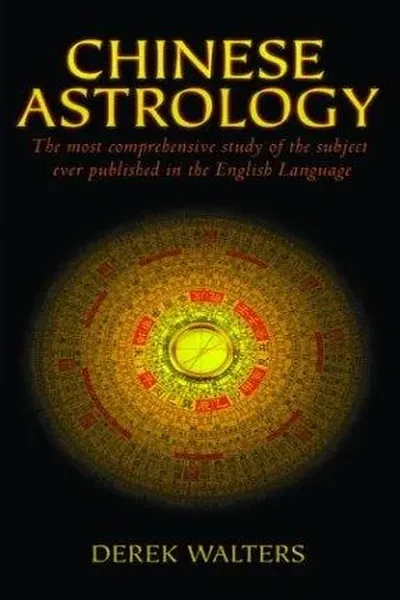




More Free Astrology & Cosmology Books
View all →