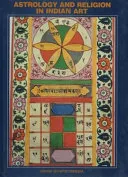
Astrology and Religion in Indian Art
 78
78

Astrology and Religion in Indian Art
Swami Sivapriyananda’s *Astrology and Religion in Indian Art* offers a scholarly, if occasionally dense, exploration of a subject often treated superficially. The book excels in its detailed cataloging of astrological symbolism within specific artistic traditions, particularly the representations of planets as deities in sculpture. A limitation lies in its academic tone, which may deter readers seeking a more accessible introduction to the topic. The section detailing the iconography of Surya (the Sun God) as a planetary representation is particularly illuminating, demonstrating the direct translation of astrological concepts into visual form. It serves as a valuable reference for specialists, though its depth might prove daunting for the uninitiated. The work successfully argues for astrology's centrality in Indian visual culture.
📝 Description
78
Swami Sivapriyananda's 1988 work connects Jyotiṣa to Indian religious art.
This book investigates the deep connection between Jyotiṣa, or Hindu astrology, and the religious and artistic traditions of India. It argues that astrology was not just for prediction but structured how sacred art was conceived and created. The author details the symbolic language of Hindu astrology, showing how its concepts appear in Indian sculpture and painting.
The text examines the visual forms of celestial bodies and their linked deities in Indian art. It explains how artistic styles and iconographic rules reflect astrological ideas, forming a visual system for understanding the ancient Indian view of the cosmos. These artworks served to teach and inspire devotion, not just to decorate.
The central argument is that astrological thought, religious practices, and artistic output in India are inherently linked. The book moves past simple comparisons to show how beliefs about planetary influences and cosmic cycles shaped temples, sacred images, and devotional art. Art is presented as a concrete way to express and strengthen cosmological beliefs.
This book sits within the study of the intersection of Vedic traditions and their material manifestations. It addresses how the complex symbolic system of Jyotiṣa, a core component of Vedic knowledge, was not confined to divination or ritual but actively informed the visual culture of Hinduism. By examining temple architecture, sculpture, and painting, Swami Sivapriyananda demonstrates how cosmological frameworks, rooted in astral science, became integral to devotional expression and the structuring of sacred spaces. It highlights the pervasive influence of Indian astral science on its artistic output.
💡 Why Read This Book?
• Gain a concrete understanding of Jyotiṣa's foundational principles and symbolism as presented in the early chapters, moving beyond simplistic horoscopes. • Discover specific examples of astral deities and symbols within Indian sculpture and painting, as detailed in the book's artistic analysis sections. • Appreciate the 1990 publication's contribution to understanding how cosmological beliefs, particularly those stemming from astrological traditions, actively shaped artistic creation in India.
⭐ Reader Reviews
Honest opinions from readers who have explored this book.
❓ Frequently Asked Questions
When was Astrology and Religion in Indian Art first published?
The book was first published in 1990, offering a comprehensive look at the intersection of Hindu astrology and Indian art from a scholarly perspective.
What is the primary focus of Swami Sivapriyananda's book?
The book focuses on how Hindu astrology (Jyotiṣa) is not just for divination but is deeply embedded in India's religious and cultural traditions, particularly influencing its art.
Does the book explain the basics of Hindu astrology?
Yes, the initial sections of the book are dedicated to explaining the foundations of Hindu astrology and its rich symbolism before exploring its artistic manifestations.
What kind of Indian art does the book analyze?
The book specifically analyzes traditional Indian arts, with a significant focus on sculpture and painting, to illustrate the presence and meaning of astral symbols.
Who is Swami Sivapriyananda?
Swami Sivapriyananda was an author and scholar who wrote on the philosophical and cultural aspects of Indian traditions, including the relationship between astrology and art.
Is this book suitable for beginners in astrology?
While it covers foundational aspects, the book is more suited for those with an existing interest in Indian art, religion, or comparative mythology, offering academic depth.
🔮 Key Themes & Symbolism
Jyotiṣa as Cosmological Framework
The work meticulously unpacks Hindu astrology, Jyotiṣa, presenting it not as a mere system of fortune-telling but as a fundamental philosophical and cosmological framework that structured ancient Indian thought. It details how the understanding of planetary movements, zodiacal configurations, and auspicious timings informed daily life, religious rituals, and the very conception of the universe. The book illustrates how this cosmic worldview permeated societal structures and artistic endeavors, positioning the celestial order as the ultimate blueprint for earthly existence and creative expression.
Iconography of Astral Deities
A central theme is the visual representation of astrological entities within Indian art. The book details how planets, constellations, and zodiacal signs were not only abstract concepts but were personified as deities and depicted in various forms in sculpture and painting. It examines the iconographic conventions for representing figures like Surya (the Sun), Chandra (the Moon), and the Navagrahas (nine celestial bodies), demonstrating how these artistic renderings served to venerate cosmic forces and embody astrological influences within sacred spaces and devotional practices.
Art as Embodiment of Belief
Swami Sivapriyananda argues that Indian art functioned as a tangible medium for embodying and propagating religious and astrological beliefs. The book explores how temple architecture, sculpted reliefs, and painted murals were designed to reflect celestial patterns and narrative myths tied to the cosmos. Artistic creations were thus not simply aesthetic objects but served as didactic tools, reinforcing the interconnectedness of the human, divine, and cosmic realms, and making abstract astrological principles accessible through visual language.
Symbolism in Visual Narratives
The work explores the detailed symbolism embedded within Indian artistic traditions, particularly concerning astral motifs. It deciphers the meaning behind specific symbols, gestures, and attributes used to depict celestial bodies and their associated myths. By analyzing these visual cues, the book reveals a sophisticated symbolic language that communicated complex astrological ideas and religious narratives to devotees. Understanding this symbolism is presented as key to unlocking the deeper meanings within Indian art and its connection to spiritual traditions.
💬 Memorable Quotes
Direct passages from the work, attributed to the author.
“Astrology is an integral part of India's religious and cultural traditions.”
— This foundational statement emphasizes that Jyotiṣa is not an external overlay but a deeply woven element of the Indian spiritual and societal fabric, influencing art and belief systems.
“The book explores the interrelatedness of astrology, art, and religion.”
— This highlights the central thesis: these three domains are not separate but dynamically connected, with astrology providing a framework that informs both religious practice and artistic expression.
“It deals with the foundations of Hindu astrology and its detailed symbolism.”
— This indicates the book’s commitment to providing a thorough grounding in the principles and symbolic language of Jyotiṣa before examining its artistic manifestations.
“Descriptions of various representations of astral symbols in traditional arts.”
— This points to the book's visual analysis, focusing on how celestial concepts are translated into concrete forms within Indian sculpture and painting.
“Artistic representations of astral deities such as planets.”
— This signifies the book's specific focus on iconographic studies, examining how planetary influences and deities are depicted visually in Indian art.
🌙 Esoteric Significance
Tradition
This work is deeply rooted in the Indic esoteric tradition, specifically within the philosophical and practical dimensions of Jyotiṣa (Hindu astrology) and its connection to Vedic cosmology and Puranic mythology. It aligns with a lineage that views the cosmos as a manifestation of divine consciousness, where celestial bodies hold significant spiritual and energetic influences. While not strictly Hermetic or Kabbalistic, it shares with these traditions a foundational belief in correspondence between the macrocosm and microcosm, viewing astrological patterns as keys to understanding divine order and human destiny.
Symbolism
The book illuminates the profound symbolism of planets (Grahas) as divine forces within the Hindu pantheon, such as Surya (Sun) representing the soul and vital energy, and Chandra (Moon) symbolizing the mind and emotional currents. It also explores the zodiacal signs and their associated mythologies, showing how these celestial archetypes are visually encoded in temple carvings and manuscript illuminations. The Navagrahas, the nine primary celestial deities, are presented as a key iconographic set, representing a microcosm of cosmic influence that art sought to depict and appease.
Modern Relevance
Contemporary practitioners and scholars of Vedic astrology, comparative religion, and South Asian art history frequently reference Sivapriyananda's work. Thinkers exploring the intersection of consciousness, cosmology, and creative expression find value in its detailed analysis of how astrological principles informed artistic canons. Its examination of iconography provides a visual lexicon for modern students of Jyotiṣa seeking to understand the cultural and spiritual depth behind traditional astrological symbolism, bridging ancient practices with contemporary esoteric thought.
👥 Who Should Read This Book
• Students of Vedic astrology and comparative cosmology seeking to understand the cultural and artistic expressions of Jyotiṣa. • Researchers in South Asian art history interested in the iconographic and symbolic meanings behind temple sculptures and paintings. • Esoteric practitioners and philosophers exploring the interconnectedness of celestial influences, religious beliefs, and creative manifestation in ancient traditions.
📜 Historical Context
Published in 1990, Swami Sivapriyananda's *Astrology and Religion in Indian Art* emerged during a period of renewed academic interest in the synthesis of Indic traditions and a growing Western appreciation for Eastern philosophies, partly fueled by the Theosophical movement's earlier popularization efforts. While scholars like Stella Kramrisch had already explored the spiritual dimensions of Indian art, Sivapriyananda's work specifically targeted the intricate relationship between Jyotiṣa and visual culture. The book provided a detailed analysis of iconography, grounding its interpretations in traditional astrological texts and contemporary artistic practices. Its publication offered a counterpoint to purely aesthetic or historical analyses, reasserting the vital role of cosmological belief systems, particularly astrology, in shaping artistic output. It contributed to a broader understanding of how ancient Indian societies perceived and represented the cosmos, influencing subsequent scholarship on the subject.
📔 Journal Prompts
The foundational principles of Hindu astrology as presented in the book.
The visual representation of astral deities in Indian sculpture and painting.
How the symbolism of planets like Surya informs artistic creation.
The concept of the cosmos as a blueprint for traditional Indian art.
The integration of Jyotiṣa within religious and cultural traditions discussed.
🗂️ Glossary
Jyotiṣa
The traditional Hindu system of astrology, concerned with the study of celestial bodies and their perceived influence on earthly affairs and human lives. It forms a core part of Vedic studies.
Graha
Literally 'seizer' or 'planet' in Sanskrit, referring to the nine celestial bodies considered in Vedic astrology: Surya (Sun), Chandra (Moon), Mangala (Mars), Budha (Mercury), Guru (Jupiter), Shukra (Venus), Shani (Saturn), Rahu, and Ketu.
Navagrahas
The collective term for the nine primary celestial deities or influences in Hindu astrology, often depicted together in temples and artwork.
Iconography
The visual images and symbols used in a work of art or the study or interpretation of these images and symbols.
Surya
The Hindu deity of the Sun, considered a Graha and a primary celestial influence in Jyotiṣa, often depicted as a radiant figure driving a chariot.
Puranic Mythology
A genre of Indian literature dealing with the creation of the universe, genealogies of gods, heroes, sages, and descriptions of cosmology, philosophy, and dharma, often featuring deities like Surya.
Cosmology
The study of the origin, evolution, and eventual fate of the universe, particularly as it relates to the perceived order and structure of the cosmos within religious and philosophical traditions.