Keats, Hermeticism, and the Secret Societies
 81
81

Keats, Hermeticism, and the Secret Societies
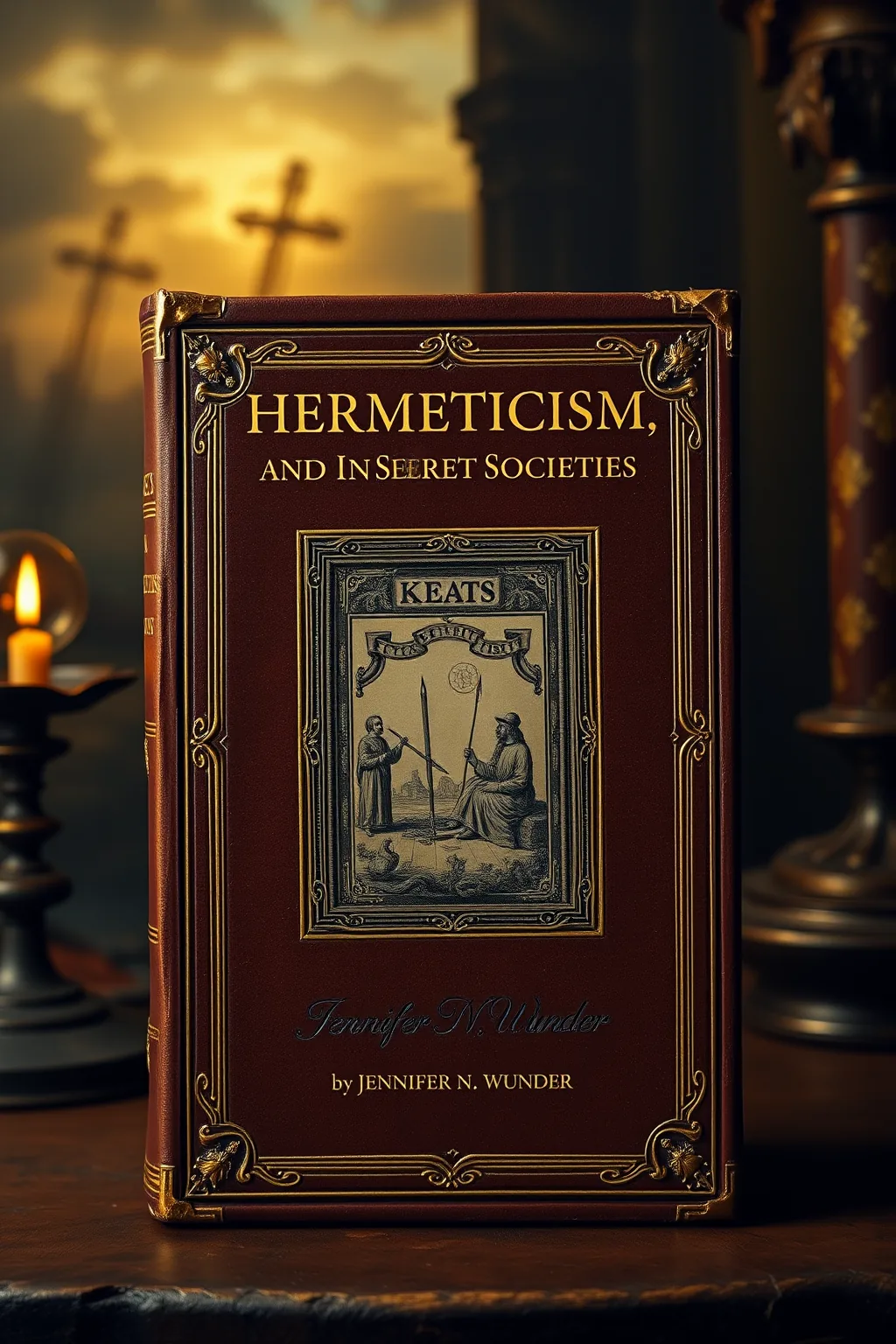
Jennifer N. Wunder's "Keats, Hermeticism, and the Secret Societies" moves beyond conventional biographical and critical approaches to Keats by situating his work within the vibrant, often overlooked, landscape of Romantic-era esotericism. The book's strength lies in its meticulous archival research, convincingly demonstrating the widespread public awareness of groups like the Rosicrucians and Freemasons. Wunder excels at tracing the dissemination of esoteric ideas through popular pamphlets and articles, providing a crucial context for understanding the intellectual currents of the early 19th century. A particularly compelling section details how the symbolic language of initiation and hidden knowledge appears in Keats's "Endymion," suggesting a deeper engagement with these themes than previously acknowledged. However, the book occasionally struggles to balance its detailed historical exposition with a sustained literary analysis, sometimes leaving the reader wanting more direct connections between the historical material and the specific poetic effects. Despite this minor imbalance, the work offers a valuable new perspective, challenging established interpretations of Keats's engagement with spirituality and the wider world. Wunder provides a persuasive argument for the significance of secret societies in shaping the Romantic imagination.
📝 Description
81
Jennifer N. Wunder's 2008 book connects John Keats to the Rosicrucians and Freemasons.
Jennifer N. Wunder's "Keats, Hermeticism, and the Secret Societies" examines the impact of esoteric groups like the Rosicrucians and Freemasons on Romantic literature, with a special focus on John Keats. Published in 2008, the study details how popular interest in these clandestine organizations influenced the creative works of the era. Wunder contends that grasping this cultural background is necessary for a full understanding of Romantic poetry and correspondence. The book is aimed at literary scholars, graduate students of Romanticism, and dedicated Keats enthusiasts. It will also interest those curious about the history of secret societies, Western esotericism, and the relationship between intellectual history and literary studies. Readers interested in the hidden influences on one of England's most famous poets will find considerable material.
The early 19th century, the height of the Romantic movement, was a time of significant intellectual and cultural change. Alongside scientific progress, a fascination with ancient wisdom, mysticism, and secret traditions also grew. Older ways of thinking had not vanished with Enlightenment rationalism; the appeal of mystery, the occult, and hidden knowledge remained strong. Freemasonry was an established institution, and Rosicrucianism, though more legendary, captured the public imagination through various interpretations. Writers like William Blake, who came before Keats, openly engaged with mystical themes, setting a precedent for exploring non-mainstream spiritualities. Wunder places Keats's involvement within this wider context of Romanticism's often unconventional spiritual outlook, pointing to the accessibility of certain ideas.
This book is situated within the study of Western esotericism, specifically exploring its manifestations in the early 19th century. It investigates how traditions like Rosicrucianism and Freemasonry, which often involved symbolic language and hidden knowledge, permeated the cultural atmosphere. The work connects these currents to the intellectual landscape of Romanticism, a period where a renewed interest in mysticism and alternative spiritualities coexisted with rationalism. By examining the reception and interpretation of these esoteric ideas in popular culture and literary circles, Wunder highlights their role in shaping the creative output of figures like Keats.
💡 Why Read This Book?
• Understand the Romantic era's fascination with esoteric knowledge by examining the public's exposure to Rosicrucianism and Freemasonry through popular print, as detailed by Wunder's research into early 19th-century publications. • Discover how John Keats's poetry and letters reflect themes of initiation and hidden wisdom, as Wunder analyzes specific works like "Endymion" and his correspondence, revealing a previously underappreciated layer of meaning. • Gain a fresh perspective on literary history by exploring the intellectual currents that connected Romantic writers to clandestine traditions, challenging traditional interpretations and enriching your appreciation of the period's complex spiritual landscape.
⭐ Reader Reviews
Honest opinions from readers who have explored this book.
❓ Frequently Asked Questions
What specific secret societies are discussed in relation to Keats?
The book primarily focuses on the Rosicrucians and Freemasons, examining their presence in public discourse and their potential influence on Romantic writers, including John Keats, during the early 19th century.
When was Jennifer N. Wunder's "Keats, Hermeticism, and the Secret Societies" first published?
The original publication date for Jennifer N. Wunder's "Keats, Hermeticism, and the Secret Societies" is 2008.
Does the book argue Keats was a member of a secret society?
Wunder does not claim Keats was a member of a secret society. Instead, she argues that the public's awareness and fascination with these groups, and the esoteric ideas they represented, permeated the cultural atmosphere and influenced his writing.
What is Hermeticism and why is it relevant to Keats?
Hermeticism is a philosophical and religious tradition based on writings attributed to Hermes Trismegistus. Wunder explores how Hermetic concepts of hidden knowledge, spiritual alchemy, and divine correspondence were part of the intellectual milieu that shaped Keats's poetic imagination.
What evidence does Wunder use to support her claims about secret societies' influence?
Wunder utilizes contemporary articles, pamphlets, books, and Keats's own poetry and letters. She traces the dissemination of esoteric themes in popular culture and analyzes how these themes manifest in Keats's creative output.
Is this book suitable for someone new to Keats or esoteric studies?
While scholarly, the book aims to make esoteric concepts accessible. Readers new to Keats or esoteric studies might benefit from some prior familiarity, but Wunder's clear explanations of historical context and literary connections make it a valuable resource for dedicated learners.
🔮 Key Themes & Symbolism
Esoteric Influence on Romanticism
This work examines the pervasive undercurrent of esoteric thought, particularly concerning secret societies like the Rosicrucians and Freemasons, within the Romantic literary landscape. It details how the public's engagement with these groups, often through popular publications, created an intellectual climate receptive to mystical and hidden knowledge, thereby shaping the thematic and symbolic concerns of writers such as John Keats. Wunder demonstrates that these traditions were not merely fringe interests but integral to the period's cultural discourse.
Keats and the Hermetic Tradition
The book offers a focused analysis of John Keats's poetry and letters, interpreting them through the lens of Hermeticism and the symbolism associated with secret orders. Wunder argues that Keats's exploration of themes like spiritual ascent, hidden truths, and the nature of poetic inspiration can be better understood by acknowledging his potential exposure to or engagement with esoteric ideas prevalent in his time. This perspective reframes aspects of his work, highlighting a deeper engagement with esoteric concepts.
The Role of Popular Print
A significant aspect of Wunder's research involves tracing the dissemination of knowledge about secret societies through popular print media of the Romantic era. The study highlights how articles, pamphlets, and books made esoteric lore accessible to a wider reading public, fostering a cultural fascination that influenced literary production. This focus on the mechanics of cultural transmission is key to understanding how ideas, even those concerning clandestine groups, permeated society.
Reinterpreting Keats Scholarship
By foregrounding the influence of secret societies and Hermeticism, "Keats, Hermeticism, and the Secret Societies" proposes a new avenue for Keats scholarship. Wunder challenges readers to reconsider established interpretations of Keats's work by integrating the historical context of esoteric beliefs and practices. This approach provides a fresh perspective on his intellectual development and the broader spiritual landscape inhabited by Romantic poets.
💬 Memorable Quotes
Direct passages from the work, attributed to the author.
“The public's exposure to and fascination with articles, pamphlets, and books about the societies.”
— This highlights how esoteric knowledge, often presumed to be exclusive, was in fact widely available and consumed by the general populace during the Romantic period, influencing cultural sensibilities.
“Wunder traces their influence on Keats's poetry and letters.”
— This points to the core argument of the book: that the symbolic language and philosophical underpinnings of secret societies are demonstrably present in Keats's most significant works, offering a key to deeper understanding.
“Recovering the common knowledge about secret societies like the Rosicrucians and Freemasons during the Romantic period.”
— This emphasizes the book's methodological approach, focusing not on uncovering hidden membership but on the widespread cultural awareness and discourse surrounding these groups.
“Offers readers a first look at the role they played in the writings of Romantic authors in general and Keats in particular.”
— This suggests the novelty of Wunder's research, presenting a comprehensive study that specifically links the general trend of esoteric interest to the particular case of John Keats's oeuvre.
“Offers a new perspective on Keats scholarship.”
— This indicates the book's contribution to the academic field, proposing an alternative interpretive framework that enriches existing critical dialogues about Keats and his literary context.
🌙 Esoteric Significance
Tradition
This work engages with the Western Esoteric Tradition, specifically focusing on Hermeticism and the symbolic frameworks of fraternal secret societies like Freemasonry and Rosicrucianism. It positions these traditions not as isolated phenomena but as integral components of the broader intellectual and cultural currents that shaped Romantic literature. The book fits within scholarship that explores how esoteric philosophies informed artistic and literary movements, departing from purely historical accounts to analyze their specific impact on creative output.
Symbolism
Key symbols explored include those related to initiation, such as the concept of passing through stages of hidden knowledge, and the Hermetic principle of "As Above, So Below," reflecting a belief in the interconnectedness of the macrocosm and microcosm. The symbolism of light, hidden wisdom, and spiritual ascent, often associated with Masonic degrees and Hermetic texts, is analyzed for its presence and function within Keats's poetry, suggesting a coded language available to those familiar with such traditions.
Modern Relevance
Contemporary scholars of Romanticism continue to grapple with the spiritual and philosophical dimensions of the era. Wunder's work remains relevant for those interested in the history of ideas, particularly how esoteric traditions have influenced Western thought and art. Modern practitioners of Hermeticism, Freemasonry, and related paths may find the book useful for understanding the historical reception and literary integration of their traditions, offering insights into the enduring appeal of symbolic language and hidden knowledge.
👥 Who Should Read This Book
• Literary scholars specializing in Romanticism or John Keats: To gain a new interpretative framework that integrates esoteric influences into established critical analyses. • Students of Western Esotericism: To understand how Hermeticism and secret society lore were integrated into mainstream cultural discourse and literary production in the early 19th century. • Cultural historians: To explore the role of popular print in disseminating esoteric ideas and shaping the intellectual range of the Romantic period.
📜 Historical Context
The early 19th century, the era of Romanticism, was a period marked by a complex relationship with the Enlightenment's rationalism. Alongside scientific advancement, there was a persistent undercurrent of interest in mysticism, ancient wisdom, and secret traditions. Freemasonry, established for centuries, maintained a significant public profile, while the mystique surrounding Rosicrucianism fueled popular imagination through various publications and interpretations. This intellectual climate provided fertile ground for exploring themes of initiation, hidden knowledge, and spiritual transformation, which resonated with Romantic sensibilities that often valued intuition and subjective experience over pure reason. Writers like Samuel Taylor Coleridge were deeply engaged with German idealism and philosophical esotericism, and even poets less overtly mystical than Blake found ways to engage with the era's spiritual inquiries. Jennifer N. Wunder's work situates Keats within this milieu, demonstrating that the discourse surrounding secret societies was part of the common cultural fabric, readily accessible and influential, rather than confined to cloistered initiates.
📔 Journal Prompts
The public's exposure to and fascination with articles, pamphlets, and books about secret societies during the Romantic period.
Keats's poetry and letters as evidence of influence from Hermeticism or secret societies.
The concept of 'common knowledge' regarding esoteric traditions in the early 19th century.
Thematic connections between initiation rituals and Keats's exploration of poetic development.
Reinterpreting Romantic literature through the lens of esoteric symbolism.
🗂️ Glossary
Hermeticism
A philosophical and religious tradition based on a body of knowledge attributed to Hermes Trismegistus, a syncretic figure combining Greek Hermes and Egyptian Thoth. It emphasizes divine wisdom, spiritual ascent, and the interconnectedness of all things, often expressed through symbolic language.
Rosicrucians
Members of a legendary secret society, first mentioned in pamphlets published in Germany in the early 17th century. They were associated with esoteric wisdom, alchemy, and spiritual reform, capturing the imagination of later mystical and occult traditions.
Freemasonry
A fraternal organization with origins in stonemason guilds. It uses allegorical rituals and symbols, often drawn from biblical narratives and Hermetic traditions, to teach moral and philosophical lessons concerning brotherhood, charity, and the pursuit of knowledge.
Romanticism
A literary and artistic movement that emerged in the late 18th century and flourished in the early 19th century. It emphasized emotion, individualism, imagination, the sublime in nature, and often a critique of rationalism and industrialization.
Initiation
A ritual or process through which an individual is formally introduced into a group, society, or spiritual path. In esoteric contexts, initiation often symbolizes a transition, a revelation of hidden knowledge, or a spiritual rebirth.
Esotericism
Belief systems and practices considered secret or intended only for a select group of initiates, often involving mystical, spiritual, or occult knowledge distinct from exoteric (publicly available) doctrines.
John Keats
One of the foremost poets of the second generation of English Romantics (1795–1821), known for his odes, sonnets, and narrative poems, celebrated for their rich imagery and exploration of beauty, truth, and mortality.