Hidden symbolism of alchemy and the occult arts
 79
79

Hidden symbolism of alchemy and the occult arts
Silberer's "Hidden Symbolism of Alchemy and the Occult Arts" offers a rigorous, if at times dense, exploration of alchemical iconography. The strength lies in its systematic approach, dissecting complex symbols with an eye toward their psychological resonance, a departure from purely historical or mystical interpretations. One particularly insightful section examines the symbolism of the Ouroboros, linking its cyclical nature to concepts of integration and wholeness. However, the work's academic tone can be a barrier for those seeking a more accessible entry into occult symbolism. The language, while precise, occasionally obscures the very insights it aims to illuminate, requiring significant reader concentration. Despite this, the book remains a valuable resource for understanding the symbolic grammar of alchemy through a psycho-analytic lens.
This study provides a foundational, if challenging, perspective on alchemical symbolism.
📝 Description
79
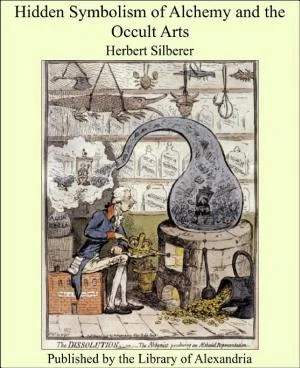
Herbert Silberer's 1912 work examines the symbolic language of alchemy and occult arts.
Herbert Silberer's "Hidden Symbolism of Alchemy and the Occult Arts" analyzes alchemical and occult traditions through their symbolic language and psychological connections. Published in 1912, the book interprets alchemical processes and imagery not as early chemistry, but as symbolic narratives of human transformation. Silberer scrutinizes various texts and symbols, linking ancient practices to psychological states. This volume is suited for students of esotericism, comparative religion, and depth psychology. It offers substantial material for those interested in the historical development of occult thought and its psychological interpretation. The book focuses on symbolic structures within these disciplines, appealing to readers with existing knowledge or an academic interest, rather than serving as an introduction to magic or alchemy. Its emergence coincided with a period of significant interest in occultism and its re-evaluation through psychological perspectives, influenced by thinkers like Carl Jung. This era saw a renewed study of alchemy for its psychological and philosophical content, beyond its historical chemical aspects.
This work belongs to a late 19th and early 20th-century intellectual current that re-examined esoteric traditions through psychological frameworks, notably influenced by Carl Jung. Silberer's analysis of alchemy as a symbolic language for psychological states reflects this broader movement. It positions alchemical symbolism not merely as historical practice but as a meaningful expression of the human psyche, connecting ancient Hermetic arts with emerging depth psychology.
💡 Why Read This Book?
• Gain a nuanced understanding of alchemical symbolism beyond mere historical curiosity, specifically how Silberer interprets the "Philosopher's Stone" as a symbol of psychological integration, a concept distinct from purely chemical pursuits. • Explore the psychological interpretations of alchemical imagery, learning how Silberer connects the "alembic" and "retort" to internal transformative processes, offering a unique perspective not found in basic occult texts. • Appreciate the historical context of occult studies, understanding how early 20th-century psychoanalytic thought, as applied by Silberer, re-framed the study of traditions like alchemy.
⭐ Reader Reviews
Honest opinions from readers who have explored this book.
❓ Frequently Asked Questions
What is the primary focus of Herbert Silberer's "Hidden Symbolism of Alchemy and the Occult Arts"?
The book primarily focuses on decoding the symbolic language of alchemy and occult arts, interpreting them through a psychological lens. It examines how alchemical processes and imagery represent internal transformations and states of consciousness, rather than just proto-chemical experiments.
When was Herbert Silberer's "Hidden Symbolism of Alchemy and the Occult Arts" first published?
While the original research and writing likely predate it, the edition referenced was first published in 2016, making it a more recent access point to Silberer's earlier scholarship.
Does this book offer practical alchemical recipes or rituals?
No, this book is a scholarly analysis of symbolism and psychology, not a practical guide. It focuses on the theoretical and symbolic meaning behind alchemical practices, not their execution.
What is the "Ouroboros" as discussed in the book?
The Ouroboros, a serpent or dragon eating its own tail, is discussed as a potent alchemical and symbolic motif representing cyclicality, self-sufficiency, and the integration of opposites, often linked to the Great Work.
Is this book suitable for beginners in occult studies?
It can be challenging for absolute beginners due to its academic tone and reliance on existing knowledge of esoteric concepts. However, dedicated beginners with an interest in symbolic interpretation will find it rewarding.
What connection does Silberer draw between alchemy and psychology?
Silberer posits that alchemical symbolism often represents psychological processes and the journey toward spiritual or psychological wholeness. He views alchemical texts as containing encoded narratives of the human psyche's development.
🔮 Key Themes & Symbolism
Alchemical Processes as Psychological Journeys
Silberer interprets alchemical operations like calcination, dissolution, and conjunction not as mere chemical steps, but as allegorical representations of psychological purification and integration. The "Great Work" becomes a metaphor for individuation, where the alchemist's external manipulation of matter mirrors an internal transformation of consciousness and the resolution of psychic dualities.
The Symbolism of the Philosopher's Stone
Beyond its alchemical quest for material transmutation, the "Philosopher's Stone" is presented as a profound symbol of spiritual perfection, ultimate knowledge, or psychological wholeness. Silberer examines how this elusive goal signifies the unification of opposites within the psyche and the attainment of a higher state of being, transcending ordinary existence.
Esoteric Apparatus and Vessels
The tools and containers of alchemy, such as the alembic, retort, and athanor, are imbued with symbolic meaning. Silberer explores how these instruments represent the psychic crucible or womb in which transformation occurs. They are depicted as essential for containing and facilitating the difficult processes of spiritual and psychological metamorphosis.
Dual Interpretations of Symbols
A central theme is the inherent duality in alchemical symbolism, possessing both a literal (though often allegorical) meaning and a deeper psychological or spiritual one. Silberer emphasizes that understanding alchemy requires recognizing these layered meanings, where external processes often serve as coded expressions of internal psychic states and spiritual aspirations.
💬 Memorable Quotes
Direct passages from the work, attributed to the author.
“The Ouroboros signifies the cyclical nature of creation and destruction.”
— This concept highlights the serpent devouring its tail as a symbol of eternal recurrence and the unity of primal forces, fundamental to understanding alchemical processes as both endings and beginnings.
“Alchemical imagery often serves as a coded language for psychological states.”
— Silberer suggests that the arcane symbols and procedures in alchemy are not just about material transformation but are deeply embedded metaphors for the human mind's journey and its inherent complexities.
“The Philosopher's Stone represents a state of perfect equilibrium.”
— This points to the Stone not merely as an object, but as an achieved condition of psychic harmony, where all opposing forces within the individual have been reconciled.
“The alembic is a vessel for profound internal change.”
— This interpretation positions the alchemical apparatus as a symbolic container for the soul or consciousness, undergoing purification and refinement through arduous processes.
“Understanding the 'Great Work' requires recognizing its psychological dimensions.”
— Silberer encourages readers to look beyond the literal pursuit of gold, seeing the alchemical quest as a profound metaphor for personal growth and the attainment of spiritual or psychological maturity.
🌙 Esoteric Significance
Tradition
Silberer's work is deeply rooted in the Hermetic and alchemical traditions, but it significantly reframes them through the lens of early depth psychology. While acknowledging the historical and spiritual aspects of alchemy, his primary contribution lies in interpreting its symbolism as a projection of unconscious psychological processes. This approach aligns with later esoteric movements that sought to integrate ancient wisdom with modern psychological understanding, particularly those influenced by Jungian thought.
Symbolism
Key symbols explored include the "Philosopher's Stone," representing psychic wholeness and the integration of opposites; the "Ouroboros," symbolizing cyclical processes, eternity, and the unity of primal forces; and alchemical apparatus like the "alembic" and "retort," which are interpreted as vessels for psychological transformation and refinement. These symbols are seen as embodying the alchemist's internal journey toward spiritual and psychological perfection.
Modern Relevance
Contemporary thinkers in depth psychology, Jungian analysis, and comparative mythology continue to draw on Silberer's insights. His work provides a foundational text for understanding the psychological archetypes embedded within alchemical narratives. Modern practitioners of esoteric arts, particularly those focused on personal transformation and symbolic exploration, often consult Silberer to gain a deeper appreciation of the psychological underpinnings of their chosen paths.
👥 Who Should Read This Book
• Students of Jungian psychology and comparative mythology seeking to understand the symbolic roots of psychological concepts in ancient traditions. • Scholars of Western Esotericism and Hermeticism interested in early psychoanalytic interpretations of alchemical texts and practices. • Occult practitioners looking to deepen their understanding of alchemical symbolism beyond literal interpretations, exploring its psychological and spiritual dimensions.
📜 Historical Context
Herbert Silberer's work emerged in a fertile period for esoteric scholarship, particularly in the late 19th and early 20th centuries. This era witnessed a significant re-evaluation of occult traditions, moving beyond mere superstition to investigate their philosophical and psychological underpinnings. Influenced by burgeoning psychoanalytic theories, scholars began to see alchemy not just as a precursor to chemistry but as a rich symbolic system mirroring the human psyche. Contemporaries like Carl Jung, who cited and built upon such interpretations, were deeply engaged with these ideas. This intellectual climate fostered a comparative approach, drawing parallels between alchemy, Gnosticism, and other esoteric schools. Silberer's meticulous analysis of symbols and texts aligns with this broader trend of seeking deeper, often psychological, meanings within ancient wisdom traditions, placing his work within a critical dialogue about the nature of consciousness and symbolism.
📔 Journal Prompts
The Ouroboros's symbolism of cyclicality and integration in relation to personal change.
Alchemical apparatus as metaphors for psychic containment and transformation.
Interpreting the "Philosopher's Stone" as a symbol of achieved psychological wholeness.
The dual nature of alchemical symbols and their relevance to understanding complex concepts.
Connecting Silberer's analysis of alchemical processes to modern concepts of personal development.
🗂️ Glossary
Alembic
A type of distillation apparatus commonly used in alchemy. Symbolically, it represents a vessel for purification and the refinement of substances, often interpreted as a container for psychic transformation.
Anthanor
An alchemical furnace designed to maintain a constant, gentle heat, crucial for slow and steady operations. It symbolizes a controlled inner environment for gradual spiritual or psychological development.
Calcination
The process of heating a substance to high temperatures to remove impurities or change its form. In a psychological context, it represents purification, the breaking down of old structures, or the reduction of the ego.
Great Work (Main work)
The central process in alchemy, aiming to produce the Philosopher's Stone. Esoterically, it refers to the process of spiritual or psychological perfection and the unification of opposites within the individual.
Ouroboros
An ancient symbol depicting a serpent or dragon eating its own tail. It represents cyclicality, eternity, the unity of opposites, and the eternal return.
Philosopher's Stone
The legendary alchemical substance said to transmute base metals into gold and to be a universal elixir. Symbolically, it represents spiritual perfection, enlightenment, or complete psychological integration.
Retort
A type of laboratory flask with a long, downward-sloping neck, used for distillation. Like the alembic, it symbolizes a vessel for transformation, containment, and the separation of subtle from gross elements.
🔮 Readers Also Liked
Browse all →





More by Herbert Silberer
All books →

More Free Alchemy & Hermeticism Books
View all →